What Are the Top Automotive Injection Molding Companies in China?
China has become a major base for automotive parts manufacturing, including precision plastic components made through injection molding. These parts appear in dashboards, door panels, lighting housings, clips, and under-hood systems. Their quality can affect fit, durability, weight, and production efficiency. Small details matter. A warped panel or inconsistent clip may create costly assembly problems.
Choosing an automotive injection molding company is not only about comparing prices. Buyers may need to assess tooling design, material selection, dimensional control, production capacity, and experience with automotive programs. Certifications and documented quality systems can provide useful evidence, but they do not guarantee that every supplier is right for every project. A factory visit, sample review, and clear discussion of tolerances can reveal details that a polished website may not show.
This overview looks at how to identify leading automotive injection molding companies in China and what to examine before shortlisting them. It considers capabilities such as mold development, high-volume production, engineering support, and quality inspection. Rankings can shift as companies invest, expand, or change their customer base, so any list should be treated as a starting point rather than a final verdict. That distinction is easy to overlook. Supplier information can also be incomplete, and buyers should verify important claims directly. The strongest choice is usually the company whose verified processes, communication, and production capacity match the specific part and program requirements.
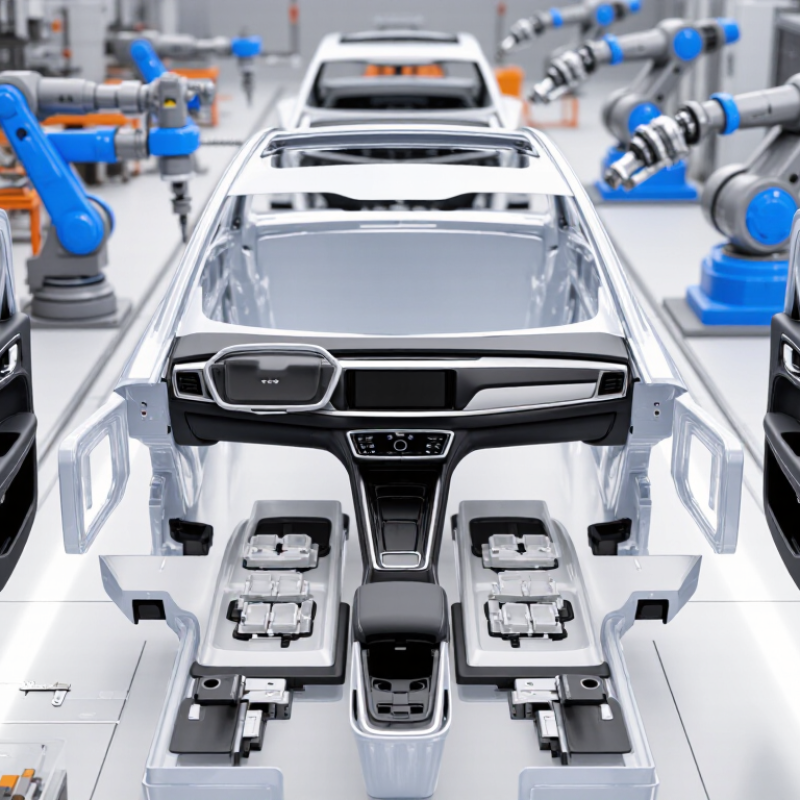
How Automotive Injection Molding Serves China’s Vehicle Industry
What Are the Top Automotive Injection Molding Companies in China?
China’s vehicle industry relies on injection molding for many visible and hidden components. Cabin panels, air vents, clips, lamp housings, and under-hood covers are common examples. These parts can be lightweight, repeatable, and shaped for tight packaging needs. That matters as vehicle platforms add sensors, wiring, and varied interior layouts. Electric vehicles also need carefully designed housings and cable-management parts. Material choice depends on heat, impact, chemical exposure, and cost. Plastic is not automatically the lighter or better answer.
Automotive molding suppliers support this work from mold design through production. Engineers review wall thickness, gate locations, cooling paths, and likely shrinkage before tooling begins. Stable cycle times help manufacturers maintain consistent dimensions across large batches. Checks may include visual inspection, fit tests, dimensional measurement, and aging tests suited to each part. Traceable material batches and documented process settings make defects easier to investigate. Yet a polished sample does not guarantee reliable output months later. Tool maintenance, change control, and communication deserve equal attention. Supplier comparisons should examine these routines, not only quoted price or machine size.
Tips: Ask for sample inspection records, mold-maintenance plans, and clear criteria for rejecting parts. Confirm who handles design changes. A small pilot run can reveal fit problems before production scales.
What Are the Top Automotive Injection Molding Companies in China? - How Automotive Injection Molding Serves China’s Vehicle Industry
China Vehicle Production: Industry Context
| Year | Total Vehicle Production | New Energy Vehicle (NEV) Production | NEVs as Share of Total Production | Relevance to Injection Molding |
|---|---|---|---|---|
| 2022 | 27.02 million | 7.06 million | 26.1% | Vehicle production provides a broad demand context for molded interior, exterior, electrical, and under-hood components. |
| 2023 | 30.16 million | 9.59 million | 31.8% | Growth in vehicle output and NEV production increased the importance of lightweight plastic parts and components for electrical systems. |
| 2024 | 31.28 million | 12.89 million | 41.2% | The rising NEV share underscores applications such as connector housings, battery-system components, and molded interior parts. |
Production figures are national totals. NEV shares are calculated from the figures shown and rounded to one decimal place. They describe vehicle-industry context, not injection-molded parts output.
Typical Automotive Injection-Molded Applications
| Vehicle Area | Typical Molded Parts | Common Material Options | Relevant Part Requirements |
|---|---|---|---|
| Interior | Trim panels, console components, vents, bezels, and storage parts | Polypropylene (PP), ABS, and PC/ABS blends | Surface appearance, dimensional stability, impact performance, and fit |
| Exterior | Grilles, lamp housings, mirror components, and trim pieces | PP, ABS, and polycarbonate (PC), selected according to part design and specification | Weathering resistance, impact performance, dimensional control, and finish |
| Electrical and electronic systems | Connector housings, clips, sensor housings, and cable-management parts | Polyamide (PA), PBT, and other engineering thermoplastics | Electrical insulation, heat resistance, strength, and precise features |
| Under the hood | Fluid-system fittings, covers, brackets, and selected housings | Heat-resistant grades of PA, PP, and other engineering thermoplastics | Temperature, chemical exposure, mechanical loading, and operating environment |
| NEV battery and power systems | Selected covers, insulating parts, connector components, and cable supports | Application-specific flame-retardant or engineering-grade thermoplastics | Electrical insulation, thermal performance, flame requirements, and system-level safety specifications |
Material choices vary by component design, vehicle specification, and applicable safety requirements; the examples are not universal prescriptions.
Source: China Association of Automobile Manufacturers (CAAM), annual vehicle production statistics for 2022, 2023, and 2024. NEV means new energy vehicle.
Related Posts
-
China Best Automotive Injection Molding Manufacturers?
-
What Is Automotive Injection Molding and How Does It Work?
-
How to Optimize Automotive Injection Molding for Efficiency?
-
2026 Top Trends in Automotive Injection Molding for Future Innovation
-
What Is an Injection Mold Machine?
-
2026 How to Find the Best Molding Solutions for Your Project?