Why Choose a Plastic Injection Machine for Your Business?
Choosing the right plastic injection machine can shape production costs, product quality, and long-term resilience. It affects every cycle, from pellet feeding to part ejection.
Fortune Business Insights valued the global injection molding machine market at USD 12.58 billion in 2023. Its report projects continued growth through 2032, driven by packaging, automotive, medical, and consumer products. Grand View Research also identifies automation, electric machines, and energy efficiency as major market trends. These figures are useful, but they are not a guarantee for every factory. Market definitions and regional conditions differ.
A plastic injection machine offers repeatable molding, fast cycle times, and scalable output. An electric model can reduce hydraulic energy use and improve control in suitable applications. Servo-hydraulic systems may offer a practical balance for demanding production environments. The best choice depends on resin type, mold size, shot volume, tolerances, maintenance skills, and expected utilization. A machine that looks inexpensive may become costly through downtime, scrap, or difficult servicing.
John Bozzelli, founder of RJG and an injection molding authority, states, “The process is the product.” That principle deserves attention. Stable temperature, pressure, and cooling often matter more than impressive machine specifications. A carefully validated machine can produce consistent parts beside a busy operator, with only small process adjustments. Still, no purchase decision should rely on marketing claims alone. Review manufacturer data, independent testing, service response, and total cost of ownership before committing. The answer may be less obvious than expected.
What Is a Plastic Injection Machine?
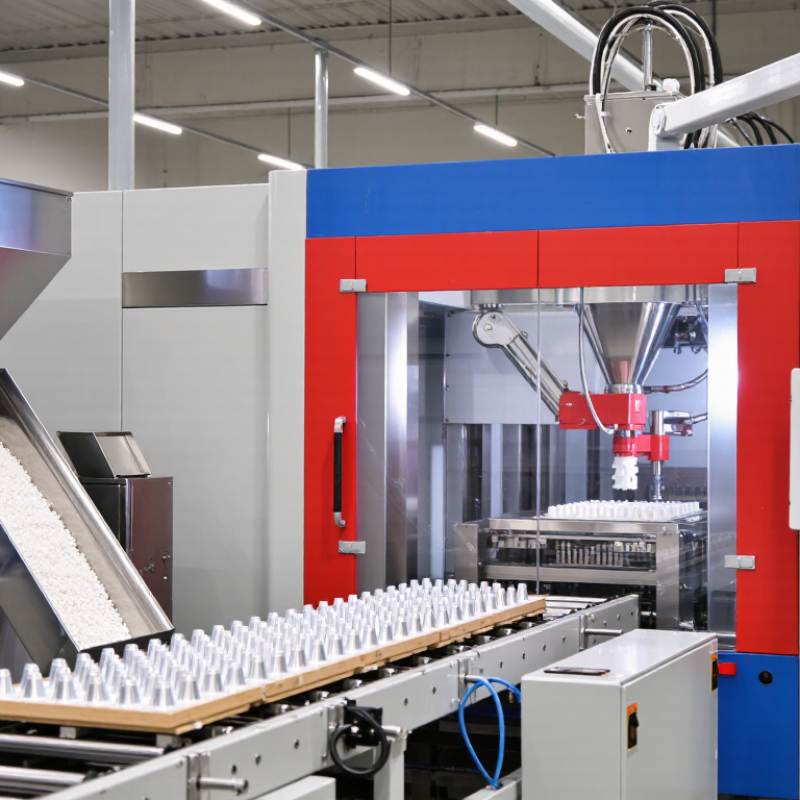
A plastic injection machine is industrial equipment that turns small plastic pellets into shaped parts. It heats the material inside a temperature-controlled barrel. A screw then pushes the melted plastic into a metal mold under pressure. After cooling, the mold opens and releases the finished component.
The process is repeatable and measurable. Operators can adjust temperature, injection speed, pressure, and cooling time. These settings affect surface quality, dimensions, strength, and production speed. For example, a thin housing may need faster filling to prevent incomplete edges. A thicker part may require longer cooling to reduce warping.
The machine includes a hopper, heated barrel, injection unit, clamping unit, and control system. Its capacity must match the mold size and material requirements. Choosing excessive clamping force can increase energy use and equipment costs. Choosing too little force may cause flashing along the mold line.
Real production also involves practical judgment. Moisture-sensitive plastics may need careful drying before molding. Small changes in room temperature can influence results. Even experienced operators sometimes adjust settings more than expected. That learning curve is easy to underestimate.
For a business, the machine can support consistent output, complex shapes, and reduced manual assembly. However, it also requires mold maintenance, operator training, ventilation, and routine inspections. A detailed trial run is wiser than relying only on catalogue figures. Good results come from matching the machine, mold, material, and production target.
Why Choose a Plastic Injection Machine for Your Business? - What Is a Plastic Injection Machine?
| Business Dimension | What It Means | Relevant Facts | Why It Matters to Your Business |
|---|---|---|---|
| Basic Definition | A plastic injection machine melts plastic material and injects it into a mold under pressure. | The molded part solidifies inside the mold before the mold opens and the part is ejected. | It provides a repeatable method for producing identical plastic parts at commercial volumes. |
| Production Volume | The process is designed for repeated production using the same mold. | One mold can produce one or several parts per cycle, depending on the number of cavities. | High-volume production can reduce the average labor and setup cost per part. |
| Cycle Time | Cycle time is the total time required to complete one molding cycle. | Many parts have cycle times measured in seconds, but the actual time depends on part size, wall thickness, material, mold design, and cooling requirements. | Short, stable cycles can improve throughput and production scheduling. |
| Material Compatibility | The machine processes thermoplastic pellets or granules that can be softened by heat and hardened again by cooling. | Common thermoplastics include polypropylene, polyethylene, ABS, polystyrene, polyamide, and polycarbonate, subject to machine and mold requirements. | Material flexibility allows businesses to serve packaging, consumer goods, automotive, electrical, and industrial applications. |
| Clamping Force | Clamping force keeps the mold closed while plastic is injected. | Machines are available across a wide range of clamping forces, from small laboratory and precision units to machines rated at several thousand tonnes. | Selecting sufficient force helps prevent flash and supports the production of larger or higher-pressure parts. |
| Part Repeatability | The machine controls injection speed, pressure, temperature, and screw movement during each cycle. | Stable process settings help maintain consistent dimensions, weight, appearance, and mechanical performance. | Consistent output can reduce scrap, rework, inspection costs, and customer complaints. |
| Automation Potential | Auxiliary equipment can automate part removal, feeding, inspection, labeling, and packaging. | Robotic take-out systems and integrated sensors are commonly used to support unattended or partially attended production. | Automation can improve workplace safety, reduce repetitive labor, and support continuous production. |
| Machine Drive Options | Machines may use hydraulic, electric, or hybrid drive systems. | Electric systems generally provide precise motion control and can avoid hydraulic oil; hydraulic and hybrid systems remain widely used for their force capability and application flexibility. | The best option depends on required force, speed, accuracy, maintenance resources, and energy targets. |
| Product Complexity | Injection molding can create detailed shapes, ribs, bosses, snap-fits, and textured surfaces in one molded part. | Part design must account for draft angles, wall thickness, shrinkage, gates, vents, and cooling. | Design freedom can reduce the number of separate components and assembly operations. |
| Material Efficiency | The process delivers molten material into a defined cavity, with material use determined by the part, runner system, and process settings. | Runners and sprues may be reground when the material specification and quality requirements allow it. | Efficient mold design and controlled regrind use can help lower material waste. |
| Quality Control | Quality depends on machine settings, mold condition, material drying, cooling, and operator control. | Typical checks include dimensions, weight, visual defects, color, flash, short shots, warpage, and mechanical performance. | A documented process-control plan supports reliable production and traceability. |
| Maintenance Needs | Regular maintenance protects machine accuracy, safety, and uptime. | Typical tasks include lubrication, inspection of heaters and sensors, screw and barrel checks, mold maintenance, and cleaning. | Preventive maintenance can reduce unexpected downtime and extend equipment service life. |
| Best Business Fit | Injection molding is most suitable when a business needs repeatable plastic parts and can justify mold-development costs. | It is commonly considered for medium- to high-volume production, especially when consistent quality and short per-part processing time are important. | The investment can be attractive when expected production volume, part value, quality requirements, and long-term demand support the total cost. |
Note: Actual performance, cycle time, energy use, material temperature, and required clamping force vary according to the machine, mold, plastic material, part design, and production conditions.
Related Posts
-
Top 10 Plastic Mold Injection Machine Solutions for Your Manufacturing Needs
-
Best 10 Plastic Injection Machines for Efficient Manufacturing?
-
7 Injection Moulding Process Tips for Global Buyers?
-
10 Best Injection Moulding Process Tips for Global Buyers
-
What is Plastic Mold Injection Machine? A Comprehensive Guide to Its Types and Applications
-
What is an Injection Mold Machine and How Does it Work?