China Top 10 Injection Mold Manufacturing Companies?
China’s injection mold manufacturing sector has become a critical link in global automotive, electronics, medical, and consumer-product supply chains. The country combines broad supplier networks, skilled machining labor, advanced CNC equipment, and competitive production costs. Yet capability differs sharply between factories.
Industry data supports this scale. Grand View Research identifies automotive, packaging, and electronics as major drivers of the global injection molding market. MarketsandMarkets also reports continuing investment in precision molding, automation, and lightweight components. UN Comtrade trade data further shows China’s strong presence in international mold and tooling shipments. These sources indicate market strength, but they do not prove that every supplier offers consistent quality.
That distinction matters.
This guide examines the China Top 10 Injection Mold Manufacturing Companies through practical criteria. These include mold complexity, tolerance control, material expertise, project experience, inspection systems, export performance, and after-sales support. Factory audits, sample testing, and production records remain more reliable than impressive websites.
Some manufacturers specialize in automotive interior molds. Others focus on medical parts, thin-wall packaging, or large household components. A supplier producing excellent prototypes may still struggle with high-volume production. This is an important limitation.
The ranking should therefore be viewed as a useful starting point, not an absolute verdict. Buyers should verify certifications, steel grades, trial-shot results, maintenance plans, and communication standards before signing contracts. In this industry, small details matter: a misaligned ejector, unstable cooling channel, or delayed design change can affect thousands of parts.
Injection Mold Manufacturing in China: Scope, Types, and Industry Terms
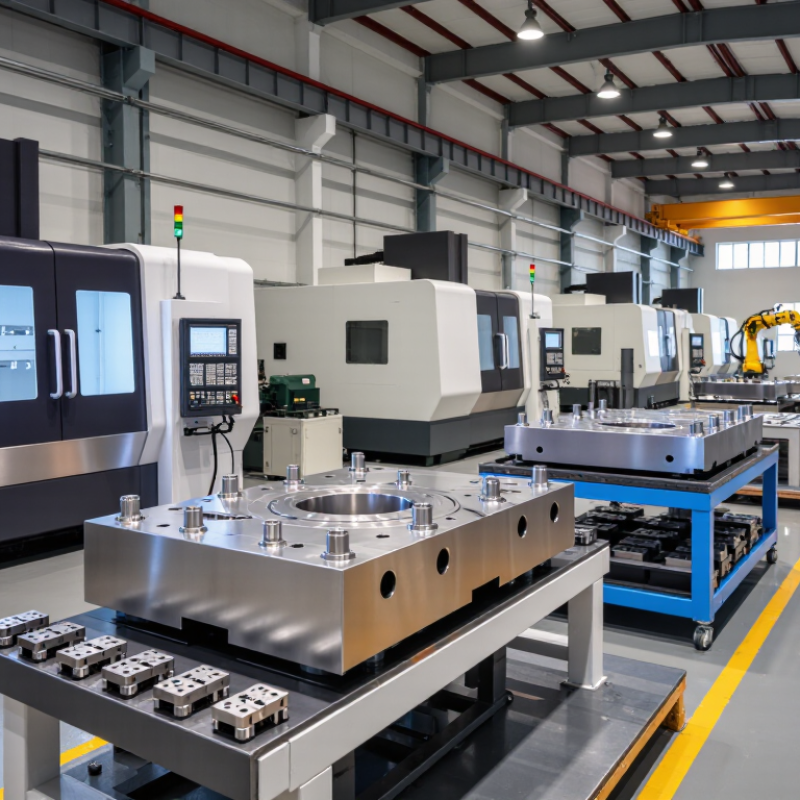
China’s injection mold manufacturing sector covers design, steel preparation, machining, trial molding, validation, and maintenance. Grand View Research estimates the global injection molded plastics market will continue growing through 2030, supported by automotive, medical, electronics, and packaging demand. China serves these sectors with both high-volume export tooling and smaller precision molds.
Common mold types include two-plate, three-plate, hot-runner, cold-runner, insert, overmolding, family, and stack molds. Each choice affects cycle time, material waste, tooling cost, and repair access. Key industry terms include parting line, gate, draft angle, ejector pin, cooling channel, cavity, core, DFM, T0, and T1 sampling. In practical mold reviews, engineers inspect gate marks, weld lines, flash, shrinkage, and uneven cooling. A polished cavity alone proves little. Dimensional stability matters more.
Fortune Business Insights estimates the global injection molding machine market will expand significantly this decade, reflecting wider demand for automated production. However, mold quality depends on more than machine capacity. Steel selection, heat treatment, machining accuracy, cooling layout, and process documentation all influence service life. A mold may produce an excellent first sample and still fail after repeated cycles. That is an uncomfortable but important limitation. Reliable manufacturers should provide inspection records, material certificates, trial reports, and clear revision control. Claims without traceable data deserve caution.
China’s Mold Industry at a Glance: 2023 Output Data from CDMIA
China’s mold industry remains a major manufacturing base. CDMIA’s 2023 data places the industry’s total output value at roughly RMB 370 billion. This figure covers many mold categories, including injection, die-casting, stamping, and precision tooling. It does not measure injection mold companies alone.
The data also reflects strong links with automotive, electronics, medical devices, and household products. In a typical workshop, engineers review steel hardness, cooling channels, and cycle time before cutting the first cavity. Export demand remains important, but domestic production is equally influential. A careful buyer should not treat output value as proof of superior quality. Capacity can hide inconsistent inspection, delayed maintenance, or weak project communication.
Tips: Ask for recent project samples, dimensional inspection records, and mold trial videos. Confirm the steel grade, expected cycle life, warranty terms, and spare-part support. Factory visits can reveal practical details, such as clean assembly benches and clearly labeled components. One point deserves reflection: public industry data is useful, but reporting methods may differ between sources. Verify the figures before using them in investment or supplier decisions.
Ranking Criteria: Export Value, Capacity, Certifications, and Tolerance Levels
China Top 10 Injection Mold Manufacturing Companies?
A reliable ranking should measure more than factory size or online visibility. Export value shows international demand, but it can hide subcontracting or unusual yearly orders. Capacity should include machine numbers, mold dimensions, steel processing, and quality-control staffing. A strong manufacturer can explain its monthly output with production records, not broad promises.
Certifications provide another useful filter. ISO 9001 supports process consistency, while material traceability and documented inspections improve accountability. Tolerance levels deserve close attention. For precision molds, buyers should review cavity measurements, surface-finish reports, trial samples, and correction records. A supplier claiming ±0.01 mm should demonstrate this performance across repeated inspections. Small details matter.
Tips: Request three recent export references, a capacity breakdown, and sample inspection reports. Check whether certificates match the actual production site. Ask how the company handles mold repairs and late-stage design changes. Export value alone is not enough. Capacity figures may also be inflated, especially when equipment is shared. A ranking can therefore be useful, but it should remain open to revision. Personally, I would score verified tolerance data higher than impressive marketing language. Audits, factory visits, and consistent delivery history make the final list more trustworthy.
China’s Top 10 Injection Mold Manufacturers: Company Profiles and Core Markets
China’s top ten injection mold manufacturers serve different industrial needs rather than one single market. Precision medical mold specialists focus on cleanroom components, syringes, and diagnostic housings. Automotive mold makers produce large door panels, dashboards, and lighting parts. Electronics experts build tight-tolerance molds for connectors, switches, and device covers. Packaging manufacturers target thin-wall containers, caps, and food-grade closures. These profiles require different steel grades, cooling designs, and quality controls.
Other leading profiles include appliance mold manufacturers, optical-part specialists, household-product suppliers, industrial-component producers, two-shot molding experts, and rapid-prototype workshops. Their core markets range from refrigerators and furniture fittings to lenses, pumps, and engineering enclosures. Experienced buyers should examine machining accuracy, mold-flow analysis, trial-shot records, and after-sales response. A polished website proves little. Factory evidence matters more. In practice, some suppliers still underestimate maintenance planning, especially when exporting complex molds across long distances.
Tips: Request sample parts, inspection data, and a detailed mold schedule before signing. Check cavity balance, cooling channels, steel certificates, and expected cycle life. Ask how the manufacturer handles design changes. This is where many projects become expensive. Also confirm packaging, spare inserts, repair support, and communication procedures. A supplier may offer a low initial quotation, yet weak documentation can create delays, uneven parts, or repeated tooling costs. Personally, I would value transparent feedback over optimistic promises. Even strong manufacturers can make mistakes when specifications remain vague.
Technical Comparison: Mold Life, Cycle Time, Materials, and Quality Standards
Comparing China’s top ten injection mold manufacturers requires more than reviewing equipment lists. Mold life depends on steel grade, heat treatment, cooling design, and maintenance access. Hardened steel can support millions of shots, while softer steel suits shorter production runs. That difference affects both price and replacement risk.
Cycle time reveals engineering discipline. Efficient molds use balanced runners, uniform cooling channels, and reliable ejection systems. A few seconds saved per cycle can reduce major production costs. Testing should record filling time, cooling time, warpage, and dimensional variation. Small gains matter.
Material selection must match the product and service environment. P20 steel may suit prototypes or moderate volumes, while premium hardened grades support demanding production. Aluminum can shorten development time, but it usually offers lower wear resistance. Quality control should include CMM inspection, mold-flow analysis, surface checks, and trial-shot reports. ISO 9001-based procedures improve traceability, though certification alone cannot guarantee good tooling. Ask for cavity pressure data and maintenance records. Many comparisons ignore these details. That is a weakness.
Real experience often exposes imperfect assumptions. A mold may meet drawing tolerances yet produce unstable parts after several thousand cycles. Cooling channels can also perform differently from simulation results. Engineers should inspect actual samples, not trust polished presentations. A careful factory will explain failures, corrective actions, and remaining risks without hiding inconvenient measurements.
China Injection Mold Manufacturing: Technical Benchmark Comparison
Indicative engineering benchmarks for high-volume injection molds manufactured in China, comparing expected mold life and typical cycle time by application tier.
Materials
Common tool steels include P20 for general-purpose molds, 718H for improved polishability, H13 for elevated-temperature applications, and S136 for corrosion-resistant or high-gloss parts.
Quality Standards
Typical quality controls include ISO 9001-based systems, steel-mill material certificates, CMM dimensional inspection, mold-flow validation, first-article approval, and documented process capability checks.
How to Read the Chart
Mold life is shown in million shots; cycle time is shown in seconds. Actual results vary with resin, part geometry, cooling design, maintenance, cavitation, and production conditions.
Reference ranges are non-company-specific industry benchmarks and should be validated through design review, material certification, mold trials, and acceptance testing.