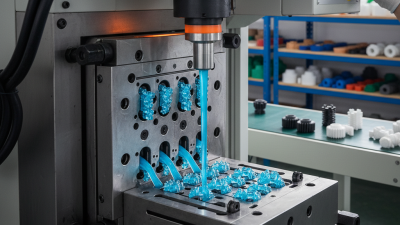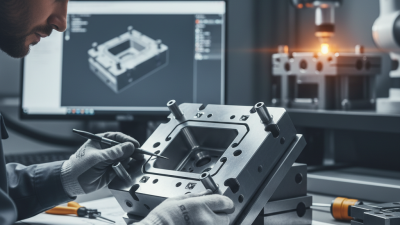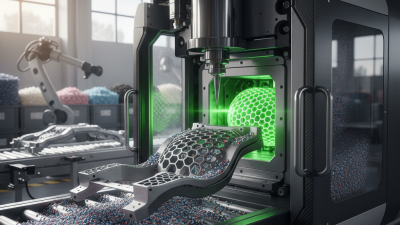
Choosing among the top injection mold manufacturing companies worldwide requires more than comparing website claims. Buyers must examine engineering depth, production capacity, quality systems, and proven delivery records. A reliable supplier should explain its mold design process clearly, from DFM review and steel selection to CNC machining, polishing, and trial runs. Factory evidence matters. Inspectors checking cavity dimensions, technicians adjusting cooling channels, and engineers reviewing sample parts reveal more than polished advertisements.
This guide evaluates leading manufacturers through practical, measurable criteria. These include experience with complex molds, control of tolerances, material knowledge, maintenance support, and communication across time zones. Certifications can strengthen credibility, but they should support real operating discipline rather than replace it. Customer references, documented inspection reports, and transparent lead-time estimates offer stronger reassurance.
No ranking is perfect.
Company strengths often depend on the project. One manufacturer may excel at automotive molds, while another performs better with medical components or high-volume consumer products. Cost alone can mislead buyers, especially when poor cooling design creates longer cycles and expensive rework. We will also consider regional advantages, tooling technology, after-sales service, and responsiveness during design changes.
The goal is not to declare one universal winner. It is to help readers compare capable partners with greater confidence. Some information may change as factories expand, invest, or alter their markets. Readers should verify current capabilities directly before making a final decision. Practical judgment remains essential.
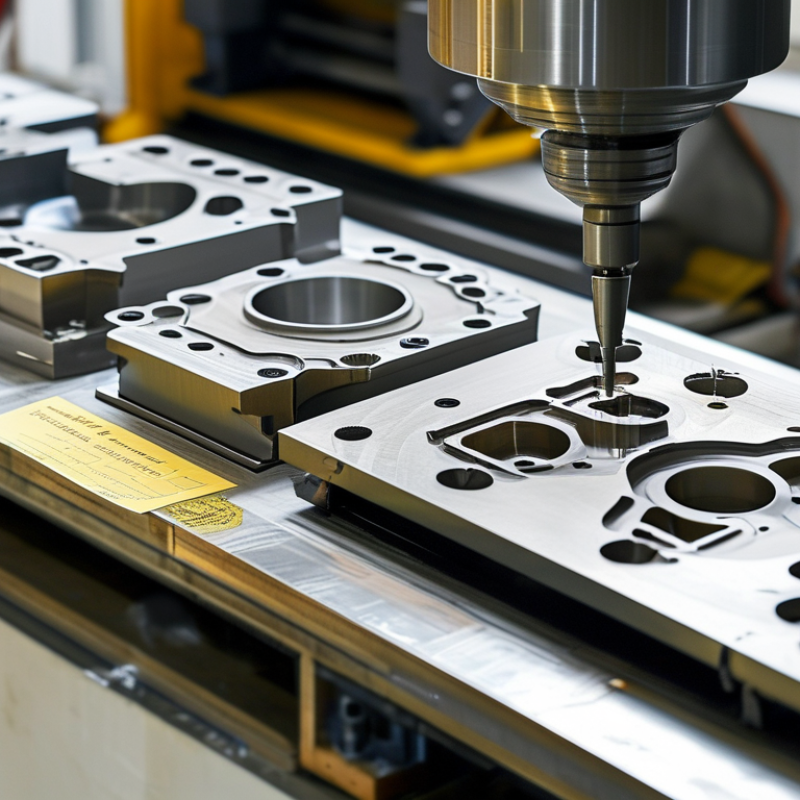
Injection mold manufacturers design and build the tooling that converts molten plastic into repeatable components. Their role extends beyond cutting steel. They translate a product drawing into a manufacturable cavity, considering wall thickness, draft angles, cooling paths, shrinkage, and ejection forces.
Industry demand makes this work strategically important. PlasticsEurope reported 413.8 million tonnes of global plastics production in 2023. A 2024 Grand View Research assessment also valued the injection-molded plastics market at more than 280 billion US dollars. These figures indicate scale, but they do not guarantee quality. A poorly balanced runner can create short shots, weld lines, or uneven packing, even when the machine settings look correct.
In practical mold development, manufacturers use flow analysis, CNC machining, electrical discharge machining, polishing, and dimensional inspection. A capable team records steel certificates, cavity measurements, trial results, and corrective actions. It also plans maintenance, because a damaged cooling channel can quietly increase cycle time and scrap. The real test appears on the shop floor.
A perfect first trial is uncommon. That matters.
Experienced engineers compare simulation results with actual parts, then revise gates, vents, or cooling layouts. They also question the drawing when tolerances seem unnecessarily strict. ISO 9001-based quality systems can improve traceability, but paperwork cannot replace skilled observation. The best manufacturer acts as a technical partner, reducing production risk before thousands of parts enter the line. Sometimes, the most valuable contribution is identifying a design assumption that looked correct but was never tested.
Comparing global injection mold manufacturers requires more than checking quoted prices. Experienced buyers examine process control, engineering depth, and delivery evidence. A mold may look inexpensive, yet poor venting can create flash, burn marks, and repeated production stops.
Start with measurable capability. Ask for tolerance records, steel certificates, mold-flow analysis, and inspection reports from coordinate-measuring machines. ISO 9001 certification supports quality discipline, but it does not replace process audits. According to MarketsandMarkets, the global injection molding market is projected to grow from about USD 190 billion in 2023 to more than USD 260 billion by 2028. Rising demand makes capacity verification important. Review machine availability, toolroom equipment, maintenance schedules, and backup production plans. Small details matter. Can the supplier explain cooling-channel design clearly?
Total cost should include engineering changes, sampling, packaging, shipping, maintenance, and expected mold life. Grand View Research identifies automotive, electronics, medical, and consumer products as major demand areas, each requiring different precision and validation practices. A medical component may require tighter documentation than a household enclosure. The cheapest quotation is rarely the safest benchmark.
Lead time also needs evidence. Request a stage-by-stage schedule, not one optimistic delivery date. Compare first-trial timing, correction cycles, spare-part support, and response speed after approval. Sustainability deserves a place on the scorecard; the International Energy Agency reports that manufacturing efficiency remains closely linked to energy reduction and emissions control. No scorecard is perfect. I would still weight defect history above polished presentations, because real production exposes weaknesses quickly.
A practical evaluation framework for comparing injection mold suppliers without relying on company or brand data. The weighting reflects the main technical, operational, and quality factors commonly used in global mold sourcing.
Dimensional accuracy, mold life, delivery performance, engineering capability, quality systems, cost competitiveness, and international support are key criteria when assessing a global injection mold manufacturer. Higher percentages indicate greater evaluation importance.
Injection mold manufacturing varies by region because production priorities, materials, and supply networks differ. East Asia remains strong in high-volume tooling, precise inserts, and fast production cycles. Manufacturers there often support automotive, electronics, medical, and household applications. Their workshops may combine high-speed machining with automated electrode and inspection systems. A polished cavity is not enough. Cooling design, steel selection, and maintenance access affect real output.
European manufacturers often emphasize engineering validation, traceability, and long service life. They commonly manage complex molds for technical polymers, thin walls, and demanding surface finishes. Regional suppliers in North America typically focus on close customer collaboration, rapid sampling, and replacement support. This can reduce delays when design changes appear late. Still, regional strengths are not universal. A capable factory can miss a delivery window, while a smaller shop may solve a difficult tolerance problem faster.
When comparing manufacturers by region, buyers should review trial-shot data, dimensional reports, steel certificates, and documented process controls. Ask how the team handles warpage, flash, cooling imbalance, and spare-part availability. A remote audit can reveal less than an in-person visit. That limitation matters. Reliable communication also deserves measurement: response time, drawing revision control, and corrective-action records show operational maturity. Cost remains important, but an inexpensive mold may require repeated adjustments and create expensive downtime. Regional experience helps, yet each project needs evidence, not assumptions.
Injection mold manufacturers serve far more than automotive production. Their tooling supports medical devices, consumer electronics, packaging, appliances, and industrial equipment. Each sector demands different mold features, materials, and validation methods.
Automotive molds often create dashboards, grilles, battery housings, and interior panels. Medical mold makers produce syringe components, diagnostic casings, and surgical instrument parts. These projects require clean production areas, precise tolerances, and documented inspections. Electronics manufacturers need molds for thin phone covers, connectors, switches, and sensor housings. Packaging specialists commonly build molds for caps, containers, and dispensing systems. The best suppliers understand resin flow, cooling balance, shrinkage, and cycle-time control. They also test sample parts before approving full production.
Tips: Ask for material experience, inspection records, tool-maintenance plans, and sample dimensions. Request details about mold life and replacement-part support.
A reliable evaluation should include more than price. Review design feedback, communication speed, machining capability, and corrective-action procedures. Factory visits can reveal practical details, such as clean assembly benches and organized spare-part storage. Yet even experienced mold makers can miss a minor draft issue. That weakness deserves honest discussion, not polished promises. Product quality depends on the mold, molding process, resin choice, and operator training. A supplier that explains limitations clearly may offer more dependable long-term value.
| Industry Served | Typical Products | Common Mold Types | Frequently Processed Materials | Key Technical Requirements | Typical Secondary Operations | Common Quality or Compliance Frameworks |
|---|---|---|---|---|---|---|
| Automotive | Instrument panels Door trim Lighting components Under-hood parts | Large single-face molds, family molds, insert molds, two-shot molds, and gas-assist-compatible molds | Polypropylene, ABS, polyamide, polycarbonate, POM, thermoplastic elastomers, and glass-fiber-reinforced engineering plastics | High dimensional stability, visible-surface control, warpage reduction, balanced filling, and long production life | Painting, plating, laser marking, heat staking, assembly, and in-mold decoration | Automotive quality systems such as IATF 16949 are commonly relevant, together with customer-specific validation requirements |
| Consumer Electronics | Device housings Connectors Buttons Wearable components | Precision multi-cavity molds, insert molds, micro-feature molds, and overmolding tools | ABS, polycarbonate, polyamide, PBT, liquid silicone rubber, thermoplastic elastomers, and flame-retardant grades | Fine texture replication, tight tolerances, thin-wall filling, cosmetic control, and efficient cycle times | Printing, coating, laser engraving, ultrasonic welding, and subassembly | ISO 9001 is commonly used for quality management; electrical safety and material flammability requirements may also apply |
| Medical Devices | Syringe components Diagnostic housings Drug-delivery parts Laboratory consumables | High-cavitation precision molds, cleanroom-compatible molds, unscrewing molds, and insert molds | Polypropylene, polycarbonate, cyclic olefin polymers, polyether ether ketone, polyamide, and medical-grade elastomers | Particle control, repeatability, traceability, validated processes, burr prevention, and compatibility with sterilization methods | Assembly, ultrasonic welding, sterilization, vision inspection, and automated packaging | ISO 13485 is commonly relevant; product and process requirements depend on the device classification and market |
| Packaging | Caps and closures Thin-wall containers Dispensers Preforms | High-cavitation molds, stack molds, thin-wall molds, hot-runner molds, and unscrewing molds | Polypropylene, polyethylene, polyethylene terephthalate, polystyrene, and cyclic olefin materials | High output, short cycle times, consistent sealing surfaces, low part weight, and accurate thread geometry | Labeling, lining, closure assembly, leak testing, and automated inspection | Food-contact, pharmaceutical-packaging, and recycling-related requirements may apply according to the end use |
| Household Appliances | Control panels Handles Interior liners Structural housings | Large-part molds, family molds, insert molds, two-shot molds, and texture-surface molds | ABS, polypropylene, polystyrene, polyamide, polycarbonate, PBT, and glass-fiber-reinforced compounds | Large-part flatness, structural strength, surface texture, dimensional consistency, and efficient cooling | Foam bonding, printing, coating, assembly, and functional testing | ISO 9001 is commonly used, while electrical, thermal, and chemical safety requirements vary by product |
| Electrical and Power Equipment | Terminal blocks Switch housings Cable accessories Insulating components | Precision multi-cavity molds, insert molds, overmolding tools, and hot-runner molds | Polyamide, PBT, polycarbonate, thermoset compounds, polypropylene, and flame-retardant engineering plastics | Electrical insulation, flame resistance, creepage-distance control, insert positioning, and repeatable cavity filling | Terminal insertion, crimping, ultrasonic welding, electrical testing, and automated inspection | Material flammability classifications and electrical product standards are commonly specified by the application |
| Industrial Equipment | Pump components Valve bodies Machine covers Fluid-handling parts | Insert molds, reinforced-plastic molds, complex-core molds, and low-to-medium-cavitation production tools | Polyamide, POM, PBT, polypropylene, polycarbonate, polyurethane, and fiber-reinforced thermoplastics | Wear resistance, pressure resistance, dimensional stability, controlled shrinkage, and reliable mechanical performance | Machining, assembly, sealing, pressure testing, and functional inspection | ISO 9001 is common; application-specific pressure, chemical-resistance, and safety requirements may apply |
| Building and Construction | Pipe fittings Drainage components Insulation accessories Window hardware | Large-component molds, core-back molds, unscrewing molds, and multi-cavity fitting molds | Polyvinyl chloride, polypropylene, polyethylene, ABS, polyamide, and glass-fiber-reinforced materials | Long-term durability, pressure resistance, weatherability, thread accuracy, and stable dimensional performance | Gasket insertion, cutting, assembly, pressure testing, and visual inspection | Building-product, plumbing, fire-performance, and environmental requirements depend on the destination market |
| Food-Service Products | Reusable containers Utensils Trays Dispensing components | Multi-cavity molds, thin-wall molds, stack molds, and molds designed for easy part ejection | Polypropylene, polyethylene, polystyrene, polycarbonate, polyethylene terephthalate, and food-contact elastomers | Food-contact material compatibility, smooth surfaces, low contamination risk, balanced filling, and high productivity | Printing, labeling, sealing, leak testing, and automated packing | Food-contact regulations and migration limits vary by region, material, and intended use |
| Personal Care and Cosmetics | Caps and pumps Dispensing closures Cosmetic containers Applicators | High-cavitation molds, unscrewing molds, two-shot molds, and precision hot-runner molds | Polypropylene, polyethylene, ABS, SAN, PCTG, polycarbonate, and thermoplastic elastomers | Appearance quality, thread accuracy, sealing performance, color consistency, and reliable actuation | Metallization, coating, printing, labeling, pump assembly, and leak testing | Cosmetic-packaging, chemical-compatibility, and consumer-safety requirements may apply according to the formulation |
| Sports and Recreation | Protective equipment Handles and grips Training accessories Outdoor components | Overmolding tools, two-shot molds, insert molds, large-part molds, and textured-surface molds | Polypropylene, ABS, polycarbonate, polyamide, thermoplastic polyurethane, and silicone rubber | Impact resistance, ergonomic surfaces, flexible-to-rigid bonding, weather resistance, and repeatable assembly fit | Foam bonding, printing, assembly, coating, and mechanical testing | Product-specific impact, chemical, wear, and consumer-safety requirements are commonly applied |
| Renewable Energy and Battery Systems | Battery housings Electrical connectors Energy-system brackets Cable-management parts | Insert molds, overmolding tools, precision multi-cavity molds, and molds for reinforced engineering plastics | Polyamide, PBT, polycarbonate, polypropylene, thermoplastic elastomers, and flame-retardant compounds | Electrical insulation, thermal stability, dimensional control, sealing, chemical resistance, and high-strength inserts | Busbar insertion, sealing, welding, electrical testing, and leak testing | Electrical, fire-safety, environmental, and transport requirements depend on the specific energy application |
The table summarizes established applications, mold technologies, material classes, and compliance considerations commonly handled by major injection mold manufacturers worldwide; exact capabilities vary by supplier and project.
Injection mold manufacturing is moving from a toolmaking discipline toward a data-led production service. Global leaders are judged by repeatability, not polished catalogs. In plant audits, practical signals include stable cavity dimensions, documented steel treatment, and clear maintenance records. A mold that runs 500,000 cycles reliably often matters more than a low quotation. Shorter development schedules are also changing supplier selection. Engineers now expect design-for-manufacturing feedback before cutting steel, especially for thin walls, threads, and tight tolerances.
Digital simulation is becoming standard across complex projects. Flow analysis can reveal air traps, weld lines, and uneven filling before machining begins. Sensors inside presses and molds add evidence about pressure, temperature, and cycle drift. Yet data is not magic. Poor calibration can create confident but misleading reports. This remains an uncomfortable weakness. Experienced teams still compare software results with trial runs, measured parts, and technician observations.
Sustainability is reshaping material and cooling decisions. Manufacturers are testing recycled resins, lower-waste runners, and conformal cooling channels made through advanced processes. Energy use per cycle is receiving closer attention, particularly in high-volume automotive, medical, and consumer applications. Regional sourcing is growing as customers seek shorter logistics routes and stronger supply continuity. Reliable manufacturers also document validation, dimensional inspection, and change control. Still, no supplier gets every variable right. Skilled technicians must interpret results, correct tool wear, and question automated recommendations. That human judgment may be less visible, but it remains decisive.