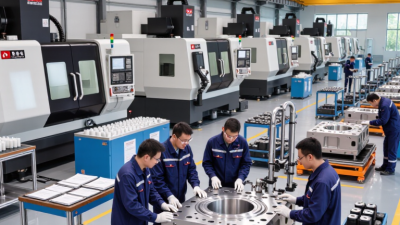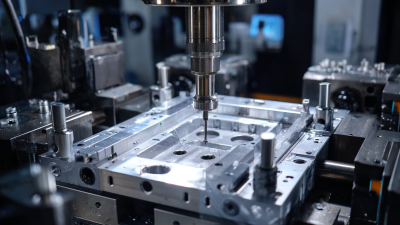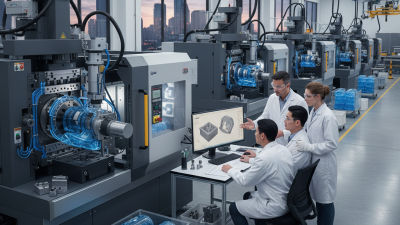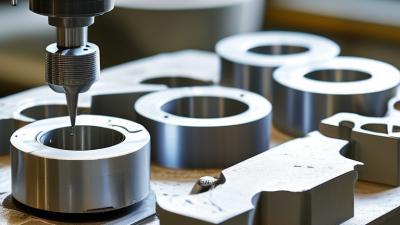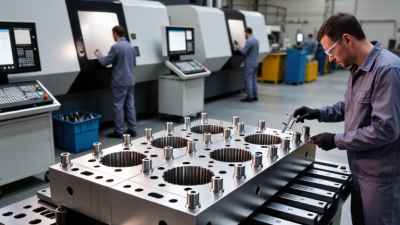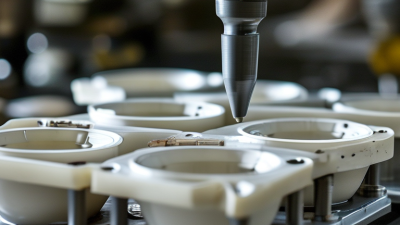
A molding tool is the shaped hardware that turns molten or softened material into a repeatable product. It may form a bottle cap, medical housing, automotive clip, or transparent lens. The tool usually contains a cavity, core, runners, gates, cooling channels, and an ejection system. Together, these parts control shape, filling, cooling, and release. The process looks simple. It is not.
The scale is significant. PlasticsEurope’s Plastics—the Fast Facts 2024 reports global plastics production reached 413.8 million tonnes in 2023. A large share of these materials requires controlled forming, including injection, compression, blow, and rotational molding. Industry forecasts also show continued demand for injection molding equipment, especially in packaging, electronics, healthcare, and transportation. However, market growth does not guarantee good tooling decisions.
A molding tool works by guiding material under controlled pressure and temperature. In injection molding, a machine fills the cavity, while cooling channels remove heat. The material then contracts, and ejector pins release the finished part. Small changes matter. A blocked cooling channel can create warpage. A poorly placed gate can leave visible marks or weak weld lines. ISO 20457 provides guidance for plastics moulded parts and dimensional tolerances, but standards cannot replace practical validation.
Experienced toolmakers inspect flow behavior, steel selection, maintenance access, and expected production volume. They also question the first design. A tool that succeeds during a short trial may perform poorly after thousands of cycles. That uncomfortable gap deserves attention. Understanding how a molding tool works helps engineers balance appearance, strength, cost, cycle time, and long-term reliability.
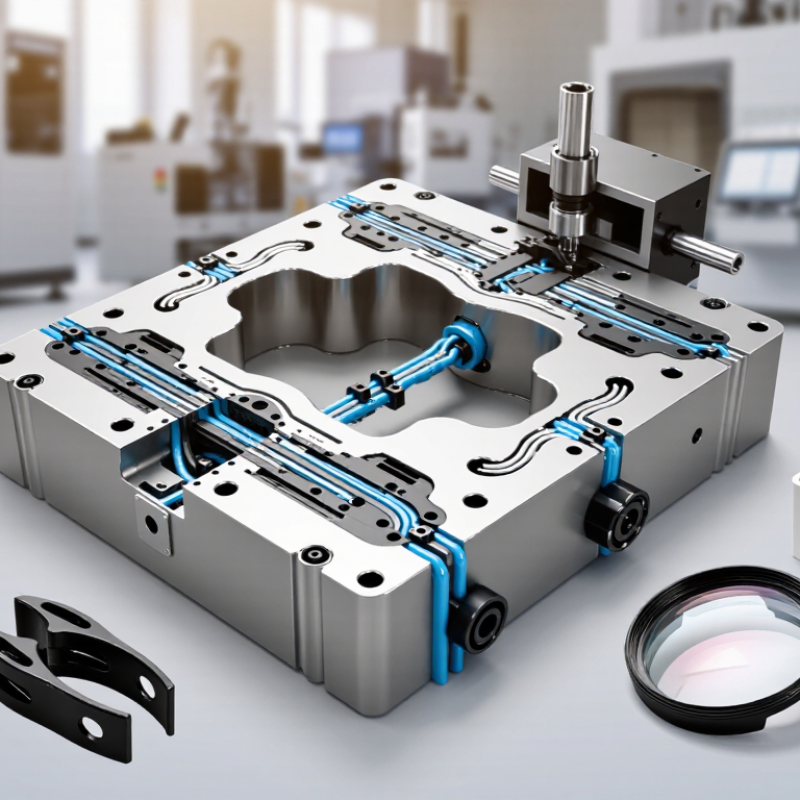
A molding tool is a shaped device used to form materials into repeatable parts. Its main purpose is to give liquid, soft, or heated material a precise shape. It turns a design drawing into a physical object. Think of it as a temporary container with a very specific interior. The final surface often reflects that cavity. Precision matters.
During production, material enters the tool through a controlled opening. Heat, pressure, and cooling help the material fill the cavity correctly. The cavity defines the outside shape, while the core can create holes or internal spaces. After the material hardens, the tool opens or releases the finished part. Some tools use ejector pins, slides, or removable inserts. The cycle then repeats under carefully measured conditions.
A molding tool also supports consistency, efficiency, and surface quality. A well-designed tool can reduce waste and shorten production time. It must withstand repeated pressure, temperature changes, and mechanical movement. Uneven cooling may cause warping, visible marks, or weak areas. That defect may appear small but affect assembly later. Technicians inspect dimensions, vents, edges, and release points during testing. Still, no tool is perfect. A minor alignment error can expose a larger design weakness. For that reason, experienced teams adjust the tool after observing real production results, not only computer predictions.
A molding tool is a precision assembly that shapes heated material inside a controlled cavity. Its structure usually includes a mold base, cavity plates, core inserts, guide pins, and clamping surfaces. The cavity forms the product’s outside shape. The core creates internal features, such as holes, ribs, or channels. Alignment matters. Even a slight mismatch can leave a visible flash line on the finished part.
Material enters through the sprue, runner, and gate system. These passages guide the flow into the cavity at a planned speed. Cooling channels circulate fluid near the forming surfaces. Cooling decides quality. Uneven temperatures may cause warping, sink marks, or difficult release. Vents allow trapped air to escape, although very small vents are easy to overlook during design reviews. Experienced technicians check them near sharp corners and deep ribs.
After solidification, the ejector system pushes the part from the core using pins, sleeves, or a lifting plate. Guide systems keep both mold halves moving together during repeated cycles. In practice, a tool may perform well on paper but require adjustment after trial production. Gate marks, cooling time, and ejection force often reveal problems that drawings cannot show. A highly polished surface does not fix poor ventilation or unbalanced filling. Reliable results come from accurate machining, careful inspection, controlled testing, and honest revision when the first design is not enough.
A molding tool is a precision cavity that shapes heated polymer into a repeatable part. Its performance depends on steel quality, cooling layout, venting, and process control.
The cycle begins when the clamping unit closes the mold halves. The machine then melts polymer pellets inside a heated barrel. A screw pushes the melt through the nozzle and into the cavity. Injection speed must fill narrow ribs without trapping excess air. Packing pressure follows. It compensates for shrinkage while the material loses heat. Coolant moves through internal channels, often around the thickest sections. When the part becomes rigid, the mold opens. Ejector pins release it onto a conveyor or inspection tray. Workers check flash, sink marks, short shots, and warpage. Small defects often reveal larger process problems.
PlasticsEurope reported 413.8 million tonnes of global plastics production in 2023. That volume shows why stable molding cycles matter. Industry analysis from Grand View Research also projects continued growth in injection-molded plastics through 2030. However, output alone proves little. A faster cycle can create more rejects. A polished tool may still hide an uneven cooling path. No simulation replaces a measured trial.
Tips: Record cavity pressure, mold temperature, cooling time, and part weight. Adjust one variable at a time. Keep vents clean. Inspect early samples closely. Perfect cycles are rare. Even experienced teams need reflection after every trial.
A molding tool is a shaped cavity that forms plastic, rubber, metal, or composite material under controlled pressure and temperature. In practical workshops, its performance depends on cavity accuracy, cooling channels, surface finish, and maintenance. The choice matters.
Injection molds are common for housings, medical components, and automotive parts. They usually use hardened steel for long production runs, while aluminum supports faster machining and lower initial cost. Compression molds apply heat and pressure to materials such as rubber, silicone, and thermosets. They often use steel because repeated thermal cycling can damage weaker materials. Blow molds create hollow bottles and tanks, commonly from polyethylene or PET. Rotational molds use powdered polymers and produce large, seamless parts. Thermoforming tools shape heated plastic sheets over a cavity. Aluminum is widely used because it transfers heat efficiently.
Material selection is rarely simple. Tool steel offers wear resistance, but it increases machining time and weight. Aluminum cools quickly, yet its surfaces may suffer earlier under abrasive compounds. Copper alloys can improve heat removal in difficult areas, although their cost and softness require careful design. According to PlasticsEurope’s Plastics—The Fast Facts 2024, global plastics production reached about 413.8 million tonnes in 2023. That scale increases demand for reliable tooling, but production volume alone should not decide the tool material. Part geometry, resin additives, cycle time, and repair access matter too. Small design assumptions can become expensive defects.
| Molding Tool Type | How It Works | Typical Tool Materials | Common Molded Materials | Typical Applications | Main Advantages | Key Considerations |
|---|---|---|---|---|---|---|
| Injection Mold | Molten material is injected under pressure into a closed cavity, cooled or cured, and then ejected. | Hardened or pre-hardened tool steel, stainless steel, aluminum, and copper-alloy inserts. | Thermoplastics, thermosets, and some liquid silicone rubbers. | Housings, caps, connectors, medical parts, automotive components, and consumer products. | High production speed, repeatable dimensions, and the ability to create complex geometries. | High initial tooling cost; proper cooling, venting, shrinkage control, and draft angles are required. |
| Compression Mold | A measured charge is placed in a heated cavity and compressed between mold halves until it cures or consolidates. | Tool steel, stainless steel, nickel alloys, and aluminum for lower-volume or lower-temperature tooling. | Thermosetting compounds, rubber, composite prepregs, and sheet molding compounds. | Electrical housings, seals, gaskets, composite panels, and structural components. | Suitable for reinforced materials and produces relatively low material waste. | Longer cycle times than injection molding; flash and charge placement must be controlled. |
| Transfer Mold | Material is loaded into a separate chamber and forced through gates into one or more heated cavities. | Hardened tool steel, pre-hardened steel, and corrosion-resistant steel. | Thermosetting plastics, rubber compounds, and encapsulation materials. | Electronic encapsulation, insert molding, seals, and parts with metal inserts. | Better control around inserts and more complex shapes than basic compression molding. | Material waste can increase because of the transfer chamber and runners; tooling is more complex. |
| Blow Mold | A heated tube or preform is placed in a cavity and expanded against the mold walls with compressed air. | Aluminum, tool steel, stainless steel, and nickel-plated tooling surfaces. | Blow-molding thermoplastics such as polyethylene, polypropylene, PET, and PVC. | Bottles, containers, fuel tanks, ducts, and hollow industrial parts. | Efficient production of hollow, lightweight parts with relatively uniform walls. | Wall-thickness distribution, parison control, cooling, and pinch-off design affect quality. |
| Rotational Mold | A measured amount of polymer powder or liquid is heated inside a hollow mold while the mold rotates around two axes. | Aluminum, cast aluminum, steel, and electroformed nickel. | Polyethylene and selected other rotational-molding thermoplastics. | Tanks, bins, playground equipment, kayaks, road barriers, and large hollow products. | Low tooling pressure, relatively inexpensive molds, and large seamless hollow parts. | Longer cycles, limited material selection, and less precise dimensional control than injection molding. |
| Thermoforming Mold | A heated plastic sheet is drawn over or into a mold using vacuum, air pressure, or mechanical force. | Aluminum, epoxy tooling board, composite materials, and steel for high-volume production. | ABS, HIPS, PET, PVC, polycarbonate, and other thermoformable sheet materials. | Packaging trays, appliance liners, vehicle interior panels, and protective covers. | Short development time, relatively low tooling cost, and economical production of large panels. | Sheet thinning, webbing, trimming waste, and limited detail on the mold side not directly formed. |
| Die-Casting Die | Molten nonferrous metal is injected at high pressure into a reusable metal die and solidifies rapidly. | Hot-work tool steel, often supported by heat-resistant inserts and cooling channels. | Aluminum, zinc, and magnesium alloys. | Engine housings, brackets, gear cases, appliance components, and structural castings. | High production rates, thin walls, good surface finish, and repeatable metal parts. | High die cost, thermal fatigue, porosity risk, and restrictions on alloy selection. |
| Silicone Rubber Mold | Liquid silicone is poured around a master pattern, cured, and then removed to form a flexible reusable mold. | Room-temperature-vulcanizing silicone rubber, sometimes reinforced with a rigid support shell. | Polyurethane, epoxy, plaster, wax, low-temperature resins, and certain casting silicones. | Prototypes, concept models, artistic castings, and short-run parts. | Captures fine detail, allows easy demolding, and requires relatively low tooling investment. | Limited mold life, lower dimensional stability, and unsuitable for high-pressure or high-temperature production. |
Note: Tool selection depends on the part geometry, production volume, molding temperature and pressure, required surface finish, dimensional tolerances, and material behavior.
What Is a Molding Tool and How Does It Work?
Applications, Maintenance, and Service Life of Molding Tools
A molding tool shapes molten or softened material inside a controlled cavity. In injection molding, the tool includes cavities, cores, cooling channels, gates, and an ejection system. These parts control dimensions, surface finish, cycle time, and safe part release. Applications range from automotive housings and medical components to closures, electrical parts, and daily-use containers. Each application demands a different balance between precision, output, material behavior, and tooling cost. A narrow rib may need careful steel support. That detail matters.
Reliable maintenance begins with inspection, not emergency repair. Operators should check vents, parting surfaces, slides, ejector pins, and cooling lines at planned intervals. Residue can block a vent and create burns, short shots, or unstable filling. Water deposits can reduce cooling efficiency and extend every cycle. Technicians should clean approved surfaces, lubricate moving components, and record wear measurements. Torque, alignment, and temperature records make troubleshooting more objective. Still, maintenance schedules are not universal. Material, production volume, and tool design change the interval.
Service life depends on steel selection, cycle pressure, resin additives, and operator discipline. A well-maintained tool may produce millions of cycles, while abrasive materials can shorten that figure significantly. Early warning signs include flash, uneven gloss, rising ejection force, and dimensional drift. Ignoring these signals often turns a small repair into a costly rebuild. In practical shop work, visual checks catch problems early, but they are insufficient alone. Critical tools need dimensional inspection, cooling-flow tests, and preventive servicing. No schedule is perfect. Production pressure can expose gaps. Replacement is not always failure. Sometimes, redesigning a worn insert improves reliability more than extending its use.
A molding tool is a precision-machined mold used to shape molten plastic or other materials under controlled pressure and temperature. Its service life depends on material selection, production volume, operating conditions, cleaning, lubrication, and preventive maintenance.
The chart shows typical preventive-maintenance intervals expressed in production cycles. Actual intervals vary with resin abrasiveness, mold complexity, clamping force, temperature, corrosion risk, and tool-steel quality.