China Top Molding Tool Manufacturers and Suppliers?
China has become a major sourcing hub for precision molding tool production. Its suppliers serve automotive, medical, electronics, packaging, and consumer product markets. However, choosing a reliable partner requires more than comparing online prices.
As injection-molding educator John Bozzelli puts it, “The mold is the heart of the injection molding process.” This practical view explains why tool design affects every later stage. Poor cooling channels can leave sink marks. Weak steel may cause early wear. An inaccurate parting line can create flash and costly rework.
A dependable Chinese molding tool manufacturer should demonstrate measurable capabilities. Look for DFM reports, material certificates, CMM inspection records, and documented mold trials. ISO 9001 certification can support quality management, but it cannot replace technical evidence. Ask whether the supplier has built similar tools for your material, production volume, and tolerance requirements.
Factory experience matters.
During an audit, inspect the machining area, assembly benches, and toolroom discipline. Check how workers label components and record changes. A clean workshop does not guarantee perfect results, but poor traceability creates avoidable risks. Request sample parts from a completed project, not only attractive product photographs.
No supplier is perfect. Even a strong manufacturer may underestimate cooling complexity or revise a delivery date. That is why clear acceptance criteria, spare-part planning, and trial approval should appear in the contract.
This guide compares leading China molding tool manufacturers and suppliers through practical criteria. It considers engineering support, tooling quality, communication, lead time, after-sales service, and total ownership cost. The ranking may not fit every buyer. Your resin, geometry, annual volume, and risk tolerance still matter most.
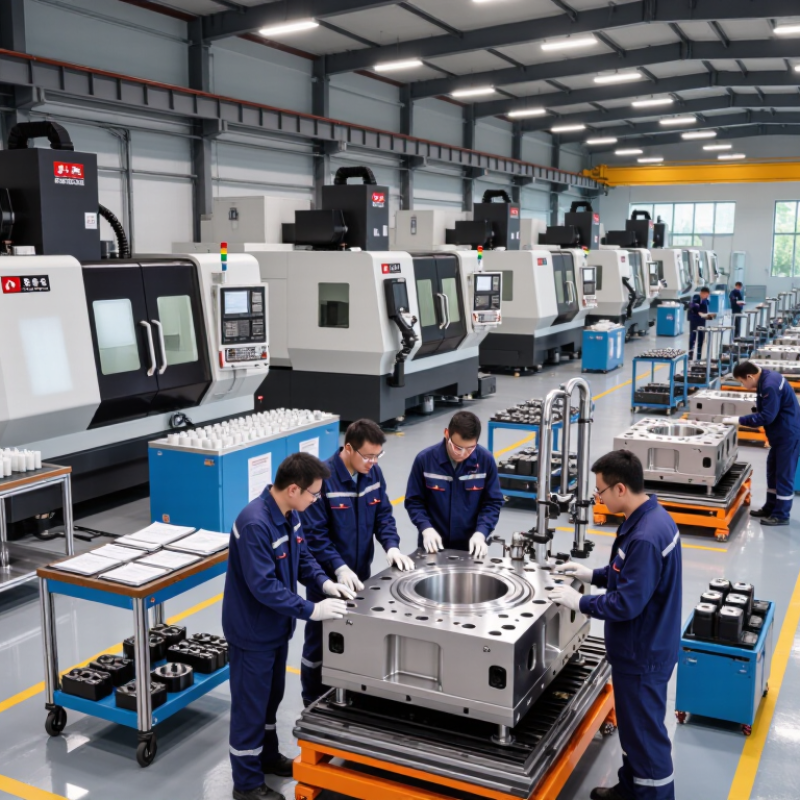
Molding tools are engineered systems that shape molten material into repeatable parts. They include cavities, cores, runners, cooling channels, and ejector mechanisms. Each feature affects dimensions, surface finish, cycle time, and production stability. In practical manufacturing, a tool is not merely a steel block. It is a controlled process.
Their importance is clear in current market data. Grand View Research estimated the global injection molded plastics market at approximately USD 206 billion in 2023. Its report expects continued growth through 2030, driven by automotive, medical, electronics, and consumer applications. Such volume demands dependable tooling. A poorly balanced runner can create uneven filling, visible weld lines, or excessive material waste. Small errors become expensive when repeated thousands of times.
Tool design also influences energy use and maintenance. A 2024 industry analysis from MarketsandMarkets identifies cooling performance, automation, and precision manufacturing as major molding technology trends. Efficient cooling can shorten cycles, but faster is not always better. I have seen production teams prioritize speed, then discover warped parts and higher rejection rates. That mistake is easy to repeat. Toolmakers should validate steel selection, venting, shrinkage allowances, and cooling layouts before cutting metal. Simulation helps, but it cannot replace experienced inspection and measured trials. Even a polished design may need revision after the first production run.
A practical comparison of common molding tools, materials, applications, performance factors, and supplier evaluation criteria.
| Molding Tool Type | Primary Process | Typical Tool Materials | Common Applications | Main Advantages | Important Limitations | Typical Production Volume | Why It Matters |
|---|---|---|---|---|---|---|---|
| Injection Mold | Plastic injection molding | Pre-hardened steel, hardened steel, aluminum | Automotive components, housings, medical parts, consumer products | High repeatability, complex geometries, fast cycle times, suitable for automation | High initial tooling cost; design changes can be expensive after machining | Medium to very high volumes | Controls part shape, dimensions, surface finish, and production consistency |
| Compression Mold | Compression molding | Tool steel, stainless steel, aluminum | Rubber seals, electrical components, thermoset parts, composite panels | Suitable for thermosets and fiber-reinforced materials; relatively simple tooling | Longer cycles than many injection processes; flash and material waste may require control | Low to high volumes | Provides controlled pressure and heat distribution for durable molded products |
| Blow Mold | Extrusion or injection blow molding | Aluminum, tool steel, stainless steel | Bottles, containers, tanks, ducts, hollow technical parts | Efficient production of hollow parts; good dimensional repeatability | Wall-thickness control can be demanding; limited mainly to hollow forms | Medium to very high volumes | Defines container capacity, neck geometry, wall thickness, and sealing surfaces |
| Die-Casting Mold | High-pressure die casting | Hot-work tool steel with heat treatment | Aluminum and zinc alloy housings, brackets, structural components | Fast cycles, thin walls, good surface quality, near-net-shape production | High thermal and mechanical stress; specialized venting and cooling are required | Medium to very high volumes | Maintains casting accuracy and helps manage heat, pressure, porosity, and tool life |
| Transfer Mold | Transfer molding | Hardened tool steel, corrosion-resistant steel | Encapsulated electronics, rubber parts, thermoset components | Good control of inserts and intricate shapes; supports multi-cavity production | Tooling and process setup are more complex than basic compression molding | Medium to high volumes | Positions inserts accurately and distributes material into detailed cavities |
| Prototype Mold | Prototype injection or low-volume molding | Aluminum, soft steel, hybrid inserts | Design validation, pilot runs, fit testing, market samples | Shorter development time and lower upfront cost than full production tooling | Limited service life and lower resistance to abrasive or highly reinforced materials | Prototype to low volumes | Reduces design risk before investment in production-grade tooling |
| Evaluation Dimension | What to Check | Recommended Evidence | Business Impact |
|---|---|---|---|
| Engineering Capability | Parting lines, draft angles, cooling, venting, shrinkage, and ejection design | Design reviews, mold-flow analysis, drawings, and documented revision control | Fewer defects, less rework, and more predictable production |
| Material Selection | Steel grade, hardness, corrosion resistance, thermal conductivity, and wear resistance | Material certificates, heat-treatment records, and hardness reports | Determines tool life, maintenance frequency, and part quality |
| Machining Accuracy | CNC machining, electrical discharge machining, polishing, and dimensional inspection | Coordinate-measuring-machine reports and inspection plans | Improves fit, interchangeability, and dimensional consistency |
| Quality Management | Incoming inspection, process control, trial approval, and corrective-action procedures | Quality certificates, inspection records, and sample approval reports | Reduces production interruptions and nonconforming parts |
| Testing and Validation | Trial shots, process windows, cycle-time checks, and dimensional validation | Trial reports, approved samples, process parameters, and defect analysis | Confirms that the tool performs under realistic manufacturing conditions |
| Maintenance Support | Spare parts, preventive maintenance guidance, repair response, and technical documentation | Maintenance schedules, spare-part lists, service terms, and repair procedures | Extends service life and minimizes unexpected downtime |
| Communication and Delivery | Milestone planning, change management, packaging, shipping, and response time | Project schedules, progress reports, packaging specifications, and acceptance criteria | Helps control launch timing, logistics risk, and total project cost |
China’s molding tool industry is organized as a connected production network. Steel mills and material distributors supply mold bases, inserts, and specialized alloys. Standard-component producers provide guide pins, ejectors, cooling fittings, and other repeatable parts. Tool workshops then combine these elements with CAD design, CNC machining, electrical discharge machining, and polishing.
Many manufacturers specialize by process or product type. Some focus on injection molds for household parts, while others serve automotive, medical, packaging, or electronic applications. Engineering teams usually manage mold flow studies, tolerance checks, cooling layouts, and trial production. Independent inspection teams may verify hardness, dimensions, surface quality, and cycle performance. This separation improves control, although communication gaps can still cause delays.
Tips: Request material certificates, machining records, trial reports, and a clear maintenance plan. Ask who controls design changes and who owns the final drawings. A factory visit can reveal practical details, such as machine capacity, inspection habits, and storage conditions. Supplier directories are useful, but they are not proof of capability. Samples may look excellent while internal cooling channels remain poorly designed. Even experienced buyers can overlook this point. A reliable partnership needs measurable standards, documented feedback, and realistic deadlines rather than attractive promises.
China’s molding tool suppliers are commonly organized around downstream sectors such as automotive, consumer electronics, appliances, medical devices, and general industrial products. Automotive manufacturing is a major demand anchor, with new-energy vehicles becoming an increasingly important source of tooling requirements.
Data: China Association of Automobile Manufacturers (CAAM), vehicle production in 2022–2024. Conventional vehicle production is calculated as total vehicle production minus new-energy vehicle production. Units: million vehicles.
China’s molding tool sector includes several supplier types, each serving a different production need. Custom mold manufacturers design and build injection molds for plastic parts, often managing steel selection, machining, polishing, and trial runs. Standard component suppliers provide mold bases, ejector pins, guide systems, and cooling fittings. Some engineering companies offer design-for-manufacturing reviews before production begins. This can reduce redesigns, but not always.
Experienced buyers should examine more than price. Ask for dimensional inspection reports, material certificates, mold-flow analysis, and sample parts from recent projects. A reliable manufacturer should explain tolerances clearly and identify risks around warpage, weld lines, shrinkage, and parting surfaces. Factory visits can reveal practical details, such as machine maintenance, assembly cleanliness, and spare-part storage. A polished website proves very little. That is worth remembering.
Tips: Request a trial-shot schedule, maintenance plan, and ownership terms in writing. Compare tooling life, repair response, and communication quality, not only the initial quotation. A cheaper tool may use unsuitable steel or simplify cooling channels. I have seen attractive proposals become expensive after repeated modifications. Leave room for technical disagreement, because the first design is rarely perfect. Suppliers serving export markets should also document packaging, inspection procedures, and delivery controls.
China’s top molding tool companies compete through practical engineering, not polished catalogs alone. Experienced teams review part geometry, wall thickness, draft angles, and cooling needs before cutting steel. They often use CAD and flow simulation to identify weld lines, air traps, and uneven filling. This early review can reduce expensive revisions.
Strong manufacturers combine CNC machining, wire cutting, EDM, grinding, and skilled bench fitting. Their workshops may measure critical inserts within tight tolerances using coordinate measuring equipment. Tool steels are selected according to production volume, resin behavior, and expected wear. A high-volume automotive mold needs different protection from a short-run consumer product tool.
Cooling channels matter greatly. Poor cooling can leave visible sink marks and extend cycle times.
Reliable suppliers also control sampling and documentation. They record mold dimensions, trial results, maintenance points, and approved sample conditions. Technical staff should explain changes clearly, especially when a design cannot be manufactured as drawn. Factory visits can reveal useful details: organized electrode storage, traceable steel certificates, and technicians checking parting surfaces by hand. Still, not every impressive workshop delivers consistent production quality. A polished first sample may hide flash, unstable cycle times, or difficult maintenance. That risk deserves honest review. Experienced buyers should examine repeatability across several trials, not only the first successful part.
China Top Molding Tool Manufacturers and Suppliers: How to Evaluate and Select a Reliable Chinese Supplier
China remains a major manufacturing base. UNIDO’s International Yearbook of Industrial Statistics 2024 estimates that China produced about 31.6% of global manufacturing value added in 2022. This scale offers broad tooling capacity, but supplier quality varies. A low quotation proves little.
Ask for recent tool samples, dimensional reports, and customer-approved trial records. Review the supplier’s design workflow, steel traceability, heat-treatment documents, and mold-flow analysis. A capable team should explain gate locations, cooling channels, ejection risks, and expected tool life in clear terms. ISO’s Survey 2022 recorded over 1.26 million ISO 9001 certificates worldwide, yet certification alone cannot verify machining accuracy or project discipline.
Audit the factory remotely or in person. Check CNC machines, wire-cut equipment, CMM inspection, spare-part storage, and mold assembly areas. Request a milestone plan with design approval, steel cutting, first trial, corrections, and final acceptance. Define tolerance, surface finish, cycle time, sample quantity, and corrective-action deadlines in writing. Small details matter.
The first trial may expose hidden problems.
Use independent inspection when shipment value is significant. Ask how the supplier handles late changes, unclear drawings, and failed samples. Their answer reveals more than a polished presentation. I would also compare three quotations, not just two, because the cheapest offer may exclude polishing, validation, or engineering revisions. That comparison is imperfect. Supplier websites can be outdated, and audit visits show only one day. Keep evaluating communication after the purchase order, since responsiveness often predicts the real delivery experience.