7 Best Injection Mold Machines for Global Buyers
Global buyers compare more than purchase prices when choosing an injection mold machine. The right press must match the part, resin, production volume, and available floor space. A compact model may suit precision components, while large housings often need greater clamping force and shot capacity. These choices influence cycle time, part consistency, energy use, and waste. Small details matter. Mold access, cooling connections, and control settings can affect daily production as much as headline specifications.
This guide compares seven machine options using practical criteria: machine type, capacity, repeatability, operating efficiency, and support availability. It considers hydraulic, electric, and hybrid designs, while recognizing that specifications vary by manufacturer and configuration. Buyers should verify published data against their own mold, material, and output requirements. A supplier’s service network, spare-parts access, installation guidance, and operator training also deserve close attention, especially when equipment will be shipped overseas. Check electrical requirements and applicable local standards with qualified professionals before purchasing. No machine wins everywhere. A shortlist can still miss a plant’s real constraints, so treat these comparisons as a starting point, then confirm performance with the supplier and a representative production trial.
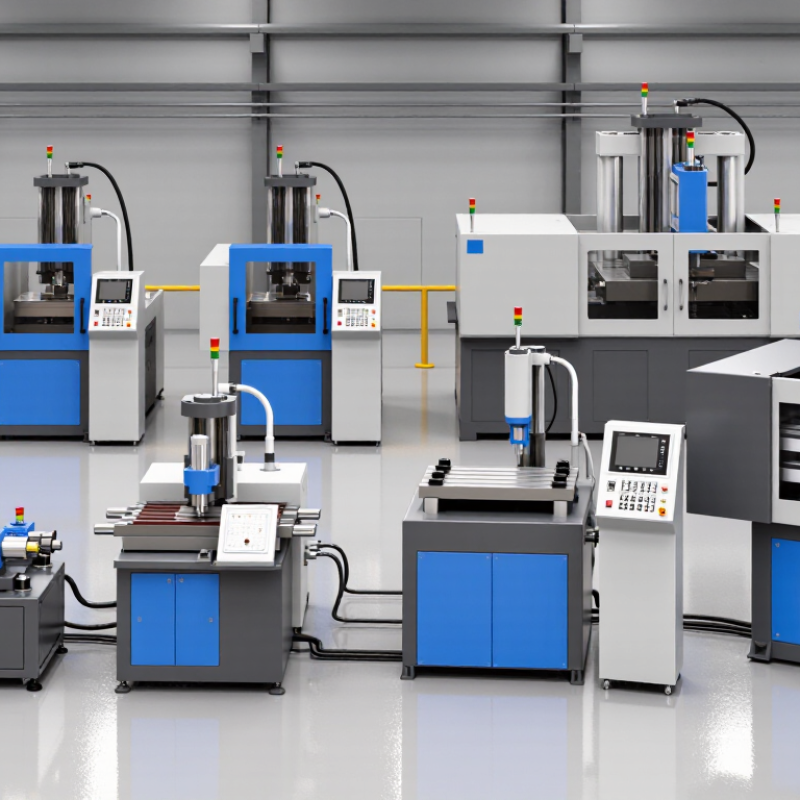
How Injection Mold Machines Work and Where They Are Used
An injection mold machine turns plastic pellets into repeatable parts through heat, pressure, and a precisely shaped mold. Pellets enter a heated barrel, where a rotating screw melts and mixes them. The screw then pushes the melt through a nozzle into a closed mold. After cooling, the mold opens and ejector pins release the part. The cycle repeats. A small temperature or pressure shift can leave sink marks, short shots, or warped edges, so operators monitor settings and inspect samples—not just the machine display.
The process serves packaging, automotive interiors, household goods, electronics, and medical components. PlasticsEurope’s Plastics—the Fast Facts 2023 report estimates global plastics production at 400.3 million tonnes in 2022, illustrating the scale of material demand behind these applications. The OECD’s Global Plastics Outlook reports that production reached 460 million tonnes in 2019, using a broader plastics accounting scope. These figures describe plastics overall, not injection molding alone. That distinction matters. For buyers, machine choice depends on part size, resin, expected cycle time, and tolerance requirements. Electric machines can offer precise motion control; hydraulic systems are often valued for high clamping force. Neither is automatically the better fit. Even a well-specified machine can waste material when mold design or process settings are overlooked.
| Machine Type | How It Works | Indicative Clamping Force | Typical Applications | Key Advantages | Buyer Considerations |
|---|---|---|---|---|---|
| Hydraulic | A hydraulic system drives the clamping unit and usually powers the screw that melts, meters, and injects plastic into the closed mold. The part cools before the mold opens and ejects it. | About 30 to 6,000+ metric tonnes, depending on configuration | General-purpose molded parts, household goods, automotive components, and larger products | Broad size range; suitable for many materials, molds, and production requirements | Compare energy use, hydraulic maintenance needs, cycle-time requirements, and local service support. |
| All-electric | Electric servo motors control key movements such as clamping, screw rotation, injection, and ejection. Plastic is melted in the barrel, injected into the mold, cooled, and ejected. | Commonly about 20 to 1,000 metric tonnes | Precision components, medical products, electronics, and clean-production applications | Precise motion control; often lower energy use than comparable conventional hydraulic machines, depending on duty cycle | Check required injection pressure, machine size, available power supply, and the supplier’s service capability. |
| Hybrid | Combines electric drives for selected movements with hydraulic systems for others. A reciprocating screw melts and injects the resin into the clamped mold, followed by cooling and ejection. | Commonly about 50 to 4,000 metric tonnes | High-volume packaging, automotive parts, technical components, and mixed production needs | Can combine precise electric control with hydraulic capability; performance depends on the design and process | Review which axes are electric or hydraulic, expected energy consumption, and maintenance requirements. |
| Two-platen | Uses two main platens and a compact clamping arrangement to close and hold the mold. The injection unit melts and pushes plastic into the mold, where it cools before opening and ejection. | Often about 1,000 to 6,000+ metric tonnes | Large automotive parts, appliance housings, crates, and other large molded components | Can provide high clamping force with a relatively compact machine footprint compared with some traditional layouts | Check mold dimensions, platen support, tie-bar spacing, floor loading, and factory access for installation. |
| Vertical insert-molding | The mold closes vertically, allowing operators or automation to place inserts before injection. Molten plastic surrounds or bonds to the insert as it fills the cavity and cools. | Often about 20 to 500 metric tonnes | Electrical connectors, threaded inserts, metal-reinforced components, and overmolded parts | Gravity can help keep inserts in position; rotary tables or shuttles can support loading and production flow | Assess insert-loading ergonomics, automation needs, mold layout, and operator safety provisions. |
| Micro-molding | Uses a small, carefully controlled shot to fill tiny cavities. Depending on the system, it may use a specialized injection unit; the mold still clamps, cools the part, and opens for ejection. | Often below 100 metric tonnes; the required force depends on projected area and cavity pressure | Small medical, electronic, optical, and precision-engineered components | Designed for accurate control of small shots and miniature features when paired with suitable tooling and process control | Confirm shot-size range, material handling, mold venting, measurement capability, and process validation needs. |
| Multi-component | Uses two or more injection units to inject different materials or colors into a mold, either in sequence or in coordinated stages. The mold is then cooled and the combined part is ejected. | Varies widely; commonly about 100 to 3,000+ metric tonnes | Two-color products, soft-touch grips, seals, and components combining rigid and flexible materials | Can create bonded or multi-color parts in one production cycle when materials and tooling are compatible | Verify material compatibility, injection-unit arrangement, mold rotation or transfer method, and setup complexity. |
| How injection molding works: Plastic resin is heated and plasticized in a barrel, then injected under pressure into a closed mold. The material cools and solidifies; the mold opens, and ejectors release the finished part. Clamping-force figures are broad, indicative ranges—not specifications—and vary by machine design, mold, material, and application. | |||||
Related Posts
-
Top 10 Plastic Mold Injection Machines to Watch in 2025
-
What is Plastic Mold Injection Machine? A Comprehensive Guide to Its Types and Applications
-
Top 10 Plastic Mold Injection Machine Solutions for Your Manufacturing Needs
-
What is an Injection Mold Machine and How Does it Work?
-
Why Choose a Plastic Injection Machine for Your Business?
-
Top 10 Injection Molding Mold Types for Global Buyers?