What Is a Recycling Machine and How Does It Work?
A Recycling Machine is more than a metal box that “makes waste disappear.” It is an engineered system that identifies, separates, processes, and prepares discarded materials for another production cycle. Its exact design depends on the material stream, required purity, and final market. A machine handling plastic bottles may use conveyors, infrared sensors, air jets, crushers, washing tanks, and pelletizers. A metal recycling line may rely on magnets, eddy-current separators, shredders, and compacting equipment.
The scale of the challenge is substantial. The World Bank’s What a Waste 2.0 report estimated 2.01 billion tonnes of municipal solid waste were generated globally in 2016, with this figure potentially reaching 3.40 billion tonnes by 2050. The OECD’s Global Plastics Outlook reported that only 9% of plastic waste was successfully recycled in 2019. These figures explain why reliable equipment matters, but they do not make recycling automatic. Contamination, moisture, mixed materials, and worn components can reduce output quality quickly.
A Recycling Machine usually begins with feeding and preliminary sorting. It then changes the material’s size, separates unwanted items, and may clean or densify the recovered fraction. Sensors need calibration. Blades need maintenance. Small errors become expensive losses at industrial speed. This guide examines the machine’s core components, working stages, performance indicators, and practical limitations. It also questions a common assumption: recycling technology helps, but better product design and careful waste collection remain equally important.
What Is a Recycling Machine?
A recycling machine is equipment that separates, cleans, compresses, or transforms discarded materials into usable feedstock. It may process paper, glass, metals, plastics, or electronic waste. The machine’s design depends on the material’s size, weight, moisture, and physical properties. It is not simply a large sorting box.
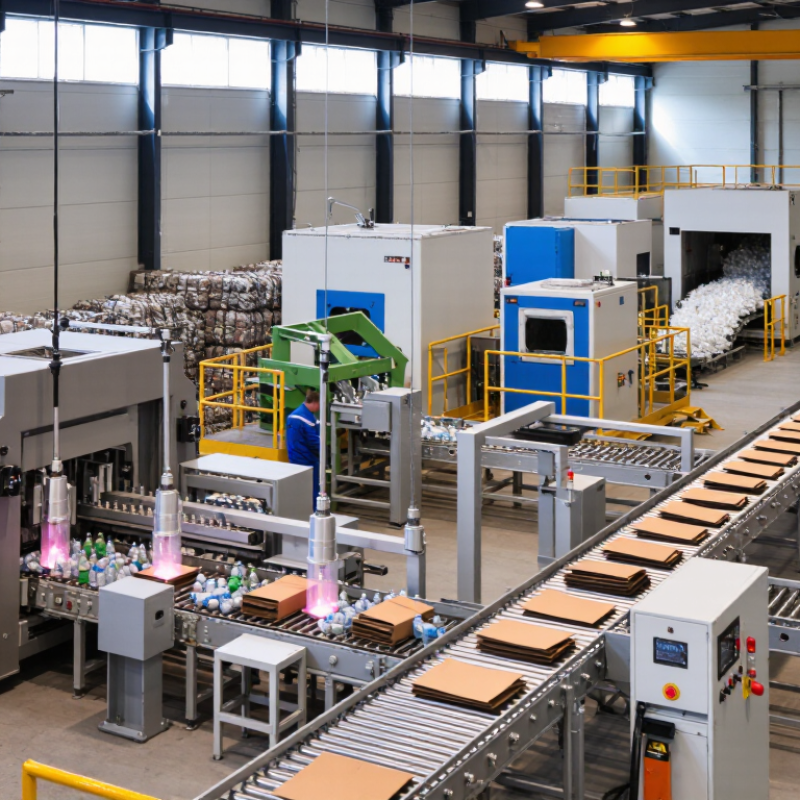
Inside a typical system, a conveyor carries mixed waste beneath sensors and mechanical separators. Screens remove oversized pieces. Magnets attract ferrous metals, while eddy-current systems separate non-ferrous metals. Optical scanners can identify certain plastics by color or polymer type. Air jets then push selected items into different containers. Shredders reduce bulky materials, and balers compress sorted fractions for transport. Clean inputs usually produce better results.
The Global E-waste Monitor 2024 reported 62 million tonnes of electronic waste worldwide in 2022. Only 22.3% was formally collected and recycled. That figure shows both the need and the limitations of recycling equipment. Machines improve consistency, but they cannot correct every problem. Wet packaging, dark plastics, damaged components, and human sorting errors still reduce recovery rates. A machine may appear highly efficient during testing. Real facilities are messier. Operators must inspect outputs, adjust settings, and measure contamination regularly. The World Bank’s What a Waste 2.0 report projected municipal solid waste could reach 3.40 billion tonnes annually by 2050, making reliable separation technology increasingly important.
| Material Stream | Typical Input | Primary Machine or Unit | How the Process Works | Typical Output | Important Quality Consideration |
|---|---|---|---|---|---|
| Paper and Cardboard | Newspapers, office paper, corrugated boxes, and cartons | Conveyor, screen, and baler | Materials are conveyed, screened by size, separated from unwanted items, and compacted into bales for transport. | Sorted paper grades and cardboard bales | Food residue, moisture, plastic film, and mixed materials can reduce the value of the recovered fiber. |
| Ferrous Metals | Steel cans, iron components, and other magnetic metal items | Magnetic separator | A rotating or suspended magnet attracts ferrous metals while non-magnetic materials continue along the conveyor. | Separated steel or iron scrap | Removing non-metallic attachments and excessive dirt improves the quality of the metal stream. |
| Non-Ferrous Metals | Aluminum cans, copper, brass, and other non-magnetic metals | Eddy-current separator | A rapidly changing magnetic field induces electrical currents in conductive metals, pushing them away from the conveyor flow. | Sorted aluminum and other non-ferrous metal fractions | Particle size, material moisture, and the presence of ferrous items affect separation performance. |
| Plastic Containers | Bottles, tubs, trays, and rigid packaging made from different polymers | Optical sorter | Near-infrared or visible-light sensors identify material characteristics, and air jets direct items into separate streams. | Polymer-specific plastic flakes or bales | Dark-colored plastics, labels, caps, and heavy contamination may be difficult for optical systems to identify correctly. |
| Glass | Clear, green, and brown bottles and jars | Glass breaker and screen | Glass is crushed into cullet, screened by particle size, and separated from lightweight contaminants such as paper and plastic. | Color-sorted glass cullet | Ceramics, stones, heat-resistant glass, and metal closures are unwanted contaminants in container-glass recycling. |
| Organic Waste | Food scraps, garden waste, and other biodegradable materials | Shredder and composting or digestion system | Organic material is size-reduced and processed under controlled aerobic or anaerobic conditions by microorganisms. | Compost, biogas, or digestate, depending on the process | Plastic contamination, excess moisture, and an unsuitable carbon-to-nitrogen balance can affect the final product. |
| Electronic Waste | Computers, appliances, cables, circuit boards, and small electronic devices | Dismantling line and shredder | Reusable components and hazardous parts are removed first; the remaining material is shredded and separated by magnetic, eddy-current, and density methods. | Separated metals, plastics, glass, and reusable components | Batteries, refrigerants, mercury-containing parts, and other hazardous materials require controlled handling. |
| Textiles | Clothing, household fabrics, and industrial textile offcuts | Cutter, opener, and fiber separator | Textiles are sorted by fiber type and color, cut or pulled apart, and processed into reusable fibers or suitable secondary materials. | Recovered fibers, wiping cloths, insulation, or other textile products | Blended fibers, coatings, zippers, buttons, and moisture can make mechanical recycling more difficult. |
| Mixed Recyclables | Household or commercial collections containing paper, containers, metals, and other materials | Material recovery facility line | Bag openers, conveyors, screens, magnets, eddy-current separators, optical sorters, and quality-control stations work in sequence. | Separate material streams prepared for reprocessing | Effective sorting depends on correct equipment settings, regular maintenance, and low levels of contamination. |
| General Operating Sequence | Collected recyclable material | Feed, sort, process, and compact | The machine receives material, removes unsuitable items, separates materials using physical or sensor-based methods, and prepares the recovered fractions for transport or further processing. | Bales, flakes, pellets, cullet, compost, recovered metals, or other secondary raw materials | Safety guards, dust control, emergency stops, inspections, and routine maintenance are essential for reliable operation. |