What Is a Maize Flour Mill Machine?
Maize is a staple crop and a major raw material for food processing. FAOSTAT records global maize production at about 1.16 billion tonnes in 2022, showing the scale of the crop’s supply chain. The USDA’s Grain: World Markets and Trade report also tracks maize production, trade, and use across major producing regions. These reports describe a large, changing market, but they do not tell mill operators which machine will suit their grain or customers.
A Maize Flour Mill Machine cleans, conditions, and grinds maize into flour or meal. Depending on its design, it may use rollers, plates, or hammer-based grinding, followed by sieving to control particle size. In a working mill, kernels pass through equipment where settings affect yield, texture, heat, and bran separation. Small details matter. A worn screen or inconsistent moisture can change the flour in the bag.
That sounds straightforward. It is not always. “Flour” can mean different textures and extraction levels in different markets, so a machine’s name alone proves little. Buyers should compare capacity, power demand, cleaning access, spare parts, and sample results using their own maize. Manufacturer specifications are useful, but actual performance depends on grain variety, moisture, and operating skill. A published capacity figure may not match everyday output. This guide explains what the machine does, how its main components work, and which practical checks help buyers assess a mill before installation.
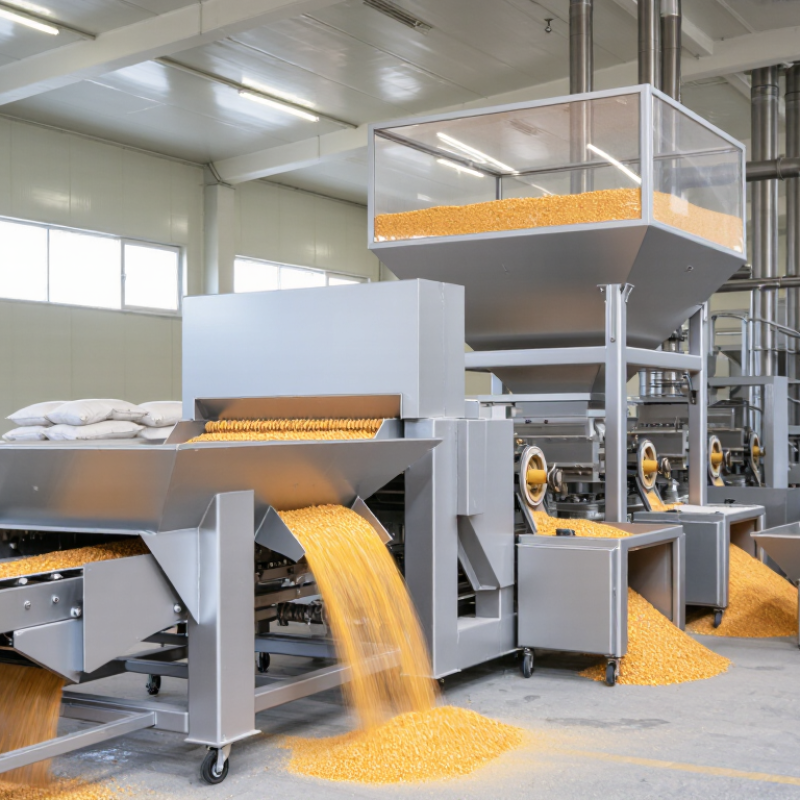
What a Maize Flour Mill Machine Is and What It Produces
What Is a Maize Flour Mill Machine?
A maize flour mill machine processes dried maize kernels into flour or meal. Depending on its design, it may clean, dehull, grind, sift, and convey grain through connected stages. A small unit might combine several steps, while a larger mill uses separate equipment. The goal is controlled size reduction, not simply crushing kernels.
The machine can produce fine maize flour for baking, coarser meal for porridge, and separated bran or germ when the process includes degermination. Screens determine which particles pass through, so changing the mesh can alter the final texture. Flour may feel soft between your fingers; meal looks visibly grainier. Simple, but important.
The result depends on more than the machine. Kernel moisture, maize variety, screen condition, and grinding speed all affect texture and yield. Clean, well-dried grain generally mills more consistently, though local preferences differ. A mill operator should check for heat, unusual vibration, and uneven output during a run. No single setting fits every batch. Real results can be less tidy than a product description suggests, so sample flour should be checked before processing a full quantity.
Maize Kernel Composition: About 82% Endosperm, 11% Germ, and 5% Pericarp
A maize kernel is not a uniform grain. About 82% of its weight is endosperm, around 11% is germ, and roughly 5% is pericarp. These figures are useful estimates, not fixed values for every crop. The remaining fraction may reflect the tip cap, rounding, or the measurement method. The neat percentages can feel more exact than they are. Kernel variety, growing conditions, and moisture can all affect the proportions.
Each part behaves differently in a maize flour mill machine. The starchy endosperm is the main source of flour, while the oil-rich germ can affect flavor and storage stability. The fibrous pericarp forms much of the outer bran layer. Cleaning, conditioning, degermination, grinding, and sifting help control how these parts enter the final product. Small differences matter. If separation is too aggressive, useful endosperm may leave with the bran; if it is too light, flour can retain more fiber or germ. Operators often check the flour’s texture and color, then adjust the settings. Not every kernel agrees. A sample may respond differently from the previous batch, so process records and routine checks help keep results consistent.
What Is a Maize Flour Mill Machine?
Approximate Composition of a Maize Kernel
Maize flour mill machines process kernels into flour. The kernel is made up mainly of endosperm, along with the germ, pericarp, and tip cap. These approximate proportions add up to 100%; actual values can vary by maize variety.
How Dry Milling Processes Maize Through Cleaning, Conditioning, and Grinding
A maize flour mill machine turns cleaned kernels into flour through a sequence of dry-milling steps. The exact setup depends on the desired product, but cleaning is a practical starting point. Screens remove stalk pieces and oversized debris, while aspiration draws away light dust and chaff. Magnets can capture ferrous particles before the grain reaches the milling section. Even a small stone can damage equipment, so operators check the cleaning line rather than assuming it works perfectly.
Conditioning follows cleaning. A controlled amount of water is added to the maize, then the kernels rest so moisture can spread through them. This helps make the outer bran more flexible and the inner endosperm easier to separate. Too much water may make the grain difficult to handle; too little can leave bran brittle. Timing and moisture targets vary with kernel condition and mill design. There is no single setting for every batch.
Then comes grinding. Rollers or other milling elements break the kernels into meal, while sifters separate particles by size. Coarser pieces may return for another pass, and finer fractions become flour. Operators watch the flour’s texture, color, and temperature as useful process clues. A flour that feels gritty may need further grinding, though repeated passes can affect heat and yield. Small details matter. Sampling at several points can reveal uneven conditioning or worn screens.
Key Machine Sections: Degerminator, Mill, Sifter, and Flour Collector
A maize flour mill machine is a connected system that turns cleaned maize into flour. Its degerminator separates much of the germ and outer layers from the kernel. This step can improve flour texture and help control oil content. Results depend on maize moisture and machine adjustment. Small differences matter.
The mill reduces the prepared kernels to smaller particles. Roller or plate designs use different grinding actions, so operators should follow the equipment settings. A sifter then separates flour by particle size. Coarse material may return for further grinding. The flour collector receives the finished product and helps limit airborne dust. Check screens, seals, and collection points regularly; wear can affect consistency.
Tips: Keep maize moisture steady before milling. Inspect the sifter mesh for tears, and clear buildup from the collector. Record settings and flour texture between batches. These checks help identify changes early, though they cannot replace proper maintenance or a trained operator’s judgment.
What Is a Maize Flour Mill Machine? — Key Machine Sections: Degerminator, Mill, Sifter, and Flour Collector | Machine Section | Main Function | How It Works | Typical Output or Material | Practical Check |
| Degerminator | Separates much of the maize germ and bran from the starchy endosperm before fine milling. | Uses mechanical action, often with controlled friction or impact, to loosen the kernel components. Performance depends on maize condition, moisture, and machine settings. | Partly degerminated maize grits or meal, plus germ- and bran-rich fractions. | Check that incoming maize is clean and appropriately conditioned; inspect the separated fractions for excessive endosperm loss. |
| Mill | Reduces maize grits or meal to the required flour or meal particle size. | Applies grinding or impact. Roller mills and hammer mills are common designs, but they produce different particle-size profiles and are not interchangeable in every process. | Ground maize flour or meal, usually containing a range of particle sizes before sifting. | Monitor feed consistency, mill condition, heat buildup, and the particle size required by the intended product. |
| Sifter | Classifies milled material by particle size and helps separate finished product from coarse particles. | Moves material over screens with selected openings. Fine material passes through; larger particles may be returned for further grinding or collected separately. | One or more flour or meal grades, along with oversize material for reprocessing or separate use. | Check screens for wear, blockage, or damage, and confirm that the product meets the required particle-size specification. |
| Flour Collector | Receives finished flour and helps separate airborne dust from conveying air. | May use a cyclone, a fabric filter, or a combined arrangement. Collected flour is directed to a hopper, bin, or packaging system while dust control depends on the equipment design. | Collected flour ready for storage or packing, with separated dust handled according to the plant’s process and safety procedures. | Inspect connections and seals, monitor filter condition where fitted, and follow appropriate combustible-dust control practices. |
How to Compare Mill Capacity, Flour Fineness, and Extraction Yield
A maize flour mill machine grinds cleaned maize into flour, but its nameplate capacity tells only part of the story. Compare output using the same maize variety, moisture level, and operating time. A mill rated for one tonne per hour may process less when kernels are damp or feed is uneven. Record kilograms of usable flour per hour, not just the advertised figure. Small details matter.
Flour fineness affects both texture and throughput. Ask for the particle-size range, or test samples with the same sieve rather than judging flour by touch alone. Finer settings can slow production and increase heat, which may affect flour quality. Check whether the machine can hold a consistent setting during a full shift. A short demonstration is useful, but it may not reveal performance after several hours.
Extraction yield is the saleable flour recovered from cleaned maize, compared with the input weight. Weigh the flour and by-products separately during a trial, and note any spillage or moisture changes. A higher yield is not automatically better if the flour is too coarse for its intended use. Keep a simple test log. I would not trust one batch as proof; results can vary, and real production is rarely perfectly tidy.