Choosing a Roll Crusher in 2026 is less about finding one universal winner and more about matching the machine to the material. Smooth-roll, single-roll, double-roll, and toothed-roll designs each handle feed and reduction differently. A smooth-roll unit may suit controlled reduction of relatively friable material, while teeth can grip larger, tougher pieces. Double-roll arrangements can offer a predictable crushing gap, but the result still depends on feed conditions and machine setup.
Small details matter. Wet, sticky feed may build up on surfaces. Abrasive rock can accelerate wear. A narrow gap can produce a finer product, yet it may also increase power demand or affect throughput. There is no magic setting. Operators should compare feed size, moisture, target product, capacity, and maintenance access against the manufacturer’s specifications. Where possible, test a representative sample; a clean showroom demonstration may not reflect a dusty, variable production line.
This guide looks at the leading roll-crusher types and explains where each can fit, what trade-offs to expect, and which questions to ask before purchase. It also distinguishes conventional roll crushers from high-pressure grinding rolls, which use a different operating approach. Names can blur across product catalogs. That deserves a closer look. The best choice is the one supported by reliable performance data, practical service access, and the realities of the site—not by a label alone.
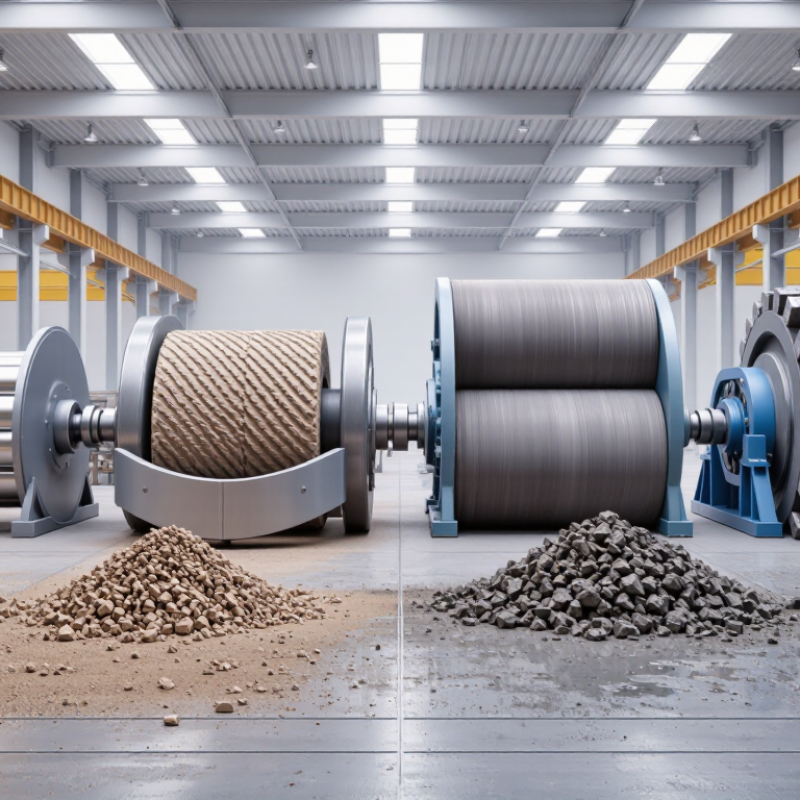
A roll crusher reduces material between two rotating cylinders. The rolls turn inward, drawing feed into the gap and breaking it mainly by compression. Depending on the design and material, some shearing may occur too. Smooth rolls suit many brittle, relatively uniform feeds; toothed rolls can grip larger, lumpier pieces. The choice depends on feed size, moisture, hardness, and the product you need—not just a machine label.
The gap between the rolls helps determine the discharged particle size, though feed variation can affect results. Operators may adjust the setting to suit the process, then check the product rather than assume the dial tells the whole story. Roll speed, wear, and uneven feeding matter as well. In practice, a crusher can behave less neatly than a diagram suggests. That is worth remembering.
Tips: Keep feed reasonably even, and inspect the rolls for wear. A changing product size may point to a gap or feed issue. Follow the equipment maker’s operating and maintenance instructions, and use suitable guarding during inspection.

Single-roll and double-roll crushers solve different reduction problems. A single-roll design uses one rotating toothed drum against a breaker plate. It suits staged reduction of friable feed, such as coal or some limestone, and can pass occasional oversize pieces.
A double-roll design draws material between two counter-rotating rolls. Operators adjust the gap to influence product size, making it useful where a more consistent output matters. Neither design is automatically better.
Scale explains why selection matters. The USGS Mineral Commodity Summaries 2025 estimates U.S. crushed-stone production at about 1.5 billion tons in 2024. That figure describes the market, not roll-crusher demand, but it shows the volume handled across aggregate operations.
In practice, feed moisture, abrasiveness, and top size can change performance sharply. Wet fines may pack around teeth or choke a feed opening. A drawing alone will not reveal that.
For a single roll, inspect tooth wear and breaker-plate clearance during routine checks; uneven wear can distort the product. For double rolls, monitor the roll gap, bearing temperature, and drive load.
Close settings may improve sizing but increase power demand and wear. That trade-off matters. A common mistake is choosing from nominal capacity without testing the actual feed.
A short trial with representative material can expose problems early, though even that may not capture seasonal moisture changes.
Toothed, smooth, and chevron-roll crushers suit different feed conditions. Toothed rolls grip larger lumps and fracture them with fewer fines, making them useful for coal, limestone, and some sticky feeds. But wet clay can still pack between teeth. Smooth rolls rely mainly on compression. They work well with brittle, relatively uniform feed when a controlled product size matters; excessive reduction can increase fines and wear. Chevron rolls use angled tooth patterns to improve bite across the roll face. Their advantage depends on feed width, moisture, and tooth geometry—not the pattern alone.
The scale of aggregate demand makes choosing carefully worthwhile. The U.S. Geological Survey’s Mineral Commodity Summaries estimated U.S. crushed-stone output at about 1.4 billion metric tons in 2023. That figure does not specify roll-crusher use, but it shows why reliable sizing and steady throughput matter. In practice, inspect the feed’s largest lumps, moisture, abrasiveness, and target size before selecting a roll type. A chevron surface may capture irregular feed more consistently, yet it is not automatically best for every plant. One detail is easy to miss: worn teeth change the effective gap and product distribution. Measure the product regularly, and reassess after wear—not just at installation.
Typical design tendencies of smooth, toothed, and chevron-roll variants
Ratings use a qualitative 1–5 scale to indicate relative design emphasis, not measured performance: 1 = lower emphasis, 5 = higher emphasis. Smooth rolls typically focus on controlled sizing; toothed rolls emphasize feed engagement and coarse-feed handling; chevron patterns can improve grip and feed movement. Actual results depend on material, roll geometry, and operating settings.
Roll crushers serve plants that need controlled size reduction without excessive fines. Their best use depends on feed hardness, moisture, and the required product size. A dry, brittle limestone feed behaves differently from damp coal. Small details matter.
Smooth-roll crushers are common in cement, minerals, and laboratory work, where relatively uniform, finer material is needed. Two rotating steel rolls compress the feed as it passes through a narrow gap. Operators can adjust that gap, but wear gradually changes the result. Regular checks are essential.
Toothed roll crushers are often used for coal, lignite, and other softer, larger-lump materials. Their teeth grip and draw feed inward, helping process material that might bridge above smooth rolls. They are also used in some mineral and recycling operations, though wet or sticky feed can still cause trouble. High-pressure grinding rolls suit mineral processing and cement plants seeking efficient fine grinding or improved liberation. They apply force across a compressed bed of particles, rather than relying on isolated impacts. Not every ore responds equally well. Test work helps confirm whether the equipment fits the feed and operating targets.
Choosing a roll crusher starts with the material, not the machine’s headline capacity.
Note its hardness, abrasiveness, moisture, and feed-size range. A smooth-roll design may suit brittle material that needs controlled sizing. Toothed rolls can grip larger, softer feed, but wet or sticky material may cling between teeth. Double-roll crushers offer a compact arrangement, though their suitability depends on the required reduction ratio. That matters.
Check the product size you need and how consistently the crusher must deliver it. Then compare expected throughput with realistic operating conditions, not just ideal figures. A sample test can reveal whether the material packs, smears, or creates too many fines. Small details help: a damp handful may behave differently from a dry sample.
Review roll wear, gap adjustment, access for cleaning, and available space around the unit. A neat specification sheet can still mislead. I would question any selection based on capacity alone. No choice is perfect. Leave room for changes in feed quality, and confirm assumptions with practical testing before settling on a configuration.
