Top 10 Molding Solutions for Your Global Sourcing Needs?
In today's competitive manufacturing landscape, sourcing optimal molding solutions is crucial for businesses. According to a report by Grand View Research, the global injection molding market is projected to reach $340 billion by 2026. This growth emphasizes the importance of innovative and reliable molding solutions in various industries. As companies look to streamline production, they face challenges in selecting the right supplier.
Choosing the right molding provider can significantly affect product quality and supply chain efficiency. Yet, many firms underestimate this complexity. Limited experience in global sourcing can lead to costly mistakes. Data from the International Trade Administration highlights that nearly 52% of companies struggle with supplier selection. This reflects a need for thorough evaluation and strategic planning when searching for molding solutions.
It's vital to navigate the myriad of options available. Not all molding providers meet the same standards of quality and service. Firms must reflect on their specific requirements and assess their potential partners accordingly. The landscape of molding solutions offers both opportunities and pitfalls. A well-informed choice can lead to enhanced productivity, while poor decisions may derail progress.
Top Considerations for Selecting Molding Solutions in Global Sourcing
When selecting molding solutions for global sourcing, several key considerations can significantly impact outcomes. Understanding material requirements is crucial. Different projects may demand specific materials for durability or aesthetic appeal. For instance, a report from the Society of Plastics Engineers highlights that over 30% of production issues arise from mismatched material properties. Knowing your project's needs helps in choosing the right type of plastic or metal, which directly affects performance.
Cost efficiency is another critical aspect. A study by Deloitte indicates that companies can save up to 25% on production costs through optimized sourcing strategies. However, that does not mean sacrificing quality. Cheaper materials can lead to higher reject rates, which is a pitfall many companies overlook. The balance between cost and quality requires thorough research and sometimes re-evaluating suppliers.
Another layer is supplier reliability. Statistics show that 40% of global companies have faced supply chain disruptions in the past year. Partnering with suppliers who have robust contingency plans is essential for stability. Yet, many companies don't thoroughly vet their suppliers, which can lead to issues down the line. This highlights the importance of asking the right questions and seeking reliable references before making commitments.
Evaluating the Cost-Effectiveness of Different Molding Technologies
When considering molding solutions for global sourcing, evaluating cost-effectiveness is vital. Different molding technologies vary in terms of upfront costs, material usage, and production speed. Injection molding is known for high precision and efficiency but demands significant initial investment. On the other hand, blow molding can be more affordable for larger quantities, though it may compromise on detail.
It’s essential to analyze production volume versus cost per unit. For low-volume projects, certain methods like 3D printing might seem appealing. However, the per-unit cost can escalate quickly. Regularly revisit your production needs to ensure your chosen method evolves with your project requirements.
One crucial aspect to consider is material selection. Using cheaper materials may reduce costs but could lead to quality issues. Always assess the long-term implications of material choices. Validation through prototypes can uncover hidden costs, ensuring any chosen technology meets performance and durability standards. Each choice you make contributes to the final output, so it’s worth the effort.
Impact of Material Selection on Molding Process Efficiency and Quality
Material selection is a critical factor in the molding process. The type of material directly influences both efficiency and the final quality of molded products. Different materials behave uniquely under various temperatures and pressures. For example, thermoplastics can flow easily, allowing for complex designs. On the other hand, some thermosetting plastics provide excellent heat resistance, but they are more challenging to process. Selecting the right material can enhance the durability of the final product while reducing production time.
Each material has its own properties. Some are lightweight, while others boast high tensile strength. It's essential to consider these attributes carefully. A mismatch can result in significant issues, such as defects or shortened product lifespan. Even minor variations in material can lead to differing finish quality. For instance, using an incorrect additive can affect how the material cools, potentially leading to warping.
It’s worth noting that not all applications require high-end materials. Sometimes, cost-effective options can serve the purpose without significant sacrifices. However, this requires astute judgment and experience. Relying solely on popular materials may overlook better, more suitable choices. Balancing performance with cost is a challenge every engineering team faces. Each decision should be made with careful consideration of both immediate and long-term implications.
Assessing the Environmental Sustainability of Molding Practices
When evaluating molding practices, environmental sustainability cannot be overlooked. According to a report by the Ellen MacArthur Foundation, approximately 300 million tons of plastic waste is generated globally each year. Much of this comes from inefficient molding processes that overlook recycling and waste management. Sustainable molding solutions can significantly reduce this impact by using biodegradable materials and implementing energy-efficient methods.
It is essential to consider the life cycle of materials used in molding. Research illustrates that traditional plastic production contributes heavily to greenhouse gas emissions. Alternatives, such as bio-based resins, can reduce reliance on fossil fuels. Furthermore, a study published in the Journal of Cleaner Production highlights that optimizing energy use in molding can lead to a 30% reduction in carbon emissions.
Pay attention to supplier practices. Not all manufacturers adhere to sustainable principles. Collaborate with those who prioritize eco-friendly approaches. Evaluate certifications and industry standards that ensure responsible sourcing and production. Revisiting material choices and production efficiency can minimize the environmental footprint significantly. The journey toward sustainability is ongoing, and consistent reflection on practices is needed for lasting change.
Top 10 Molding Solutions for Your Global Sourcing Needs - Assessing the Environmental Sustainability of Molding Practices
| Solution |
Material Type |
Recyclability |
Bio-degradable |
Sustainability Rating |
| Injection Molding |
PLA (Polylactic Acid) |
Yes |
Yes |
A+ |
| Blow Molding |
HDPE (High-Density Polyethylene) |
Yes |
No |
B |
| Compression Molding |
Silicone |
Yes |
Yes |
A |
| Rotational Molding |
PVC (Polyvinyl Chloride) |
No |
No |
C |
| Thermoforming |
PET (Polyethylene Terephthalate) |
Yes |
No |
B+ |
| Extrusion Molding |
PS (Polystyrene) |
No |
No |
D |
| 3D Printing |
PLA |
Yes |
Yes |
A+ |
| Die Casting |
Aluminum |
Yes |
No |
B |
| Additive Manufacturing |
Recycled Plastics |
Yes |
Yes |
A+ |
| Metal Stamping |
Steel |
Yes |
No |
B |
Trends in Automation and Innovation in Global Molding Solutions
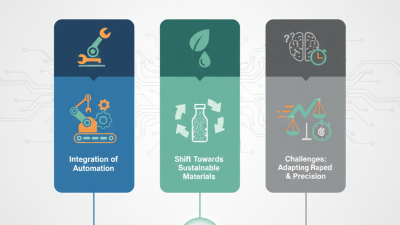
The landscape of global molding solutions is rapidly changing. Automation stands out as a game-changer. Robots are now commonly used for repetitive tasks. They enhance precision and reduce costs. However, integrating such technology requires careful planning and skilled personnel. Not every company is ready for this shift, leading to gaps in efficiency.
Innovation plays a crucial role in molding processes. 3D printing is gaining traction in prototyping and production. This technology allows for rapid design changes. It also reduces waste, but its implementation can be complex. Companies often struggle with material compatibility and machine calibration. These challenges can hinder productivity.
Sustainability is another significant trend. Many firms are exploring eco-friendly materials. This shift can be costly and requires investment in new technologies. Organizations must balance environmental goals with operational efficiency. It’s a delicate act, and not all succeed. The ongoing evolution of molding solutions presents opportunities and obstacles that require continuous adaptation.