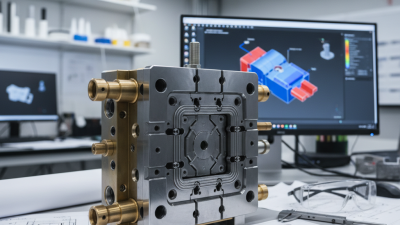
Top Mold Manufacturing Companies for Global Buyers

Choosing the right partner in mold manufacturing can shape a product’s cost, quality, and launch schedule. Global buyers often compare suppliers from China, Germany, Japan, South Korea, Italy, and other industrial markets. However, a polished website does not prove production capability.

This guide examines top mold manufacturing companies through practical buyer concerns. These include tooling experience, material selection, machining accuracy, surface finishing, inspection systems, and after-sales support. A reliable supplier should explain steel grades, expected mold life, tolerance limits, and maintenance needs in clear language. Factory audits, verified case studies, production samples, and transparent quotations offer stronger evidence than marketing claims.

Small details matter. A well-fitted mold can reduce flash, cycle delays, and rejected parts. A supplier’s response to design changes also reveals its real working style. Clear drawings, structured feedback, and documented trial results usually indicate mature project management. Still, no manufacturer is perfect. Even experienced teams may face shipping delays, design revisions, or unexpected material behavior.

The companies discussed here are not judged by reputation alone. Their capabilities, communication standards, quality controls, and suitability for different industries are considered together. Buyers should confirm current certifications, equipment capacity, export experience, and technical terms before signing a contract. Independent verification remains important.

Use this overview as a practical starting point, not a final decision. The best partner depends on your part design, production volume, budget, and quality expectations. A strong match is built through evidence, honest discussion, and careful technical review.

Top Mold Manufacturing Companies for Global Buyers

What Defines a Top Mold Manufacturing Company

A top mold manufacturing company proves its capability through repeatable results, not polished brochures. It controls steel certificates, heat treatment records, cavity dimensions, and inspection data. According to the ISO Survey 2023, more than 1.26 million ISO 9001 certificates were valid worldwide. Certification helps, but it does not replace technical judgment. Buyers should request process capability data, preferably Cpk results for critical dimensions. Mold-flow analysis, cooling-balance studies, and documented design reviews also reveal practical expertise.

Reliable suppliers communicate early. They identify draft problems, warpage risks, and difficult ejection points before machining begins. The Deloitte 2024 Smart Manufacturing and Operations Survey reported that 86% of manufacturers view smart manufacturing as important for competitiveness. Digital tracking should therefore connect design changes, machining status, trial results, and corrective actions. However, digital dashboards can still hide weak workmanship. No audit is perfect. An on-site review remains valuable.

Tips: Ask for a sample inspection report. Check cavity-to-cavity variation, not only average dimensions. Confirm the supplier’s maintenance plan, spare-part policy, and response time after delivery. Request trial-shot evidence with real resin and production settings. A strong company will explain failures clearly, including what it would improve. That honesty may matter more than a flawless presentation.

A top mold manufacturing company is typically evaluated through measurable capabilities rather than brand visibility. These representative industry benchmarks highlight the importance of dimensional accuracy, production durability, delivery reliability, and engineering response for global buyers.

Core Mold Types and Manufacturing Capabilities

Global buyers should match mold type with part geometry, resin behavior, and expected production volume. Injection molds suit precise plastic housings, caps, and medical components. Compression molds handle thermosets, rubber, and fiber-reinforced materials. Die-casting molds support aluminum or zinc parts with strong dimensional demands. According to Grand View Research, the global injection molded plastics market exceeded USD 300 billion in 2023. That scale reflects demand, not automatic quality. A mold can still fail through poor venting or uneven cooling.

Manufacturing capability matters beyond equipment lists. Look for CNC machining, EDM, wire cutting, polishing, mold-flow analysis, and controlled heat treatment. A capable supplier should report steel traceability, cavity balance, tolerance data, and trial-shot results. MarketsandMarkets estimated the global additive manufacturing market would reach more than USD 20 billion by 2025. This supports faster prototype inserts and repair parts, although printed tooling may not match hardened steel for long production runs. I would question any promise of “zero maintenance.” Real molds need inspection, lubrication, and occasional rework.

Tips:

•  Ask for a mold design review before ordering.
•  Request sample measurement reports, not only photographs.
•  Confirm cavity count, expected cycle life, cooling-channel design, and spare-part support.
•  Keep tolerances realistic; tighter is not always better.
•  One overlooked detail can become thousands of rejected parts.

Key Factors for Evaluating Global Mold Suppliers

Top Mold Manufacturing Companies for Global Buyers

Choosing a mold supplier requires more than comparing unit prices. Evaluate engineering depth, production controls, and evidence of consistent results. Ask for material certificates, machining tolerances, and inspection records. A reliable supplier should explain mold-flow analysis, cooling design, cavity balance, and expected cycle life in clear language. They should also provide a realistic timeline, not an attractive promise that later changes.

Tips: Request a sample inspection report and a video of a trial run. Confirm who owns the mold files and revision history. Check whether spare inserts, maintenance guidance, and after-sales support are included. A supplier’s response to difficult questions often reveals more than its sales presentation. Slow replies are warning signs.

Audits can strengthen your decision. Review equipment, calibration records, skilled staffing, and quality procedures.

Ask how the factory handles flash, warpage, short shots, and unexpected tool wear. Independent testing may be useful for complex or high-volume projects. Still, no audit predicts every production problem. I have seen buyers focus heavily on polished samples and overlook communication gaps. That judgment can be costly. Use a written specification, approval checkpoints, and a documented change-control process. A capable mold manufacturer welcomes these controls because they protect both quality and delivery reliability.

Leading Regions and Companies in Mold Manufacturing

Asia remains the main production base for global mold manufacturing. Grand View Research reported that Asia Pacific held over 40% of the injection molded plastics market in 2023. China supplies high-volume automotive, appliance, and consumer-product tooling. Japan and South Korea remain strong in precision machining, surface finishing, and long-cycle molds. Southeast Asia is gaining attention because of expanding electronics and automotive assembly.

Europe competes through engineering depth rather than scale alone. A 2024 report from Mordor Intelligence identified automotive applications as a major demand driver for injection molding equipment and tooling. Germany, Italy, and Central European suppliers often support complex cooling layouts, tight tolerances, and documented validation. North American manufacturers focus on shorter supply chains, rapid maintenance, and close cooperation during design changes. That matters when a mold runs hundreds of thousands of cycles.

No region wins every project. That sounds obvious, but buyers still compare only quoted prices. Experienced teams inspect steel grades, mold-flow results, cycle-time targets, and spare-part plans. They should also review dimensional reports from trial shots, not only polished presentations. The International Organization for Standardization’s ISO 9001 framework can support process control, but certification alone does not guarantee capable tooling. A practical supplier assessment should include sample parts, corrective-action records, and video evidence of machining and testing. Mistakes happen. The useful question is whether the manufacturer finds them early and documents the fix.

International Sourcing, Quality Control, and Logistics

Top Mold Manufacturing Companies for Global Buyers

International sourcing begins with measurable quality, not attractive catalog photos. A capable mold manufacturer should provide steel certificates, dimensional reports, trial-shot records, and traceable change control. Request a first-article inspection using your approved drawing and material specification. Coordinate tolerances early. A late correction can delay production by weeks.

The World Bank’s 2023 Logistics Performance Index assesses 139 economies across customs, infrastructure, shipment quality, and timeliness. These factors matter when molds travel with tight launch schedules. UNCTAD reports that over 80% of global merchandise trade by volume moves by sea. Therefore, buyers should confirm export packing, moisture protection, container loading, and backup routing. A wooden case may look sufficient, but condensation can still damage precision surfaces. That risk deserves a written packing standard.

Tips: Audit the production floor through live video or an independent inspector. Compare cavity dimensions against the approved 3D model. Ask who owns repair costs after acceptance. Keep a realistic logistics buffer, especially before regional holidays. Incoterms should be written clearly, including insurance and customs responsibilities. No scorecard is perfect; supplier communication can change after the purchase order. Review it again after the first tool trial. This extra review feels slow, yet it often exposes unclear assumptions before expensive rework begins.

Top Mold Manufacturing Companies for Global Buyers - International Sourcing, Quality Control, and Logistics

The figures below are practical international-sourcing benchmarks and commonly used qualification criteria. Actual performance should be verified through audits, samples, inspection records, and contractual quality agreements.
Evaluation Dimension Recommended Benchmark How Global Buyers Can Verify It Commercial Importance Typical Risk if Not Controlled
Tooling Type Injection Molds Die-Casting Dies Compression Molds Blow Molds Review previous projects with similar resin, alloy, part size, tolerance, and annual volume. Confirms that the supplier has relevant process knowledge rather than only general machining capacity. Short mold life, unstable cycle times, flash, warpage, or premature component failure.
Engineering Capability Documented DFM review, mold-flow analysis when needed, 3D design, 2D drawing control, and revision management. Request a sample DFM report, issue log, design-change record, and approval workflow. Reduces rework before steel cutting and helps identify filling, cooling, ejection, and venting risks. Late design changes, repeated sampling, and unplanned tooling costs.
Quality Management ISO 9001-certified quality management system or an equivalent documented process-control system. Check the certificate scope, validity, issuing body, site address, and internal quality procedures. Provides a repeatable framework for inspection, corrective action, document control, and traceability. Inconsistent inspection results and weak corrective-action follow-up.
Automotive Readiness IATF 16949 capability or experience with automotive APQP, PPAP, FMEA, MSA, and control plans. Review anonymized PPAP packages, process-flow diagrams, capability studies, and customer-specific requirements. Useful for programs requiring formal production approval and enhanced traceability. Delayed launch approval or incomplete production documentation.
Medical-Device Readiness ISO 13485-based controls where the mold supports regulated medical-device production. Confirm certification scope and assess cleanliness, material traceability, change control, and contamination controls. Supports regulated supply chains with higher documentation and risk-management expectations. Compliance gaps, uncontrolled changes, or difficult regulatory audits.
Tool Steel Selection Steel grade selected according to material abrasiveness, corrosion exposure, production volume, and surface requirements. Request steel certificates, heat-treatment records, hardness results, and cavity/core traceability. Correct steel selection affects wear resistance, polishing quality, corrosion resistance, and maintenance intervals. Unexpected corrosion, wear, dimensional drift, or shortened mold life.
Dimensional Control Inspection plan aligned with drawing tolerances, critical-to-quality dimensions, datum structure, and functional requirements. Review CMM reports, calibrated-equipment records, gauge methods, and measurement-system studies where applicable. Ensures that the tool and molded parts meet functional rather than merely visual requirements. Assembly interference, leakage, cosmetic defects, or unstable production output.
Surface Finish Clearly defined texture, polish, EDM finish, gloss, grain direction, and visual acceptance standard. Approve physical or digital samples and specify inspection lighting, viewing distance, and defect limits. Prevents subjective disputes over appearance during sampling and final acceptance. Visible mismatch, inconsistent texture, sink visibility, or rejected cosmetic parts.
Sampling and Validation Trial shots or first-article sampling performed with approved production material and documented process conditions. Request sample quantity, dimensional report, defect summary, process parameters, and corrective-action status. Confirms that the mold works under conditions representative of mass production. Tool passes a basic trial but fails during production ramp-up.
Production Lead Time Approximately 4–12 weeks for many standard plastic injection molds, depending on complexity and validation scope. Request a milestone schedule covering design approval, steel ordering, machining, assembly, trial, correction, and final acceptance. Supports realistic launch planning and prevents buyers from comparing incomplete lead-time quotations. Missed product-launch dates and expensive expedited freight.
Prototype or Soft-Tool Lead Time Approximately 1–6 weeks for selected prototype, aluminum, or simplified soft-tool solutions. Confirm tool-life expectations, allowable tolerances, cavity count, and whether production-grade materials are supported. Useful for early market testing and design validation before committing to hardened production tooling. Prototype results may not predict final production behavior.
Tool-Life Planning Written life estimate based on steel, resin or alloy, cycle conditions, maintenance, and expected annual volume. Review preventive-maintenance schedules, wear-part lists, service records, and life assumptions in the quotation. Allows buyers to compare total cost of ownership rather than only initial tooling price. Unbudgeted refurbishment, downtime, and replacement tooling.
Traceability Traceable records for steel, purchased components, heat treatment, machining revisions, inspection, and shipment release. Conduct a document audit and request anonymized traceability examples from a completed project. Improves root-cause analysis and supports claims, warranty, and regulatory investigations. Inability to isolate defective batches or prove material and process history.
Factory Audit Pre-award audit covering engineering, machining, metrology, assembly, storage, subcontracting, and corrective action. Use a scored audit checklist and verify that quoted processes are performed at the audited facility. Separates actual manufacturing capability from trading or outsourcing-only arrangements. Unexpected subcontracting, capacity shortages, or weak process control.
Inspection at Source Stage inspections at design release, steel preparation, machining completion, mold assembly, trial, and final acceptance. Use an independent inspector or buyer-approved inspection plan with objective acceptance criteria. Finds errors before international shipment, when correction is faster and less expensive. High-cost rework after delivery and disputes over responsibility.
Packaging and Export Protection Rust prevention, sealed protection, shock-resistant packing, lifting points, moisture control, and spare-parts packing list. Approve packaging photos and verify crate dimensions, gross weight, handling marks, and preservation method. Protects precision tooling during multimodal international transport. Rust, impact damage, missing components, or customs-handling problems.
International Logistics Clear Incoterms, commercial invoice, packing list, country-of-origin data, export classification, and freight responsibility. Confirm the agreed Incoterm, named place, insurance responsibility, customs broker, and document timetable. Creates a predictable landed-cost calculation and reduces border delays. Unexpected duties, demurrage, document holds, or unclear delivery liability.
Spare Parts and Maintenance Recommended spare ejector pins, seals, wear plates, springs, inserts, sensors, and maintenance instructions. Check the spare-parts list, interchangeability, part numbering, and replacement lead times. Minimizes downtime during production and simplifies local maintenance. Extended stoppages while waiting for small but critical components.
Warranty Terms Written warranty covering workmanship, agreed mold function, correction responsibility, and response time. Define warranty start point, exclusions, acceptance criteria, and procedure for remote or on-site support. Provides commercial protection when defects appear after shipment or production validation. Disputes over whether a defect is caused by design, material, process, or maintenance.
Communication and Reporting Named project manager, weekly progress updates, controlled action list, escalation path, and shared technical records. Evaluate response times during quotation and request a sample project-status report. Improves decision speed across engineering, purchasing, quality, and logistics teams. Hidden delays, inconsistent information, and slow issue resolution.
Total Cost of Ownership Evaluation includes tooling price, sampling, corrections, freight, duties, maintenance, spare parts, and expected tool life. Compare suppliers using the same technical specification and a five-year or program-life cost model. Prevents selection based solely on the lowest initial quotation. Low purchase price followed by higher downtime, maintenance, and replacement costs.
NEW JERSEY

Location

Union Tool & Mold is a mold making, repair and plastic injection molding company located in central New Jersey.
(973) 763-6611

220 Rutgers St, Maplewood, NJ 07040
ACCREDITED

Certified Company


SOCIAL PROFILE

Let’s Connect

We invite you to engage with us on LinkedIn, where you can stay updated on our latest news, insights, and professional opportunities.