Top 10 Fuel Rubber Hose Manufacturers Worldwide

Fuel Rubber Hose is a critical link between fuel storage and delivery, where material choice and construction affect reliability. A hose may look simple on a workbench. Inside, its liner must suit the intended fuel, while reinforcement helps it withstand pressure, movement, and daily vibration. Heat, tight bends, abrasion, and exposure to engine fluids can also shape service life.

This guide introduces ten Fuel Rubber Hose manufacturers operating in markets around the world. It considers practical factors such as product range, material options, manufacturing quality controls, technical documentation, and support for different applications. These points can help buyers frame a shortlist, but they do not replace an application-specific review. Specifications differ. So do test methods and regional requirements. Always confirm current product data, compatibility guidance, pressure and temperature limits, and relevant approvals directly with the manufacturer before selecting a hose.

There is no perfect ranking. A supplier with broad global distribution may not be the best fit for a specialized vehicle or equipment project. Smaller details matter, too: a clear datasheet, consistent markings, and responsive technical support can prevent avoidable delays. That is easy to overlook. The manufacturers featured here are presented as a starting point for comparison, not as a guarantee of performance. Real operating conditions can be less tidy than a catalog suggests, and that deserves careful attention.
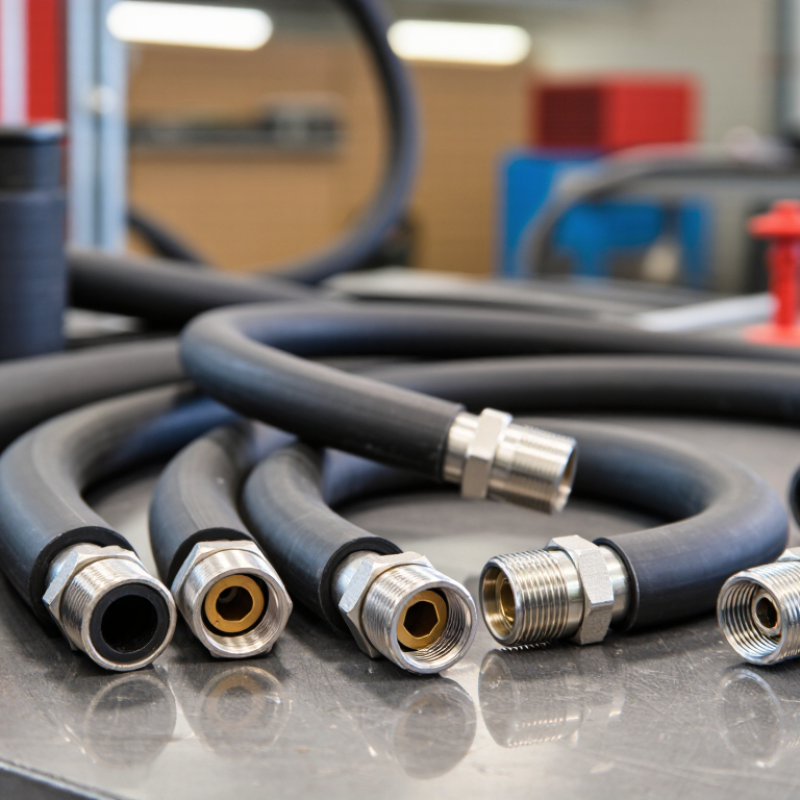
Top 10 Fuel Rubber Hose Manufacturers Worldwide

Fuel Rubber Hoses: Definition and Main Applications

Fuel rubber hoses are flexible tubes designed to carry liquid fuel between components such as a tank, pump, and engine. Their construction often includes an inner lining, reinforcement, and an outer cover. Each layer has a job. The lining contacts the fuel, while reinforcement helps the hose resist pressure, vibration, and bending. The outer cover can help protect against heat, abrasion, and exposure to oil or dirt. Compatibility matters: a hose suitable for one fuel or operating condition may not suit another.

These hoses appear in cars, trucks, motorcycles, small engines, and some industrial equipment. In a vehicle, short sections may connect rigid fuel lines to moving engine parts, where a little flexibility helps reduce stress.

Longer runs may need support to prevent rubbing against sharp edges. Fit and routing matter as much as the hose itself. A correct-looking hose can still fail early if it kinks, sits near excessive heat, or is exposed to an incompatible fluid. Real installations are not always tidy, and that deserves a closer look.

Tips: Check the hose’s stated fuel compatibility, pressure rating, and temperature range before installation. Inspect for cracks, swelling, soft spots, or damp fittings. Replace questionable sections, and keep the hose clear of hot surfaces and moving parts. Don’t guess.

Materials and Performance Requirements for Fuel Hoses

A fuel hose must carry liquid safely while resisting heat, vibration, and repeated bending. Its inner tube needs to tolerate the specific fuel, including blends that can affect some elastomers. Nitrile rubber is often used for fuel resistance, while other compounds may perform better under higher temperatures or demanding exposure. Material choice depends on the fuel and operating conditions, not just the hose’s appearance.

A hose is usually built in layers. The inner tube provides chemical resistance, reinforcement helps contain pressure, and the outer cover guards against abrasion, oil, and weather. Look closely at the installation area: a tight bend near an engine, a sharp bracket, or a hot surface can shorten service life. Small details matter. The hose should meet the system’s pressure and temperature requirements, with suitable allowance for pressure pulses and movement.

Performance checks should consider leakage, permeation, flexibility, and aging after fuel exposure. A hose that feels soft and pliable on the bench may stiffen or swell after prolonged contact with fuel. This is easy to overlook. Buyers should verify documented compatibility and test results for the intended application, rather than relying on a broad “fuel resistant” description. In practice, field conditions vary, and a material choice that works in one setup may need review in another.

How Worldwide Hose Manufacturers Are Evaluated

Evaluating worldwide fuel rubber hose manufacturers requires more than comparing catalogue sizes. Check whether each supplier publishes pressure, temperature, permeability, and fuel-compatibility limits for specific hose constructions. Test evidence should identify the method, sample condition, and production lot; a certificate alone says little about repeatability. The International Organization of Motor Vehicle Manufacturers reported 93.5 million vehicles produced worldwide in 2023. That scale makes stable supply and traceable batch records practical evaluation criteria, not optional details. OICA’s production statistics do not measure hose demand directly, however.

For technical screening, request burst-pressure results, impulse-cycle data, dimensional tolerances, and ageing tests after exposure to relevant fuels. Ask how failures are investigated. Look for clear material specifications, documented change control, and accessible technical support near the intended market. ISO 8031 addresses electrical resistance testing for hose assemblies, while ISO 1402 covers hydrostatic testing; neither standard alone proves suitability for every fuel application. Details matter. A hose that passes a short bench test may still perform differently after heat, vibration, and repeated flexing. This is where evaluations can be imperfect: public data often varies in test conditions, making direct comparisons difficult. Record the gaps rather than treating missing evidence as a pass.

Top 10 Fuel Rubber Hose Manufacturers Worldwide — How Worldwide Hose Manufacturers Are Evaluated

This table presents a transparent evaluation framework for comparing fuel-hose manufacturers. The weights are an editorial scoring model, not audited market data or a claim that any unnamed manufacturer has passed these checks.

No. Evaluation Dimension Weight Evidence to Request What a Strong Showing Looks Like
1 Applicable product standards 14% Product specifications and test reports identifying the exact hose type, intended use, standard, and edition. Evidence is relevant to the application—for example, SAE J30 for applicable automotive fuel and oil hose, SAE J1527 for applicable marine fuel hose, or ISO 7840 for fire-resistant fuel hose on small craft. Standards are not interchangeable.
2 Fuel and fluid compatibility 14% Compatibility charts and documented test results for the specified fuel, additives, and exposure conditions. Compatibility is stated for the exact product and fuel type, rather than assumed to apply to every rubber hose or every fuel blend.
3 Pressure and vacuum performance 12% Published working pressure, burst pressure where applicable, vacuum rating, and test method. Ratings are clearly defined for the product and operating conditions; working pressure is not confused with burst pressure.
4 Temperature limits 12% Product-specific minimum and maximum operating temperatures, with supporting test or specification data. Temperature limits are stated for the complete hose assembly and intended service, not inferred from a material name alone.
5 Quality-management systems 12% Current certificates, issuing-body details, validity dates, and the certified site and scope. Relevant, verifiable quality-system certification, such as ISO 9001 or—where applicable to automotive supply— IATF 16949. These certify management systems, not automatic compliance of every product.
6 Testing and production controls 12% Inspection plans, test methods, calibration records, and sample or batch test reports. Documented controls cover incoming materials, in-process production, and finished-product checks, with results linked to defined acceptance criteria.
7 Hose construction and materials 10% Construction details such as inner tube, reinforcement, and cover materials, plus applicable material specifications. Construction is documented for the chosen application, with material and reinforcement details that support the stated performance claims.
8 Product range and application coverage 8% Catalogues and datasheets covering sizes, hose types, assemblies, and intended applications. The supplier can identify suitable products for the buyer’s specific use, such as automotive, marine, or fuel-dispensing service, without treating them as interchangeable.
9 Traceability and change control 7% Batch or lot coding, material records, retention practices, and documented product-change procedures. Delivered product can be traced to production records, and relevant changes to materials or manufacturing are managed and communicated.
10 Technical documentation and support 5% Current datasheets, installation guidance, safety information, and a process for technical inquiries or complaints. Documentation is clear and product-specific, and technical responses can address operating conditions and application limits.
Total evaluation weight 100% Use the same evidence requirements and scoring method for every manufacturer being compared.

Evaluation note: Verify the current edition and scope of any cited standard directly with the relevant standards organization, and confirm that certificates and test reports apply to the specific product and manufacturing site under review.

Profiles of Ten Leading Fuel Rubber Hose Manufacturers

These ten manufacturer profiles are capability snapshots, not a strict ranking. One focuses on high-volume hose production; another develops rubber compounds for heat and fuel exposure. A third emphasizes tight extrusion tolerances, while a fourth offers flexible lengths and fittings. A fifth serves vehicle assembly lines. A sixth makes hoses for compact equipment. A seventh highlights reinforced construction. An eighth supports private-label orders. A ninth invests in testing and traceability. The tenth provides application-specific engineering support. Each profile points to a different strength, though actual performance depends on the hose specification and operating conditions.

When comparing suppliers, look beyond catalog descriptions. Ask for pressure ratings, temperature limits, fuel compatibility data, and batch inspection records. Check whether samples match the final production design. A neat sample can hide inconsistent manufacturing. That matters. Independent testing may help confirm claims, but test methods should match the intended use. These profiles are useful starting points, not proof that one manufacturer suits every project.

Tips: Share the fuel type, working pressure, temperature range, bend radius, and fitting details before requesting a quote. Confirm how the supplier handles design changes and quality issues. Small omissions can cause delays. A clear specification saves time, though it may still need revision after real-world testing.

Market Trends and Factors in Choosing a Manufacturer

Fuel hose demand is changing, but internal-combustion vehicles still need dependable fluid connections. OICA reported 93.5 million vehicles produced worldwide in 2023, a 10% rise from 2022. The IEA reported nearly 14 million electric car sales that year, about 18% of total car sales. These figures point to a shifting vehicle mix, not an immediate end to fuel-system demand. Replacement hoses and vehicles with combustion engines remain part of the market.

Choosing a manufacturer means checking performance evidence, not just a product sheet. Ask whether the hose is validated for the intended fuel blend, operating temperature, pressure, and exposure to ozone or abrasion. Request test results for permeation, impulse cycling, and aging, plus batch traceability. A hose that fits a metal line can still fail when fuel chemistry or engine-bay heat differs. Small details matter.

Manufacturers should explain how they control material consistency and investigate failures. Compare documented test methods and production checks, not broad claims such as “high quality.” The IEA’s Global EV Outlook 2024 provides useful context for changing vehicle demand; OICA’s 2023 production statistics show why supply requirements still vary by region. One weak point: published specifications rarely reveal long-term field performance. Ask for application-specific validation, and treat missing evidence as a real purchasing risk.

NEW JERSEY

Location

Union Tool & Mold is a mold making, repair and plastic injection molding company located in central New Jersey.
(973) 763-6611

220 Rutgers St, Maplewood, NJ 07040
ACCREDITED

Certified Company


SOCIAL PROFILE

Let’s Connect

We invite you to engage with us on LinkedIn, where you can stay updated on our latest news, insights, and professional opportunities.