Top 10 Chocolate Bar Production Line Suppliers?
Choosing the right Chocolate Bar Production Line supplier can shape product quality, production speed, and long-term operating costs. A dependable supplier provides more than stainless-steel equipment. It should understand chocolate tempering, moulding, cooling, demoulding, packaging, and hygienic production requirements.
This guide examines ten suppliers with practical criteria in mind. These include equipment capacity, temperature control accuracy, automation options, cleaning access, spare-parts support, and installation services. A well-designed line should maintain stable chocolate flow while protecting the glossy finish and clean snap customers expect. It should also fit your factory layout, utilities, workforce, and planned product range.
Real production conditions matter. A machine may perform well during a showroom demonstration but struggle with seasonal temperature changes or frequent recipe adjustments. That difference is important. Supplier experience, documented testing, and responsive technical support can reduce avoidable downtime. Ask for production samples, reference projects, maintenance schedules, and clear warranty terms before making a decision.
No supplier is perfect. Some offer advanced automation but require higher investment and specialized technicians. Others provide simpler systems that may be easier to maintain but offer fewer customization options. This comparison recognizes those trade-offs instead of treating every supplier as equally suitable. The final choice should reflect your output target, chocolate formulation, budget, and expansion plans. Careful evaluation creates a more reliable purchasing decision.
What Is a Chocolate Bar Production Line?
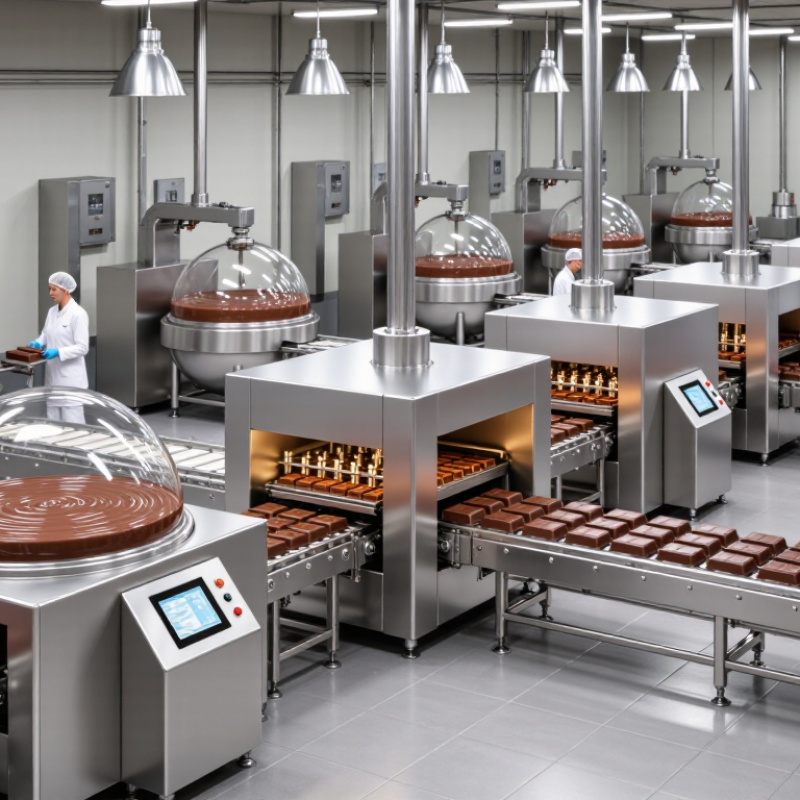
A chocolate bar production line is an integrated system that converts raw ingredients into wrapped, saleable bars. It commonly includes ingredient dosing, melting, refining, conching, tempering, molding, cooling, demolding, inspection, and packaging equipment. Each stage controls texture, flavor, weight, shape, or shelf stability. It is modular.
According to Fortune Business Insights’ 2024 Chocolate Confectionery Market report, the global market reached about USD 119.39 billion in 2023. This scale increases pressure on manufacturers to improve throughput without weakening product consistency. A tempering unit, for example, carefully controls chocolate crystal formation. Poor tempering may create gray surfaces, weak snap, or rapid melting. Cooling tunnels then reduce bar temperature through controlled airflow, often across several zones. Small errors matter.
A reliable line also requires hygienic design, traceable controls, and repeatable cleaning procedures. The International Organization for Standardization’s ISO 22000 framework emphasizes hazard control across food production processes. In practice, operators check metal detection, filling weight, conveyor speed, cooling temperature, and wrapper seals. Research and Markets’ 2024 confectionery equipment analysis identifies automation and flexible production as important investment factors. However, automation does not remove every risk. A sensor can detect weight variation, but it cannot explain a sticky product caused by unstable room humidity. That part still needs trained technicians, documented testing, and honest review of production data.
How Chocolate Bar Production Lines Work
A chocolate bar production line turns liquid chocolate into a measured, cooled, wrapped product. The process begins with roasting, refining, and conching cocoa ingredients. A tempering unit then controls crystal formation through precise heating and cooling. This step creates a glossy surface and a clean snap.
Depositors fill heated moulds with consistent chocolate weights. Vibration removes trapped air and spreads chocolate into corners. Cooling tunnels reduce the product temperature gradually, preventing cracks and bloom. The bars are demoulded, inspected, and transferred to flow wrapping equipment. According to PMMI’s 2024 packaging industry research, automation and flexible changeovers remain major investment priorities. This matters when a line switches between bar sizes or recipes. However, speed alone can expose weaknesses. Poor tempering control may create defects that visual inspection misses.
Tips: Keep chocolate temperature sensors calibrated. Record cooling-tunnel humidity daily. Test weight variation at regular intervals. The 2024 chocolate market analysis from Fortune Business Insights projects continued market growth, increasing pressure for reliable, scalable production. Energy use also deserves attention. Heating, cooling, compressed air, and refrigeration can dominate operating costs. A practical line audit should compare output, reject rates, cleaning time, and energy consumption. Data reports offer useful benchmarks, but factory conditions differ. Real measurements are still essential.
Key Factors for Comparing Equipment Suppliers
Top 10 Chocolate Bar Production Line Suppliers? Key Factors for Comparing Equipment Suppliers
Comparing chocolate bar production line suppliers requires more than checking rated capacity. The International Cocoa Organization reported a 478,000-tonne cocoa deficit for the 2023/24 season, highlighting supply and cost volatility. A reliable supplier should therefore support flexible recipes, smaller batches, and quick product changeovers. Ask for verified output data at your target bar weight, not only impressive maximum figures. Real factory trials matter.
Measure tempering accuracy, cooling stability, depositor precision, and enrobing consistency. A two-degree temperature drift can affect gloss, snap, and shelf stability. Request documented OEE results from comparable installations. PMMI industry research repeatedly identifies automation, labor efficiency, and data visibility as major packaging priorities. Check whether the line records downtime causes, temperature trends, and maintenance alerts in usable formats. Fancy dashboards are not always useful.
Hygienic design deserves equal attention. Look for tool-free access, sloped surfaces, washable components, and materials suitable for food contact. Confirm compliance with HACCP procedures, ISO 22000 systems, and relevant local machinery rules. Spare-parts availability is often overlooked. Ask for delivery times, technician response targets, training hours, and remote support coverage. Energy data should include the complete line, including refrigeration and compressed air. Supplier references can reveal uncomfortable details. One weakness remains common: advertised capacity may assume ideal chocolate viscosity, skilled operators, and no stoppages. That is not a factory plan.
Top 10 Chocolate Bar Production Line Suppliers? - Key Factors for Comparing Equipment Suppliers
| Anonymous Supplier Profile | Typical Line Capacity | Compatible Bar Weight | Molding Method | Tempering System | Cooling Tunnel Length | Automation Level | Installed Power | Approx. Footprint | Typical Lead Time | Warranty Benchmark | After-Sales Support | Best-Fit Operation |
| Supplier Profile 01 | 100–300 kg/h | 10–100 g | One-shot or standard solid-bar molding | Continuous automatic tempering | 12–18 m | Standard | 45–75 kW | 18–25 m × 4–6 m | 4–6 months | 12 months | Remote commissioning; spare-parts package | Small commercial and growing confectionery plants |
| Supplier Profile 02 | 300–600 kg/h | 20–150 g | Polycarbonate-mold depositing | Automatic continuous tempering | 18–25 m | High | 75–120 kW | 25–35 m × 5–7 m | 5–8 months | 12–18 months | On-site installation; operator training | Medium-scale standard bar production |
| Supplier Profile 03 | 500–1,000 kg/h | 25–200 g | High-speed mold filling with automatic demolding | Multi-stage automatic tempering | 25–35 m | High | 120–180 kW | 35–50 m × 6–8 m | 6–10 months | 12–18 months | Factory acceptance test; commissioning support | High-volume retail bar manufacturing |
| Supplier Profile 04 | 800–1,500 kg/h | 30–250 g | Servo-controlled depositing and mold transfer | PLC-controlled automatic tempering | 30–45 m | High | 180–280 kW | 45–65 m × 7–9 m | 8–12 months | 18 months | Preventive-maintenance plan; hotline support | Large plants requiring consistent throughput |
| Supplier Profile 05 | 150–400 kg/h | 15–120 g | Flexible molding for solid and filled bars | Batch or continuous tempering | 15–22 m | Standard | 55–95 kW | 20–30 m × 4–6 m | 4–7 months | 12 months | Basic training; remote diagnostics | Manufacturers needing product flexibility |
| Supplier Profile 06 | 250–700 kg/h | 20–180 g | Filled-bar depositing with shell-forming capability | Automatic tempering with recipe control | 20–30 m | High | 85–145 kW | 28–42 m × 5–7 m | 6–9 months | 12–18 months | Recipe setup; process validation support | Filled, layered, and center-filled chocolate bars |
| Supplier Profile 07 | 400–900 kg/h | 25–220 g | Interchangeable molds with quick-change tooling | Continuous tempering with automatic viscosity control | 24–36 m | High | 110–190 kW | 32–50 m × 6–8 m | 7–10 months | 18 months | Changeover training; service-contract option | Plants producing multiple bar formats |
| Supplier Profile 08 | 600–1,200 kg/h | 30–250 g | High-speed depositing with robotic handling | Fully automatic multi-zone tempering | 30–45 m | High | 150–250 kW | 42–62 m × 7–9 m | 8–12 months | 18–24 months | Integration with packaging and plant systems | Export-oriented and highly automated facilities |
| Supplier Profile 09 | 80–250 kg/h | 10–100 g | Compact depositing and manual mold loading option | Compact automatic tempering | 10–16 m | Standard | 30–60 kW | 15–23 m × 3–5 m | 3–5 months | 12 months | Remote support; simplified maintenance access | Start-ups, seasonal production, and limited floor space |
| Supplier Profile 10 | 1,000–2,000 kg/h | 40–300 g | Continuous high-speed molding and automatic demolding | Centralized automatic tempering system | 40–60 m | High | 220–380 kW | 55–80 m × 8–10 m | 10–15 months | 18–24 months | Full project engineering; performance testing; spare-parts planning | Large-scale, multi-shift industrial production |
Comparison note: The figures show realistic benchmark ranges commonly specified for chocolate bar production lines. Actual capacity depends on bar weight, mold pitch, chocolate viscosity, cooling conditions, product recipe, packaging speed, and operating hours. Confirm final specifications, utility requirements, food-safety documentation, validation results, delivery schedule, and service coverage through a formal technical quotation.
Top 10 Chocolate Bar Production Line Suppliers
Top 10 Chocolate Bar Production Line Suppliers
Choosing among the top 10 chocolate bar production line suppliers requires more than comparing machine prices. A reliable shortlist should examine tempering accuracy, mold changeover time, cooling stability, wrapping speed, and after-sales support. The equipment must also handle recipe changes without creating excessive waste. According to PMMI’s 2024 packaging technology research, manufacturers increasingly prioritize automation, traceability, and flexible production systems. These priorities matter when one factory produces small premium bars and high-volume retail products.
Production capacity should match real demand, not optimistic forecasts. The International Cocoa Organization’s 2023/24 market report highlighted continued volatility in cocoa supply and pricing. That pressure makes precise dosing, efficient rework control, and low material loss financially important. Suppliers with integrated tempering, depositing, cooling, and packaging stages may reduce handling risks. Still, “fully automatic” does not always mean better. A complex line can become expensive to maintain. That is an uncomfortable detail.
Site experience also separates strong suppliers from attractive proposals. Request documented test results using your chocolate formula, target bar weight, and packaging film. Check temperature records near the cooling tunnel, not only the sales brochure. Grand View Research estimated the global chocolate market at more than 130 billion U.S. dollars in 2023, showing the scale of competition. Yet market size does not guarantee equipment quality. Independent audits, operator training, spare-parts availability, and verified references deserve equal attention.
How to Select the Right Supplier for Your Factory
Choosing among the top 10 chocolate bar production line suppliers requires more than comparing machine prices. Start with your product and factory conditions. Define bar weight, daily output, recipe viscosity, cooling space, and available power. A line designed for 500 kilograms per hour may perform poorly in a small workshop.
Ask each supplier for a process diagram, utility list, installation schedule, and maintenance plan. Check whether the tempering unit, depositor, cooling tunnel, mold system, and wrapping equipment work as one system. Request factory references with similar products, not only impressive production figures. Speak with operators if possible. Their comments often reveal cleaning difficulties and recurring stoppages. Small details matter.
Review food-contact materials, electrical safety documents, hygiene design, and compliance with your local requirements. Confirm spare-part availability, remote support hours, training, and warranty limits in writing. A reliable supplier should provide test runs using your chocolate and packaging. Measure gloss, snap, weight accuracy, and demolding performance. Do not accept beautiful samples alone. They can hide unstable temperatures. One weakness in our own selection process was trusting promised capacity without checking changeover time. That mistake affected labor planning. Leave room for questions, corrections, and a second technical review before signing. The cheapest offer may become expensive when downtime, rejected bars, and delayed support enter the calculation.