2026 Top L6e Quadricycles for Global Buyers?
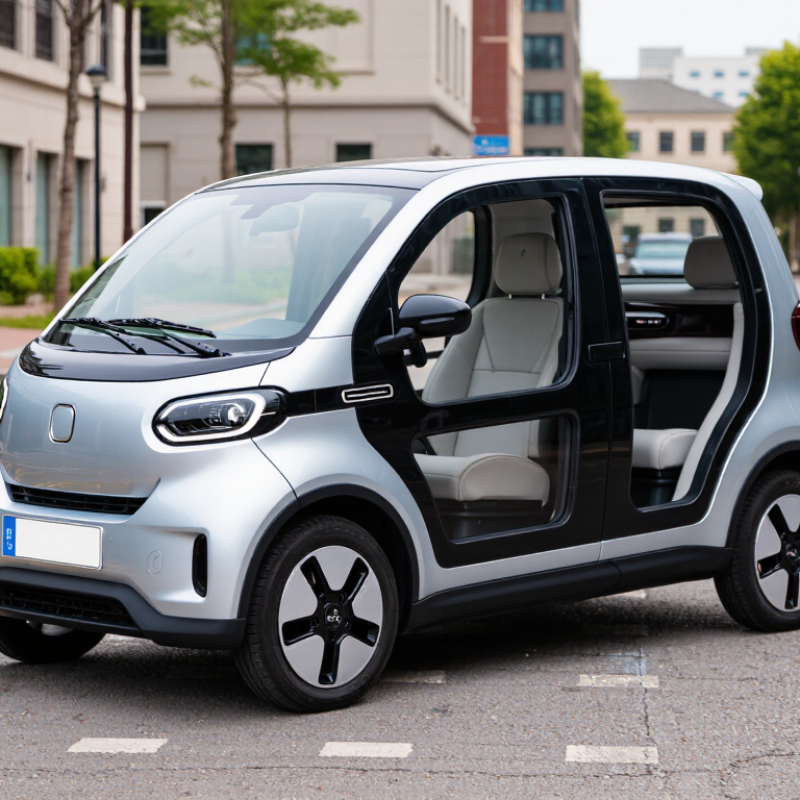
The 2026 market for L6e Quadricycle vehicles is becoming more practical, diverse, and competitive. Global buyers now expect more than a compact electric body. They want dependable range, safe braking, simple charging, weather protection, and predictable ownership costs. Urban streets are changing quickly. Narrow lanes, limited parking, and low-emission zones are reshaping everyday transport.
Carlos Ghosn, former Renault-Nissan-Mitsubishi Alliance executive, once described the Twizy as “a new vehicle concept that combines the best of a scooter and a car.” That idea still explains the appeal of an L6e Quadricycle. It can fit into tight spaces while offering more shelter than a scooter. However, the comparison is not perfect. Some models feel refined inside, while others still resemble enclosed utility carts.
This guide examines the 2026 options from a buyer’s perspective. It considers range, charging time, passenger comfort, safety equipment, after-sales support, and regional compliance. Specifications can look impressive on paper. Real performance may change with cold weather, hills, heavy loads, or frequent stop-and-go driving. Small details matter. A usable cabin, clear controls, strong door seals, and accessible service parts can influence daily satisfaction.
Not every popular model will suit every country. Registration categories, speed limits, import requirements, and equipment rules differ between markets. Buyers should verify local requirements before placing an order. Price is only one part of the decision. For many users, the better choice may be the vehicle that starts reliably, charges easily, and remains supported after delivery. That sounds ordinary. It is also where many purchasing decisions become difficult.
L6e Classification: EU Limits of 45 km/h, 6 kW, and 425 kg
2026 Top L6e Quadricycles for Global Buyers
For European buyers, an L6e quadricycle is defined by clear technical limits. Its maximum design speed is 45 km/h, keeping it suited to urban streets and short daily trips. The permitted power is generally capped at 6 kW. This limit affects acceleration, hill performance, and energy consumption.
The mass limit is 425 kg in running order, excluding the battery weight for electric models under EU rules. That detail matters. A larger battery may improve range but can change the vehicle’s practical balance. Buyers should check the technical certificate, not only the sales page. Regulation (EU) No 168/2013 provides the main European framework, while national registration rules can still differ.
A useful inspection includes a speedometer check, brake response, lighting, seat belts, and charging equipment. Look closely at the stated power rating. Peak power and continuous rated power are not always identical. The vehicle may feel quick for a few seconds, then slow on a steep road. That is normal, but it deserves honest testing.
Cabin size also needs attention. Measure the driver’s legroom and storage space with real luggage. Small details matter. Cold weather can reduce electric range, and local service access may be limited in some markets. Buyers outside the EU should confirm whether their country accepts the L6e category or requires another classification.
2026 Top L6e Quadricycles for Global Buyers
EU L6e classification is defined by a maximum design speed of 45 km/h, maximum continuous rated power of 6 kW, and maximum unladen mass of 425 kg, excluding the traction battery for electric vehicles.
Each bar represents 100% of the applicable L6e regulatory ceiling. The exact limit and unit are shown in the chart labels and tooltips. These thresholds are based on the EU vehicle category framework under Regulation (EU) No 168/2013.
2026 Buyer Criteria: Range, Battery Capacity, Safety, and Charging Data
For 2026 global buyers, L6e quadricycles should be judged by usable range, not brochure numbers. A stated 120-kilometre range may fall sharply in cold weather, heavy traffic, or hilly streets. Ask whether the figure comes from a controlled test or daily customer data. A realistic urban model should offer enough reserve for commuting, errands, and unexpected detours.
Battery capacity matters, but larger is not always better. A 10 kWh pack may support longer trips, yet it can increase weight, charging time, and replacement cost. Check the battery chemistry, warranty terms, thermal protection, and expected capacity retention.
Request clear data after repeated charging cycles. Some published figures remain optimistic. That deserves scrutiny.
Safety requires more than a strong-looking cabin. Examine seat-belt design, lighting, visibility, door locking, braking performance, and available crash-test information. Local classification rules differ, so buyers should verify speed limits, registration requirements, and permitted road use with official authorities. Charging should fit real routines. A standard household outlet may be convenient, but installation quality and circuit protection are essential.
Ask for charging time from 20% to 80%, not only from empty to full. Measure cable length and connector access at home. Small details matter.
A practical test drive should include a cold start, a steep road, tight parking, and several braking events. Record energy use afterward. Keep some doubt. Real roads are less polite than test laboratories.
Top 2026 L6e Models Compared by Speed, Payload, Range, and Price
2026 Top L6e Quadricycles for Global Buyers?
Top 2026 L6e Models Compared by Speed, Payload, Range, and Price
The strongest 2026 L6e quadricycles target short urban trips, not high-speed travel. Most are limited to about 45 km/h, although local rules can differ. A compact two-seat model usually carries 150–200 kg and offers 70–100 km of claimed range. Expected pricing often falls between €8,000 and €14,000, before taxes, delivery, and battery options. Small footprints help. A 2.5-meter vehicle can fit into tight curbside spaces, while a turning circle near seven meters makes narrow streets less stressful.
A longer-range commuter version may advertise 120–160 km, but weather, passenger weight, hills, and heating can reduce that figure sharply. A utility-focused model often accepts 250–350 kg, yet its range may fall below 90 km. That trade-off matters for tools, groceries, or small business deliveries. Entry-level versions usually cost less, but basic seats, slower charging, and limited storage can become tiring after several weeks. Premium cabins may add stronger insulation and better displays, though the extra price is not always justified.
Range claims need careful reading. Test them on your regular route. I would also inspect battery warranty terms, charging time, ground clearance, and payload certification. A 45 km/h limit feels adequate in a dense center, but frustrating on open roads. This comparison is useful, not perfect; suppliers may change specifications during 2026. Verify local registration, insurance, and driving requirements before ordering.
2026 Top L6e Quadricycles for Global Buyers? - Top 2026 L6e Models Compared by Speed, Payload, Range, and Price
A practical comparison of representative European L6e-class electric quadricycles for urban and short-distance mobility.
| Anonymous Model | Seats | Top Speed | Rated Range | Battery Capacity | Payload | Charging Time | Indicative Price | Best Use Case |
| Model 01 — City Standard | 2 | 45 km/h | 75 km WLTP | 5.5 kWh | Approx. 140 kg | Approx. 4 hours | €7,990–€8,500 | Low-cost urban commuting |
| Model 02 — Compact Premium | 2 | 45 km/h | 75 km WLTP | 5.5 kWh | Approx. 175 kg | Approx. 4 hours | €9,500–€10,000 | Style-focused city travel |
| Model 03 — Extended-Range Twin-Battery | 2 | 45 km/h | 149 km | Up to 11.2 kWh | Approx. 156 kg | Removable battery system | €11,000–€12,500 | Longer daily routes |
| Model 04 — Practical Utility | 2 | 45 km/h | 113 km | 5.5 kWh | Approx. 250 kg | Approx. 3.5 hours | €14,000–€16,000 | Higher-carrying-capacity work trips |
| Model 05 — Long-Range Light Quadricycle | 2 | 45 km/h | Up to 192 km | Approx. 8.3 kWh | Approx. 200 kg | Approx. 3 hours | €17,000–€20,000 | Maximum range within L6e limits |
Important specification notes
- All entries are anonymized model profiles based on published European L6e electric quadricycle specifications; company and brand names are intentionally omitted.
- L6e vehicles are generally limited to 45 km/h, with a maximum continuous rated power of 6 kW and an EU type-approval mass limit of 425 kg excluding traction batteries.
- Range figures use WLTP where available; real-world range can be lower because of temperature, passenger load, speed, terrain, and heating or cooling use.
- Prices are indicative European-market amounts before local taxes, registration, delivery, incentives, battery subscriptions, and optional equipment.
- Payload is an approximate usable load and should be checked against the final market homologation document before purchase or import.
Regional Rules: EU Type Approval, Quadricycle Licences, and Road Access
2026 Top L6e Quadricycles for Global Buyers?
For global buyers, L6e compliance matters more than styling. Under Regulation (EU) No 168/2013, an L6e vehicle generally has a maximum design speed of 45 km/h and a power limit of 6 kW. Electric versions also follow specific mass rules. The certificate of conformity proves the vehicle matches its approved type. Without it, registration can become difficult.
Driving licences differ across Europe. Many countries accept an AM licence, while others permit limited car-licence access. Minimum ages also vary. Road access is not universal. Motorways and high-speed roads usually exclude 45 km/h quadricycles, but local signs decide the final answer. Check the registration authority before shipping. IEA’s Global EV Outlook 2025 reported more than 17 million electric car sales worldwide in 2024. That growth supports electric mobility, but it does not remove L6e category rules.
Tips: Ask for the EU type-approval number, certificate of conformity, battery specifications, and approved top speed. Confirm insurance, parking rules, charging access, and winter requirements locally. Small details matter. A tidy checklist can still miss a municipal restriction. Importers should verify documents with the national authority, not rely only on a seller’s brochure. Regional guidance changes, and translations may create uncomfortable confusion.