Why Choose TM3DQ16RG for Industrial Automation?
Choosing an output module is a practical decision, not a catalog exercise. The TM3DQ16RG is a 16-channel relay output module in Schneider Electric’s Modicon TM3 range. It can suit control panels that need a PLC to switch several field devices, such as indicator lamps, contactors, or small actuators. The exact load and wiring requirements still matter.
In industrial automation, the useful question is not simply whether a module has enough outputs. Engineers also need to check voltage, current, switching frequency, isolation, terminal layout, and compatibility with the chosen controller. A relay output may offer flexibility across different types of loads, but frequent switching can affect relay service life. That trade-off deserves attention.
Fit matters. A clear panel layout, labeled conductors, and accessible terminals can make commissioning and later troubleshooting less frustrating. Before selecting the TM3DQ16RG, compare its current datasheet with the application’s load specifications and the controller’s hardware configuration. Check the required protection and wiring practices, too; these depend on the installation.
No module is a shortcut. This guide examines where the TM3DQ16RG may fit, what to verify before installation, and which limitations could influence a design. Product details and availability can change, so confirm critical specifications with current manufacturer documentation. That extra check may feel tedious. It can prevent a costly mismatch.
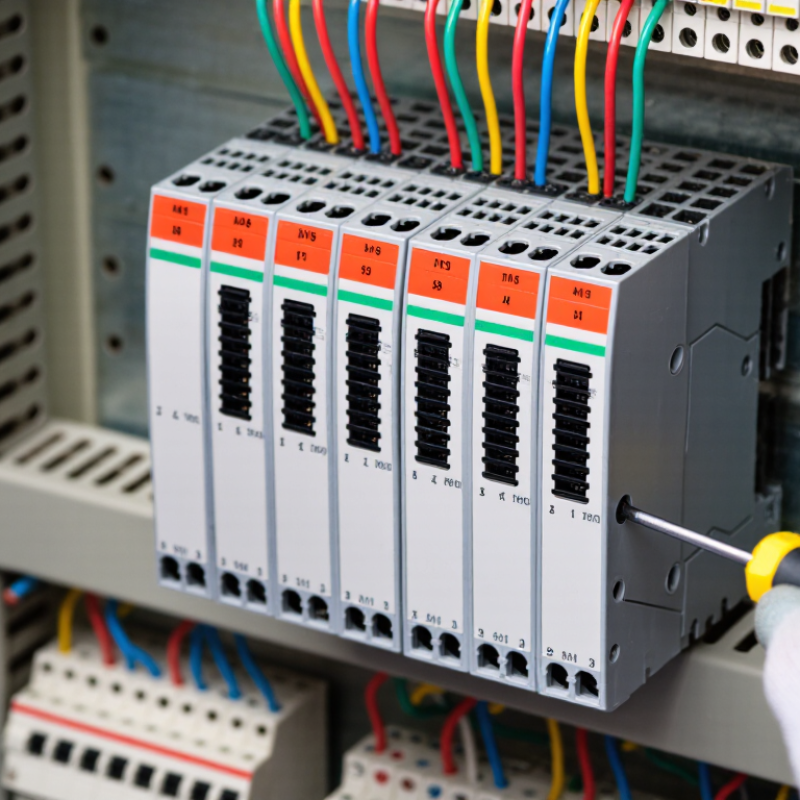
What Is the TM3DQ16RG in an Industrial Automation System?
The TM3DQ16RG is a 16-point digital output expansion module for an industrial control system. It lets a controller switch external circuits through individual relay outputs. In practice, those outputs can operate devices such as indicator lamps, contactor coils, or small solenoid valves, provided each load stays within the module’s ratings. It does not make control decisions by itself. The controller sends commands; the module carries out the switching.
Think of it as a bridge between program logic and field wiring. On a panel, an engineer might assign one output to a conveyor-ready lamp and another to a valve. Clear labels make faults easier to trace. Small detail, big difference. Relay contacts can suit different circuit types, but wiring and load limits still need checking against the product documentation. Inductive loads may also need suitable suppression. A common oversight is assuming that sixteen outputs means any sixteen devices can be connected. It does not. Shared power supplies, switching frequency, and protective devices all affect a reliable installation. Even a neat panel deserves a second wiring review.
How Does the TM3DQ16RG Handle Control Signals?
The TM3DQ16RG turns controller decisions into switching actions for field devices. Its 16 output points can control suitable indicators, relay coils, or valves. A program changes an output state, and the corresponding relay contact changes state. Simple on paper. In a cabinet, small wiring details matter.
Treat each output as a controlled switch, not as a power source. Check the load’s voltage and current against the module’s specifications before connecting it. Inductive loads, such as coils, may need suitable suppression to reduce electrical noise and contact wear. Keep control wiring clear of noisy power cables where practical. I would not assume every load behaves neatly; startup current and switching frequency can change the picture. Test one channel with the actual device before duplicating the wiring across all outputs.
Tips: Label both ends of every conductor. Confirm the common connections, load ratings, and output state during commissioning. A quick meter check can catch a reversed or missing connection.
Which Automation Tasks Can the TM3DQ16RG Support?
The TM3DQ16RG suits control panels that need to switch multiple discrete loads. Its 16 relay outputs can operate contactor coils, indicator lamps, alarms, and suitably rated valve controls. Picture a packaging line: one output signals a conveyor contactor, another switches a beacon, and others trigger pneumatic valves. Keep motor current off the module; use correctly rated contactors or drives. Check load inrush, voltage, and switching frequency against the module documentation. Relays wear.
The U.S. Department of Energy estimates that motor-driven systems use about 68% of manufacturing electricity. Its industrial motor-systems sourcebook highlights why dependable start-stop sequencing and status signaling matter. The International Federation of Robotics reported 541,302 industrial robots installed worldwide in 2023, reflecting the scale of automated production. A relay module does not create automation alone; PLC logic, sensors, protection, and commissioning shape the result. Use it for routine switching and machine coordination, not emergency-stop or other safety-rated functions. One caveat: relay outputs may be slower and less durable than transistor outputs under rapid cycling. That trade-off is easy to overlook.
How Does the TM3DQ16RG Integrate with Other Equipment?
The TM3DQ16RG integrates as a discrete-output expansion module, not as a standalone network device. A PLC maps its 16 relay outputs to commands for contactors, indicator lamps, valves, or other compatible loads. The controller communicates with the wider system; the module switches local circuits. That distinction matters. In a control cabinet, an engineer can trace each output from the PLC program to a labelled terminal and then to a field device. Check load current, voltage, isolation, and switching frequency against the module documentation before wiring. Relay contacts are flexible, but they are not suitable for every fast-switching or high-current load.
Integration also depends on the controller’s expansion-bus compatibility and the wider network design. The 2024 Industrial Network Market Shares report found that Ethernet-based networks accounted for 71% of newly installed industrial network nodes. This points to Ethernet’s growing role, but it does not mean this module connects directly to Ethernet; the PLC typically bridges field I/O and supervisory systems. Keep output names consistent across wiring drawings, PLC tags, and HMI screens. Test a real load, not only a simulated signal. Small mismatches happen. A mislabeled valve output can waste commissioning time, and documentation is not always as clear as it should be.
What Factors Should Guide TM3DQ16RG Selection?
Choosing TM3DQ16RG for an automation panel should start with the actual loads it will control. List each device, its operating voltage, steady current, and start-up demand. A small solenoid may draw more current briefly when energized. Check the module’s technical documentation against those values, including the permitted load per channel and total output limits. Small details matter.
Next, confirm that the module matches the controller’s hardware configuration and software setup. Review the output type, terminal arrangement, wiring method, and any protection requirements. Leave space for tidy wiring and clear labels; cramped terminals make troubleshooting slower. I would also check how the system behaves after a power interruption, since outputs may need to return to a defined state. Do not assume an existing panel’s wiring is suitable without inspection.
Finally, consider the installation environment and the cost of downtime. Check operating temperature, cabinet conditions, vibration exposure, and whether nearby equipment creates electrical noise. Think about maintenance, too: can technicians identify a failed channel quickly, and is a compatible spare available? A brief review of the datasheet and panel drawings can prevent avoidable rework. One point is easy to miss: the best choice on paper may still be awkward to service in a crowded cabinet.
Why Choose TM3DQ16RG for Industrial Automation?
Key selection check: output current per channel
The TM3DQ16RG provides 16 relay outputs, with a rated output current of up to 2 A per channel. Before selection, check each load’s voltage and current, switching frequency, and any group or thermal limits in the current product datasheet. Relay outputs suit applications that need switching flexibility; transistor outputs may be a better fit for frequent, fast switching.