7 Tips for Choosing the Right Carbon Fiber Sheet?
Choosing the right Carbon Fiber Sheet can determine whether a project feels precise, durable, and professionally finished. A lightweight panel may look impressive, yet its performance depends on fiber direction, resin quality, thickness, and surface treatment. These details matter when building drone frames, automotive panels, laboratory fixtures, or custom machine guards.
This guide shares seven practical tips based on material selection and workshop experience. It explains how to compare weave patterns, stiffness, weight, dimensions, and manufacturing quality. It also considers the difference between cosmetic panels and structural components. Check the specifications carefully. A glossy surface does not always indicate superior strength. Neither does a higher price guarantee better performance.
Measure twice.
Before ordering, confirm the sheet’s thickness tolerance, cutting method, flatness, and compatibility with adhesives or fasteners. Reputable suppliers should provide technical data, batch information, and clear guidance for machining. Independent testing or engineering review may be necessary for load-bearing applications. Even experienced buyers can overlook moisture exposure, edge damage, or heat limits. I have seen attractive sheets fail because the design ignored hole placement and unsupported spans. That mistake is easy to repeat. The following tips aim to make your decision more reliable, while acknowledging that no single Carbon Fiber Sheet suits every project.
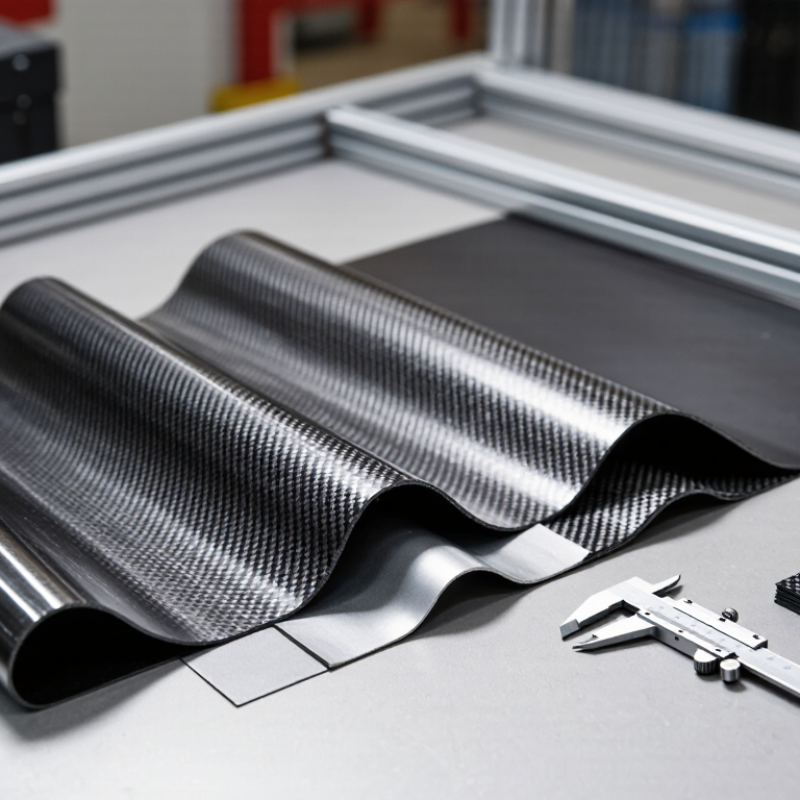
Carbon Fiber Sheet Basics: Types, Weaves, and Core Properties
Carbon fiber sheets are not defined by appearance alone. Their structure matters more. Common options include prepreg sheets, wet-layup panels, and pultruded plates. Prepreg offers controlled resin content and consistent thickness, but it usually needs controlled curing. Wet-layup sheets can suit repairs or prototypes, although trapped air may weaken the laminate. Pultruded sheets provide strong, continuous fibers along one direction.
A useful tip is to match the weave with the load. Plain weave resists handling damage and stays stable during cutting. Twill weave drapes more easily around curves, but its diagonal pattern can hide small distortions. Unidirectional carbon delivers excellent strength along one axis. It is less forgiving when loads change direction. I have seen attractive surfaces fail because the fiber direction was misunderstood.
Another tip is to check the core properties, not only the finish. Compare thickness, fiber orientation, resin content, tensile strength, flexural strength, and stiffness. Ask for test conditions and tolerances. A glossy surface proves very little. Check for pinholes, wrinkles, uneven edges, and soft spots under angled light. Small defects matter.
Think about temperature and moisture. Some sheets lose performance when exposed to heat beyond their resin system’s limits. A supplier’s datasheet should explain these boundaries clearly. My own selection mistakes usually came from choosing the lightest panel too quickly. Weight matters, but load paths matter more. When uncertain, test a small sample before committing to a larger panel.
Choose the Right Sheet Thickness, Finish, and Fiber Orientation
7 Tips for Choosing the Right Carbon Fiber Sheet?
Choosing a carbon fiber sheet starts with the load, not the appearance. Measure the span, mounting points, and expected bending force. A thin sheet may flex around a bolt. A thicker sheet adds stiffness, weight, cost, and machining effort. For a small cover, 1–2 mm may work. Structural panels often need more, yet thickness alone can mislead. Confirm the design with calculations or a prototype coupon.
Finish affects handling and performance. A smooth surface suits visible panels and easier cleaning. A textured finish can improve bonding when properly prepared. Texture alone does not guarantee adhesion. Check flatness, resin quality, voids, and edge condition under strong light. I inspect cut edges because hidden delamination may appear there. It is easy to overlook.
Fiber orientation deserves equal attention. Unidirectional sheets resist loads along their fibers. Woven sheets handle changing loads more evenly. Match the main fiber direction with the load path. Then consider off-axis forces. A panel can feel stiff in one direction and surprisingly weak in another. Do not trust appearance alone. Review technical data, request test information, and test your assembly. My early selections sometimes favored a clean finish over practical strength. That was a costly lesson.
7 Tips for Choosing the Right Carbon Fiber Sheet
Relative Bending Stiffness by Sheet Thickness
For sheets made from the same carbon-fiber laminate, bending stiffness increases approximately with the cube of thickness. The index is normalized to a 1 mm sheet, so a 2 mm sheet is approximately eight times stiffer and a 3 mm sheet is approximately twenty-seven times stiffer in bending. Choose the finish according to appearance and bonding needs, and select fiber orientation based on the primary load direction: unidirectional layers provide strength along one axis, while balanced 0°/90° or quasi-isotropic layups provide more even multidirectional performance.
Check Manufacturing Quality, Dimensions, and Compatibility
7 Tips for Choosing the Right Carbon Fiber Sheet
Inspect the sheet under bright, angled light. A reliable surface should show consistent weave, without bubbles, dry spots, or resin-rich patches. Ask how the layers were laid and cured. Manufacturing records, material certificates, and lot traceability provide stronger evidence than polished product photos. Check the fiber direction carefully. Unidirectional sheets behave differently from woven sheets under load. Confirm the resin type and curing temperature, especially for parts exposed to heat, moisture, or chemicals. A sample cut can reveal uneven layers or hidden voids. It is a small step, but it prevents expensive mistakes.
Measure thickness, length, width, and flatness yourself when the sheet arrives. Do not rely only on nominal dimensions. Machining allowances matter. A sheet listed as 2 millimeters thick may vary across its surface. Compare the measured tolerance with your drawing and assembly gaps. Check hole locations, edge quality, and cutting requirements before ordering a full batch. Compatibility also includes adhesives, fasteners, electrical insulation, and thermal expansion. Test a small bonded joint under realistic conditions. I once focused too much on strength and overlooked installation temperature. The part performed well in the workshop, then shifted during service. That mistake was avoidable. Ask for test data that matches your use, not generic claims. Keep the inspection notes with the purchase records. Details become important later.
Compare Suppliers, Certifications, Pricing, and Delivery Options
Choosing the right carbon fiber sheet is less about finding the lowest quote. Compare suppliers by manufacturing experience, process control, and communication quality. Ask for fiber orientation, resin type, thickness tolerance, surface finish, and lot traceability. A supplier who answers clearly is usually safer than one offering vague specifications.
Certifications need careful checking. Look for quality systems such as ISO 9001, plus material test reports linked to the actual production batch. Depending on the application, relevant ASTM or equivalent testing may confirm tensile strength, flatness, or dimensional stability. Do not treat a certificate as automatic proof of performance. Verify its scope, issuing body, and date. A small sample can reveal uneven edges, resin-rich areas, or unexpected warping.
Pricing comparisons should include cutting, tooling, packaging, taxes, and freight. The cheapest sheet may become expensive after waste and rework. Request itemized quotations from at least three suppliers. Then compare delivery options, not only promised dates. Check production lead time, stock availability, protective packaging, tracking, and procedures for damaged goods. Fast delivery is useful, but rushed production may reduce consistency. I would also allow extra time for inspection, because every schedule looks perfect before reality changes it. No checklist is perfect. Reconsider your choice when test results, price, and delivery promises do not agree.