What Are Machine Guarding Doors?

Machine Guarding Doors are movable barriers that help separate people from hazardous machine areas. They provide controlled access for tasks such as loading materials, clearing jams, and servicing equipment. Unlike fixed panels, these doors open when access is needed, then return to a protective position. Some slide along a track; others swing on hinges. Small design choices matter. A handle placed too close to a pinch point can make routine work awkward.

Many doors work with an interlock that signals the machine when the guard opens. Depending on the equipment and risk assessment, opening the door may stop hazardous movement or prevent a cycle from starting. An interlock is not a substitute for sound engineering or careful maintenance. Visibility matters, too. A clear panel may help an operator check a work area without opening the door, though dust, glare, and scratches can limit what is visible. No single door suits every machine.

In daily operation, the door must be practical enough that workers can use it as intended. A heavy panel, a sticking latch, or a blocked track can encourage workarounds. That detail is easy to miss. Regular checks can reveal loose hinges, damaged seals, or misaligned switches before they affect reliable operation. The sections that follow explain common door types, key components, selection considerations, and maintenance practices. The aim is useful guidance, not a claim that one design solves every safety concern.
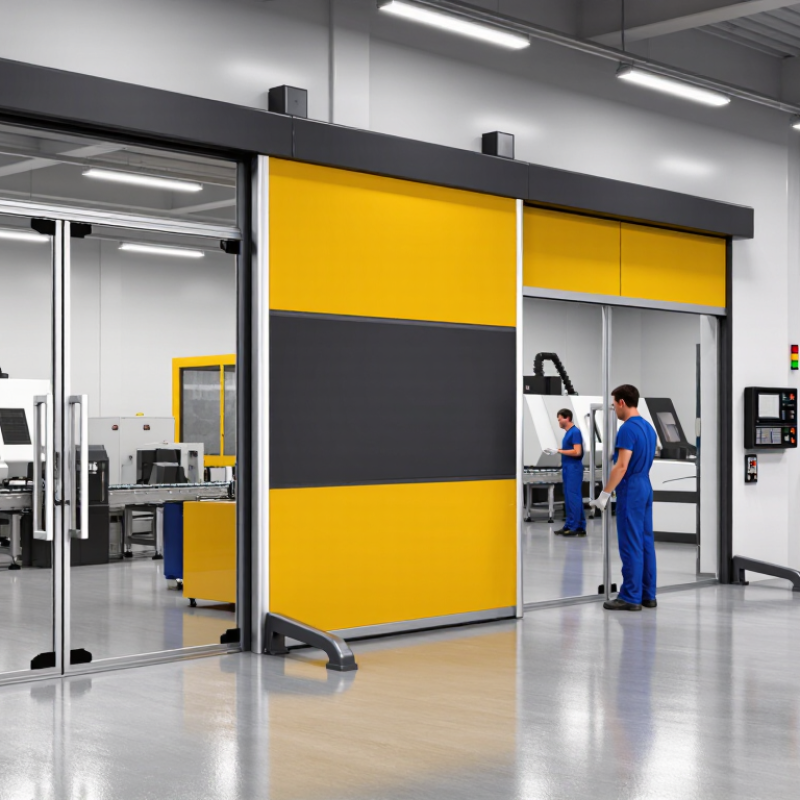
What Are Machine Guarding Doors?

Definition and Purpose of Machine Guarding Doors

What Are Machine Guarding Doors?
Definition and Purpose of Machine Guarding Doors

Machine guarding doors are movable barriers fitted around hazardous parts of machinery, such as cutting tools, rotating shafts, or robotic work areas. They let authorized workers access equipment for tasks like loading, adjustment, and cleaning while helping separate people from dangerous motion. Unlike a fixed guard, a door can open and close, so its design must account for both access and protection.

Many guarding doors use an interlock that signals the machine to stop or prevents operation while the door is open. The right arrangement depends on the machine’s hazards, stopping time, and how often workers need access. That matters. A door that looks sturdy may still leave gaps, create pinch points, or fail to stop motion quickly enough. These details need careful assessment.

The purpose is not simply to block a view or mark a boundary. A properly selected and maintained door helps reduce exposure to moving parts during routine work and servicing. Hinges, latches, panels, and interlocks should be checked for wear or damage. It is easy to assume a door is safe because it closes. That assumption can be wrong; the whole guarding system must work as intended, and safe work practices still matter.

What Are Machine Guarding Doors?

Definition and purpose: an interlocked access door helps prevent access to hazardous machine motion while it is running.

Illustrative control sequence: 1 means the condition is true; 0 means it is false. Opening the interlocked door removes run permission. Closing it again does not necessarily restart the machine; a separate reset or start action may be required. Actual safety functions depend on the machine’s risk assessment and control-system design.

Core Components and How Machine Guarding Doors Work

A machine guarding door is a movable barrier that controls access to hazardous motion, such as a press ram or rotating spindle. Its basic parts include a rigid frame and panel, hinges or sliding tracks, a handle, and an interlocking switch. Some designs also use guard locking, which keeps the door shut until dangerous movement has stopped. Details matter: a poorly aligned panel can leave a reachable gap.

When the door opens, its interlock sends a signal to a safety relay or safety-rated controller. The control system then stops or prevents hazardous motion. A locked door should release only when the hazard has reached a safe state; restarting should require a separate, deliberate action from a position with a clear view of the work area. The exact design depends on stopping time, access frequency, and the machine’s risks. A switch alone is not a complete safety system.

The need for careful installation is real. OSHA’s FY 2023 Top 10 cited standards report lists machine guarding, 29 CFR 1910.212, with 1,644 violations. That figure reflects inspections, not every unsafe machine. Still, it is a useful warning. Test the door and interlock during commissioning, then check alignment and stopping behavior during routine maintenance. A door that “usually works” deserves another look.

What Are Machine Guarding Doors? - Core Components and How Machine Guarding Doors Work

Component Typical Form or Material Purpose How It Works Key Design or Inspection Point
Door panel Solid sheet metal, mesh, or impact-resistant transparent panel Separates people from hazardous machine areas while allowing access when needed. The panel closes the access opening and forms part of the machine’s physical barrier. Choose a construction that suits the hazard, visibility needs, environment, and required strength.
Frame and fixed guard structure Steel or aluminum framing attached to the machine or floor Supports the door and closes gaps around the access opening. The frame holds the door in alignment and connects the movable guard to the surrounding fixed guard. Check that the structure is secure and that openings do not provide unintended access to hazards.
Hinges or sliding guides Hinges for swing doors; tracks or rollers for sliding doors Allow controlled movement between the open and closed positions. Hinges rotate the door; sliding guides constrain it to move along a defined path. Inspect for looseness, wear, binding, and alignment that could prevent the door from closing fully.
Handle and latch Manual handle with a mechanical catch or latch Enable the user to operate the door and keep it closed during normal operation. The latch holds the door against its frame; on an interlocked door, the safety function is provided by the interlock system, not by the handle alone. Make the door easy to operate without encouraging users to bypass the guard or safety device.
Safety interlock switch or sensor Mechanical, magnetic, or coded non-contact device Detects whether the guard is closed and provides a signal to the machine’s safety control system. When the door opens, the system is designed to initiate the required safe response, such as stopping hazardous motion. The switch or sensor is one part of that system. Use a suitable safety-rated system and verify its operation as part of the machine’s risk assessment and validation.
Guard-locking device (where required) Locking bolt or other controlled locking mechanism Keeps the door closed while hazardous motion or another dangerous condition remains. The lock prevents access until the safety control system permits release. Not every machine guarding door requires guard locking. Consider the time needed for hazards to stop and whether access could occur before the danger has ended.
Safety control system Safety relay, safety controller, and associated wiring or communications Processes guard-device signals and controls the machine’s safety-related functions. It evaluates the door status and triggers the configured response, which may include stopping the machine or preventing a start while the door is open. Design and validate the complete safety function for the specific machine and hazard; a door sensor alone does not ensure a safe stop.
Fasteners and mounting hardware Bolts, brackets, and other machine-compatible hardware Secure the door, frame, and safety devices in their intended positions. Stable mounting helps maintain alignment and reliable operation during repeated use. Check for missing, loose, damaged, or substituted fasteners during inspection and maintenance.

Typical operating sequence: The door is closed, the interlock system confirms its status, and the machine can operate only when the required safety conditions are met. Opening the door initiates the designed safety response. If guard locking is used, the door remains locked until the system permits access. Exact behavior depends on the machine’s hazards and safety design.

Common Types of Machine Guarding Doors

Machine guarding doors provide controlled access to hazardous machine areas while helping keep hands and clothing away from moving parts. OSHA’s Machine Guarding eTool cites an estimate of about 18,000 workplace amputations, lacerations, crushing injuries, and abrasions each year. Not every injury involves a door, but the figure shows why access design deserves careful attention.

Hinged doors swing open for maintenance and cleaning, making them practical where floor space allows. Sliding doors suit narrow aisles and wide machine openings. Lift-up doors can expose an entire work zone, but they need reliable support to prevent an unexpected drop. Removable panels work for infrequent access; captive fasteners help prevent loose hardware from entering equipment. Small details matter. An interlocked door stops or prevents hazardous motion when opened, while guard locking can keep it shut during machine run-down. The right choice depends on access frequency, space, cleaning needs, and the machine’s stopping time.

BLS reported 2.6 million nonfatal workplace injuries and illnesses in private industry in 2023; this broad figure is not specific to machine guarding. Still, it underscores the value of practical safeguards. A door can look solid yet be awkward to clean or easy to leave ajar. That deserves a second look. Verify the interlock, hinges, latch, and stopping behavior during installation and routine inspections. A checklist helps, but it cannot replace observing how people actually use the machine.

Sources: OSHA Machine Guarding eTool; U.S. Bureau of Labor Statistics, Employer-Reported Workplace Injuries and Illnesses, 2023.

Safety Features and Applicable Requirements

What Are Machine Guarding Doors?

Machine guarding doors control access to hazardous areas around equipment, such as robot cells, presses, and conveyor lines. Their safety features may include interlocks that stop or prevent hazardous motion when a door opens. Some installations also use guard locking, which keeps a door closed until dangerous movement has stopped. The right design depends on the machine’s risks, access frequency, and stopping time.

Good installation matters. A misaligned latch can prevent reliable operation, while a poorly placed handle may encourage workers to reach around the guard. Doors should be sturdy, difficult to bypass, and arranged so they do not create new pinch points. Clear labels and visible status indicators can help operators understand whether access is safe. Small details matter. Still, even a well-designed door can become unreliable if its hinges loosen or its interlock is adjusted carelessly.

Applicable requirements vary by location, machine type, and workplace conditions. A documented risk assessment should guide the choice of guard and safety device. Relevant machinery and electrical safety standards may also set expectations for interlocking, control-system performance, and testing. Qualified professionals should review the design against current local requirements rather than rely on a generic checklist. Inspection routines should test door alignment, interlock response, and stopping behavior. In practice, these checks are easy to postpone when production is busy. That is a weakness worth addressing in the maintenance plan.

Selection, Installation, and Maintenance Considerations

Machine guarding doors provide controlled access to hazardous areas while allowing operators to load, adjust, or inspect equipment. Selection should start with the task and the machine’s hazards, not just the opening size. Consider reach distance, door weight, cleaning needs, and how often access is required. A large sliding door may suit a wide work area; a hinged door can be simpler where floor space is limited. Fit matters.

Choose a door and interlocking device suited to the environment, including dust, oil, vibration, and washdown exposure. If hazardous motion continues after a stop command, the risk assessment may call for guard locking until motion has ceased. During installation, secure the frame to a stable structure and align the door so it closes without lifting or rubbing. Keep cables protected and away from moving parts. Then test the interlock under normal operating conditions. Never rely on a door that only looks closed.

Maintenance is practical, not optional. Inspect hinges, latches, fasteners, seals, and cables for wear or looseness. Open and close the door through its full travel; listen for scraping and check that the interlock responds consistently. Record defects and remove the machine from service when a damaged guard cannot provide protection. Small alignment problems can grow. They are easy to overlook. A short, documented inspection routine helps catch them before they interrupt safe operation.

NEW JERSEY

Location

Union Tool & Mold is a mold making, repair and plastic injection molding company located in central New Jersey.
(973) 763-6611

220 Rutgers St, Maplewood, NJ 07040
ACCREDITED

Certified Company


SOCIAL PROFILE

Let’s Connect

We invite you to engage with us on LinkedIn, where you can stay updated on our latest news, insights, and professional opportunities.