China Top Compensation Capacitors Manufacturers?

China has become a major sourcing base for Compensation Capacitors used in power-factor correction, motor drives, lighting, and industrial control systems. However, production scale does not automatically prove product quality. Buyers need stronger evidence.

Power-electronics engineer Laszlo Balogh offers a practical reminder: “The capacitor is not an ideal component.” This principle matters during supplier evaluation. A reliable manufacturer should explain dielectric selection, rated voltage, capacitance tolerance, dissipation factor, thermal endurance, and expected service life. These details reveal more than a polished product catalog.

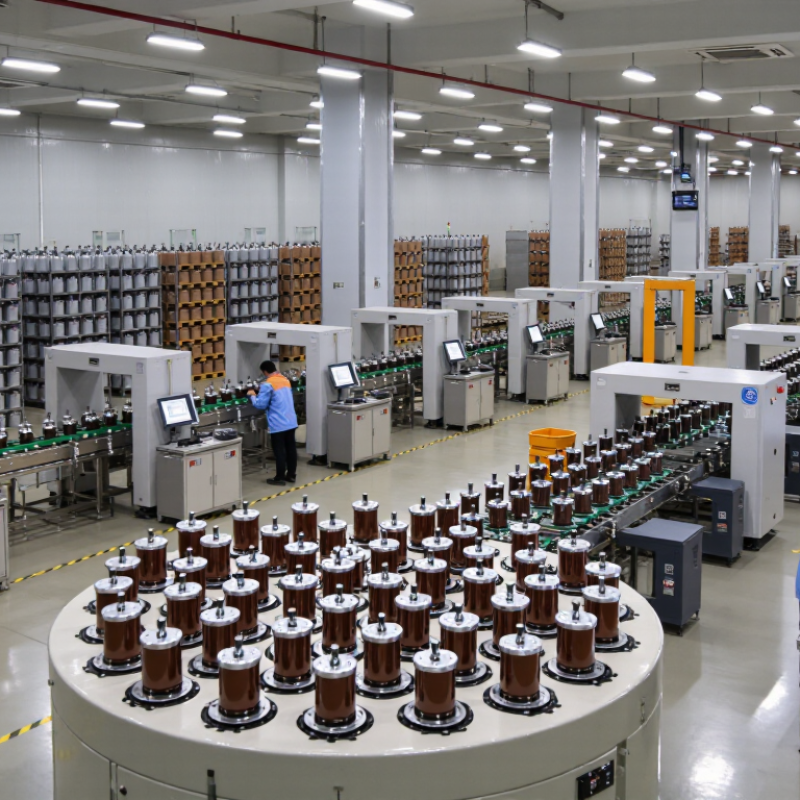
The leading China-based manufacturers usually combine automated winding, controlled impregnation, laser marking, and electrical testing. Their facilities should verify capacitance, insulation resistance, self-healing behavior, and failure performance under elevated temperatures. Factory photographs are useful, but traceable test reports are more convincing. Certifications also require careful checking. ISO documentation alone does not guarantee stable Compensation Capacitors.

Application fit remains critical. A capacitor designed for an air-conditioning motor may not suit a high-frequency converter. Film construction, terminal design, cooling conditions, and harmonic exposure can change the selection completely. Small details matter.

This article introduces China’s top Compensation Capacitors manufacturers through a practical purchasing lens. It considers engineering capability, customization, quality control, delivery consistency, and after-sales support. Some suppliers may look impressive online yet provide limited technical data. That weakness should not be ignored. A better shortlist comes from samples, datasheets, factory audits, and long-term performance evidence. No ranking is permanent. Market conditions, materials, and manufacturing discipline can change.
China Top Compensation Capacitors Manufacturers?

Compensation Capacitors Explained: kvar Ratings, Power Factor, and 50/60 Hz

China’s compensation capacitor manufacturers serve factories, buildings, and utility projects worldwide. Their products correct reactive power and reduce unnecessary current in electrical systems. The key rating is kvar, not simply capacitance. A higher kvar value supplies more reactive support, but oversizing can create leading power factor and unstable operation.

Power factor shows how effectively equipment uses supplied electricity. Motors with low power factor draw more current, warming cables and transformers. Capacitors offset this inductive demand.

Engineers often estimate required correction with
Qc = P(tan φ1 − tan φ2)

This calculation needs real load data, not a nameplate guess. A perfect power-factor target is not always wise. Small errors remain possible.

Tips:

Check rated voltage, kvar output, temperature limits, and discharge time. Confirm 50 Hz or 60 Hz suitability before ordering. Systems with variable-speed drives may need detuned reactors, because harmonics can overheat ordinary capacitor units. Ask manufacturers for test reports, tolerance data, enclosure details, and continuous-duty ratings. Inspect terminal temperature during commissioning. It catches problems early. A reliable supplier should explain aging, switching frequency, and maintenance intervals clearly, rather than promising unrealistic savings.

China’s Manufacturer Landscape: Film Types, Voltage Classes, and 1–100 kvar Units

China Top Compensation Capacitors Manufacturers?

China’s manufacturer landscape covers metallized polypropylene film capacitors, oil-filled designs, and dry-type units. Film remains popular because it offers low losses, self-healing behavior, and compact construction. For low-voltage power-factor correction, 1–100 kvar units commonly serve workshops, commercial buildings, pumps, and small production lines.

Voltage selection is less simple. Typical classes include 230, 400, 440, 480, 525, and 690 V. Higher-voltage projects may require 3.3–12 kV capacitor assemblies, with different insulation and protection requirements. IEC 60831-1 emphasizes self-healing performance, safety, and rated operating conditions. These details matter more than a low catalog price. A 440 V capacitor exposed to repeated 480 V disturbances may age quickly.

Industry data also shows the scale of demand. A 2024 MarketsandMarkets report estimates continued growth in the global capacitor market, driven by electrification, industrial automation, and renewable power equipment. Grand View Research similarly identifies power-quality correction as a steady application area. Exact China-only figures vary between reports, partly because product categories overlap. That uncertainty deserves attention.

Experienced buyers usually compare loss factor, permissible overvoltage, thermal limits, discharge resistors, and kvar tolerance. Manufacturer capability is visible in testing records, batch traceability, and documented endurance results. Some suppliers still publish limited field data. That is a weakness. A factory may offer 1–100 kvar production flexibility, yet inconsistent film quality can undermine service life. Independent testing and a clear application assessment remain practical safeguards.

Technical Benchmarks: IEC 60871, 1.1×Un Overvoltage, and Thermal Limits

China Top Compensation Capacitors Manufacturers?

When comparing Chinese compensation capacitor manufacturers, technical evidence matters more than catalogue claims. IEC 60871 provides a practical framework for evaluating high-voltage shunt capacitors. Ask for routine test records, type-test reports, and traceable production data. The declared voltage rating should match the actual network, not only the design document.

The 1.1×Un overvoltage benchmark deserves careful attention. A reliable capacitor should tolerate this condition within the permitted duty and duration defined by IEC 60871. Repeated voltage stress can accelerate dielectric aging, especially in grids with harmonics or switching surges. Engineers should check loss angle, capacitance deviation, discharge performance, and internal fuse coordination. Small details matter. Thermal limits are equally important. Review rated ambient temperature, enclosure ventilation, hot-spot behavior, and current under harmonic loading. A cooler cabinet can extend service life, but field installation often differs from laboratory conditions.

Tips: Request temperature-rise curves, harmonic derating guidance, and sample test data before approval. Confirm whether protection settings reflect the capacitor’s real operating profile. Do not rely on one impressive test. I would also inspect failed units from comparable projects, when available. This step is sometimes overlooked. A manufacturer may meet the standard yet provide weak application guidance. That gap can create avoidable failures. Performance should be judged through documents, inspection, and realistic site conditions.

This chart presents non-manufacturer-specific reference benchmarks for high-voltage shunt compensation capacitors. The voltage profile follows commonly cited IEC 60871 operating levels: continuous operation at 1.00×Un and up to 1.10×Un for 8 hours within a 24-hour period. The temperature references represent the IEC temperature category −40/A ambient limits: 40°C maximum ambient, 30°C maximum 24-hour average, and 20°C maximum annual average. Actual product selection must also consider harmonics, altitude, enclosure conditions, dielectric losses, and protection coordination.

How to Compare Top Chinese Manufacturers: Capacity, Testing, and Certification

Comparing Chinese compensation capacitor manufacturers requires more than checking catalog prices. Start with production capacity, not advertised output. Ask for monthly volume, installed equipment, and lead times during peak demand. A reliable factory should explain its winding lines, assembly process, and storage controls clearly. Visit the facility when possible. Clean floors, labeled materials, and traceable work orders reveal practical discipline.

Testing capability separates serious suppliers from simple assemblers. Request records for capacitance tolerance, loss factor, insulation resistance, and self-healing performance. Ask how samples are selected from each batch. A proper laboratory should show calibrated meters, temperature chambers, and high-voltage test equipment. Factory acceptance tests should match your operating voltage and frequency.

Small details matter. Terminal torque, sealing quality, and discharge resistor checks can prevent field failures.

I would not accept a test report without batch numbers and test dates.

Certification needs careful verification. Check whether certificates cover the exact capacitor series, rated voltage, and manufacturing site. Confirm laboratory accreditation through the issuing body, rather than trusting a scanned logo. Standards compliance supports credibility, but it does not replace production audits.

Ask for corrective-action records after failed tests. That conversation may feel uncomfortable. It can expose weak controls early. Capacity figures may also change quickly, so request recent evidence instead of relying on old brochures.

My own comparison method is still imperfect; delivery performance and after-sales response can be harder to measure than technical data.

Supplier Selection Data: Efficiency, Service Life, Warranty, and Export Reach

China’s top compensation capacitor manufacturers should be compared through measurable supplier data, not catalog claims. Check rated voltage, kvar output, dielectric loss, temperature class, and tested endurance. A reliable factory should provide routine test records and traceable batch numbers. Efficiency matters because lower losses reduce heat inside a crowded control cabinet. Small differences become significant after years of continuous operation.

Service life depends on more than the advertised number of hours. Ask how the capacitor performs under harmonics, voltage variation, and frequent switching. Metallized polypropylene elements with controlled pressure protection can improve operational safety. However, laboratory life is not the same as field life. This is where supplier evidence may feel incomplete. Request sample results from installations with similar loads, then compare them with your operating conditions.

Warranty terms should clearly define duration, replacement procedures, transport responsibility, and technical response times. A longer warranty is useful only when claims are handled efficiently. Review export experience through destination records, packaging photographs, customs documents, and local service arrangements. Strong suppliers usually maintain stable production, clear English documentation, and spare-part planning. Ask for inspection before shipment. It costs more, but it can expose loose terminals, damaged insulation, or incorrect labels before installation.

China Top Compensation Capacitors Manufacturers? - Supplier Selection Data: Efficiency, Service Life, Warranty, and Export Reach
Anonymous supplier-selection benchmark for power-factor-correction and compensation capacitor manufacturers. Technical ranges are based on commonly published industry specifications and applicable IEC requirements; supplier-specific claims should be confirmed through test reports, certificates, and shipment records.
Supplier Profile Primary Product Scope Efficiency / Loss Performance Expected Service Life Warranty Benchmark Export Reach Common Compliance Evidence Recommended Verification Documents
Profile A Low-voltage cylindrical PFC capacitors for automatic compensation panels; typically 230–800 V AC and 2.5–50 kvar per unit. Total losses: typically ≤0.5 W/kvar under rated operating conditions. Self-healing metallized polypropylene construction is commonly specified. Up to 100,000 operating hours under controlled temperature, voltage, and current conditions; actual life decreases with harmonics and overvoltage. Common commercial range: 12–24 months from shipment or commissioning, subject to contract terms. Suitable for Asia-Pacific, Middle East, Africa, and European distribution channels; verify destination-specific approvals and logistics capability. IEC 60831-1/-2, RoHS, CE where applicable, ISO 9001 quality-management certification. Routine test report, capacitance and loss-angle data, thermal test results, batch traceability, and warranty exclusions.
Profile B Heavy-duty low-voltage capacitors for facilities with variable loads, frequent switching, and moderate harmonic distortion. Losses commonly ≤0.3–0.5 W/kvar; reinforced internal pressure-disconnection and self-healing protection are preferred. 100,000–130,000 hours in published design targets when operated within rated limits and with suitable reactor protection. Common commercial range: 24–36 months; extended coverage may require installation records and approved operating conditions. Typically positioned for multi-region export, including North America, Europe, Southeast Asia, and the Gulf region; confirm local electrical certification requirements. IEC 60831-1/-2, IEC 61921 for power-factor-correction equipment where applicable, RoHS, ISO 9001, and factory test documentation. Harmonic-current limits, overload capability, endurance test results, reactor compatibility list, and field-failure statistics.
Profile C Medium-voltage shunt compensation capacitors for industrial substations and utility distribution systems; commonly 1–20 kV class. Designed for stable reactive-power output with low dielectric losses; published dielectric loss tangent values are commonly in the ≤0.2% range, depending on construction. 15–20 years is a typical design-life target when voltage, temperature, switching, and harmonic limits are maintained. Common commercial range: 12–24 months; project warranties may be longer when commissioning and protection settings are controlled. Most suitable for utility, renewable-energy, mining, and heavy-industry projects requiring project-based export documentation. IEC 60871-1/-4, IEC 60071 insulation-coordination requirements where relevant, ISO 9001, and applicable national grid standards. Type-test certificate, partial-discharge or dielectric test results, impulse withstand data, pressure-disconnector test, and installation manual.
Profile D Detuned PFC capacitor systems combined with series reactors for networks containing variable-frequency drives, UPS systems, or rectifiers. System efficiency depends on reactor tuning and harmonic profile; well-designed systems commonly maintain capacitor losses below 0.5 W/kvar while reducing resonance risk. 80,000–120,000 hours for capacitors is a realistic benchmark, subject to harmonic current, ambient temperature, and switching frequency. Common commercial range: 18–36 months for complete assemblies, with separate terms for capacitors, reactors, contactors, and controllers. Strong fit for export projects requiring panel integration, engineering drawings, and commissioning support across Europe, Asia-Pacific, and the Middle East. IEC 60831-1/-2, IEC 61439 for low-voltage assemblies where applicable, EMC documentation, RoHS, CE, and ISO 9001. Network harmonic study, tuning-frequency calculation, reactor temperature-rise test, controller settings, wiring diagrams, and FAT report.
Profile E Dry-type film capacitors and compact power-electronics compensation modules for solar inverters, converters, and industrial drives. High-frequency film designs may achieve very low ESR and low dielectric losses; performance must be assessed at the intended switching frequency and ripple current. 50,000–100,000 hours is a common application-dependent target, strongly influenced by hotspot temperature and ripple-current loading. Common commercial range: 12–24 months; application review is normally required before warranty approval. Appropriate for OEM and project exports where technical support, drawing control, and component traceability are required. IEC 61071 for power electronic capacitors, RoHS, REACH declarations where applicable, ISO 9001, and product safety test records. Ripple-current curve, ESR versus frequency, thermal endurance data, insulation-resistance test, aging test, and approved application conditions.
Profile F Integrated automatic power-factor-correction banks including capacitors, contactors or thyristor switches, protection devices, and controllers. Overall system performance is normally assessed by achieved power factor rather than capacitor loss alone; a properly sized system can maintain approximately 0.95–0.99 power factor under stable loads. 8–15 years for a complete panel is a reasonable planning range, although capacitors and switching components may require earlier replacement. Common commercial range: 12–24 months for the panel; commissioning and remote troubleshooting may be included in premium contracts. Suitable for turnkey exports when the supplier can provide single-line diagrams, packing compliance, remote support, and local service coordination. IEC 61921, IEC 61439 where applicable, IEC 60831 for capacitor units, EMC documentation, CE, RoHS, and ISO 9001. Factory acceptance test, controller algorithm description, protection coordination, enclosure rating, heat-dissipation calculation, and spare-parts list.
Selection priority: verify rated voltage, kvar output, harmonic-current capability, maximum ambient temperature, self-healing behavior, internal disconnection, applicable IEC standard, warranty exclusions, and documented export experience before approving any supplier.
NEW JERSEY

Location

Union Tool & Mold is a mold making, repair and plastic injection molding company located in central New Jersey.
(973) 763-6611

220 Rutgers St, Maplewood, NJ 07040
ACCREDITED

Certified Company


SOCIAL PROFILE

Let’s Connect

We invite you to engage with us on LinkedIn, where you can stay updated on our latest news, insights, and professional opportunities.