How to Choose the Right U Channel Steel for Your Project

Choosing the right U Channel Steel begins with more than comparing price per metre. The section must match the project’s load, span, connection method, environment, and applicable standard. A channel supporting a warehouse beam faces different demands from one used as a light equipment frame. Small errors matter.

The World Steel Association reported approximately 1.89 billion tonnes of crude steel production in 2023, showing the scale and maturity of the global steel supply chain. However, high production volume does not guarantee suitable material for every application. ASTM A6/A6M provides general requirements for structural steel shapes, including dimensional tolerances and inspection expectations. ASTM A36/A36M remains widely specified, with a minimum yield strength of 36 ksi for applicable products, while EN 10025 grades such as S235 and S355 serve many European projects. Always verify the actual mill certificate.

Experienced engineers examine channel depth, flange width, thickness, weight, and section properties before approval. They also consider buckling, weldability, galvanizing compatibility, and local corrosion exposure. A coastal support may need galvanizing or a protective coating, not merely a thicker wall. An indoor frame may not need that expense. It depends.

Supplier quality is equally important. Confirm heat numbers, test certificates, straightness, surface condition, and traceability. The American Institute of Steel Construction emphasizes documented design and fabrication practices through its specifications and quality programs. Yet standards cannot replace engineering judgment. A catalogue selection can appear efficient and still perform poorly after unexpected vibration, eccentric loading, or poor drainage. This guide explains how to compare U Channel Steel rationally, while acknowledging an uncomfortable truth: the cheapest section is rarely the cheapest complete solution.
How to Choose the Right U Channel Steel for Your Project

Define U Channel Steel and Its Common Project Applications

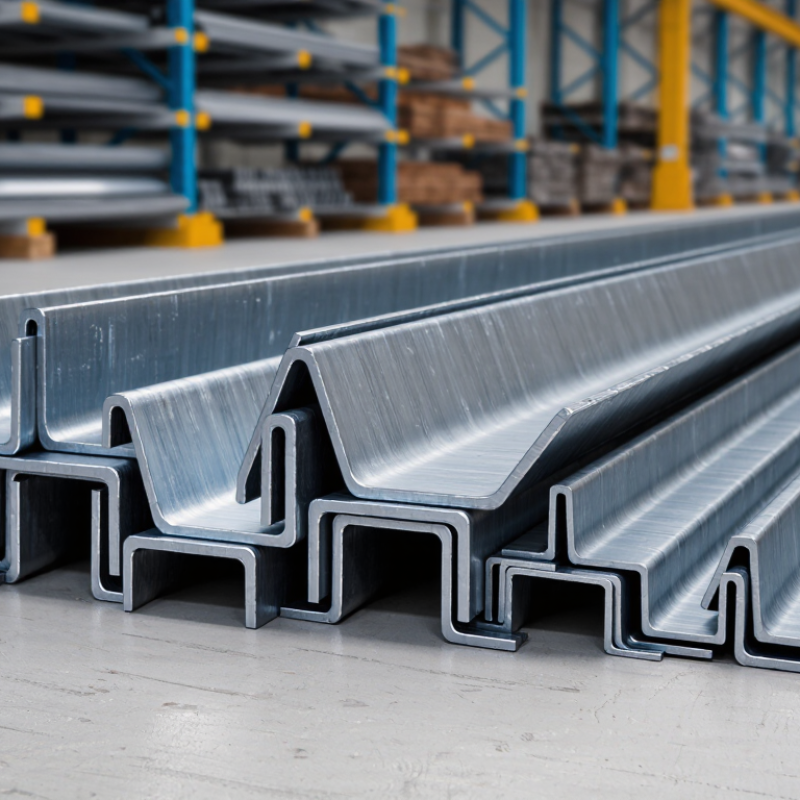
U channel steel is a rolled steel section with one web and two parallel flanges. Its cross-section resembles the letter U. The web carries much of the vertical load, while the flanges improve stiffness and connection space. It comes in different depths, widths, thicknesses, and steel grades. These dimensions affect strength, weight, corrosion resistance, and fabrication cost. It is not merely decorative metal.

In building projects, engineers use U channel steel for secondary beams, edge supports, frames, and equipment bases. It also forms door headers, trench covers, cable supports, and protective guards. In workshops, channel sections can create machine stands or guide rails. They are also useful for trailers and light structural frames. I have seen poorly selected channels twist when unsupported spans were underestimated. That problem often begins with a convenient size choice.

Before choosing a section, check the span, load direction, connection method, and exposure conditions. A thicker channel is not automatically better. It may add weight and complicate welding. Review engineering tables and qualified calculations for critical structures. For outdoor use, specify suitable protection and inspect cut edges after fabrication. Small details matter. Recheck actual site clearances, because drawings can hide pipes, bolts, or uneven surfaces.
Assess Load, Span, and Structural Requirements

Choosing a U channel steel section starts with the load path, not the catalog dimensions. List dead loads, live loads, equipment weight, wind, and possible impact. AISC 360-22 and EN 1993-1-1 require designers to check strength, stability, and serviceability. Do not treat a 3-meter span as “small” without calculating its reactions and bending moment.

Span changes everything. For a simply supported channel, bending grows rapidly as span increases, while deflection can become the governing issue. Common preliminary limits include L/360 for occupied floors, but the project specification may require stricter control. A 3,000 mm span allows only about 8.3 mm deflection at L/360. Check the section modulus for bending and the second moment of area for stiffness. Use published mill certificates to confirm yield strength, such as 235, 275, or 355 MPa grades listed under EN 10025-2.

The channel’s open shape also deserves attention. Its shear center may not align with the applied load, creating twisting. Compression flanges can buckle before the steel reaches its nominal yield strength. Connections matter too; bolts, welds, bearing plates, and local web crippling can control the design. A quick spreadsheet check helps, but it is not approval. I would inspect the support detail twice. Small assumptions often become expensive failures. Consult the latest design standard, verify units, and have a qualified structural engineer review the final selection.

Compare Steel Grades, Sizes, and Thickness Options

Choosing U-channel steel starts with grade, not appearance. ASTM A36 provides 36 ksi minimum yield strength, about 250 MPa. ASTM A572 Grade 50 raises that minimum to 50 ksi, or 345 MPa (ASTM A36/A572, ASTM A6/A6M). For European projects, S355 offers 355 MPa yield strength at thicknesses up to 16 mm. Allowable values change as thickness increases (EN 10025-2:2019). These figures matter when channels carry bending, brackets, frames, or lateral loads.

Compare depth, flange width, web thickness, flange thickness, and mass per metre. A deeper channel usually improves bending resistance, but it may twist under eccentric loading. Check Ix, Iy, and section modulus Zx in the AISC Steel Construction Manual, 16th Edition, or the relevant national table. Two 150 mm channels can have different weights and capacities. Same depth, different behavior. Thickness also affects local buckling, welding heat input, corrosion allowance, and connection fit. Do not select by width alone.

On site, measure actual thickness with calipers and verify mill certificates against the order. ASTM A6/A6M permits dimensional tolerances, so nominal size is not exact. A 6 mm web may arrive slightly different. That small difference can affect detailing. Compare design resistance, kg/m, available lengths, and coating requirements together. The cheapest section is often not the most economical after cutting and stiffening. Sometimes the calculation still feels borderline. Recheck load paths and support spacing before increasing grade; extra strength cannot correct poor stability.

Select Surface Treatments for Site and Climate Conditions

Selecting U channel steel starts with the environment, not the catalogue. Coastal air carries chloride that attacks unprotected edges, welds, and cut ends. ISO 12944-2 classifies marine exposure as high or very high corrosivity. The NACE IMPACT study estimated global corrosion costs at $2.5 trillion annually, equal to 3.4% of global GDP. That figure deserves attention. Salt changes everything.

For C3 or C4 industrial sites, specify a compatible primer and durable topcoat. Zinc-rich primers protect exposed steel electrochemically, while epoxy coatings resist moisture and chemicals. Polyurethane finishes improve ultraviolet resistance. Hot-dip galvanizing suits outdoor channels because zinc protects both the surface and minor scratches. Confirm coating thickness, drainage, and repair procedures against project specifications and ISO 12944-5. A thick coating is not automatically a suitable coating.

Small details matter. Keep channels off wet ground, seal vulnerable joints, and prevent water from collecting inside the section. On site, inspect cut edges after drilling and welding. I have seen excellent steel fail around one neglected connection. That was avoidable. Measure twice. Climate data should guide the treatment, but local exposure can be harsher than the design category suggests. A sheltered inland structure may need less protection, while a coastal structure needs frequent inspection and planned touch-ups. The easy choice can be wrong.

How to Choose the Right U Channel Steel for Your Project - Select Surface Treatments for Site and Climate Conditions

Site and Climate Condition Typical Corrosion Exposure Recommended U Channel Steel Suitable Surface Treatment Surface Preparation Typical Maintenance Interval Important Selection Notes
Dry indoor areas with controlled humidity Low exposure; limited contact with water and condensation Plain carbon steel U channel Factory-applied primer and compatible protective topcoat Remove mill scale, oil, grease, and loose rust; abrasive blast or mechanically prepare according to the coating specification Inspect every 3–5 years, or sooner where condensation occurs Suitable for structural framing, equipment supports, and protected indoor fabrication when moisture is controlled.
Outdoor inland areas with moderate rainfall Regular wetting and drying cycles; atmospheric corrosion Carbon steel U channel with a corrosion-protection system Hot-dip galvanizing or a multi-coat paint system designed for exterior steel For painting, clean and prepare the steel to the coating manufacturer's specified cleanliness and surface profile; for galvanizing, steel must be suitable for zinc immersion and properly vented Inspect annually; repair scratches and damaged coating promptly Provide drainage and avoid water traps at laps, joints, and end caps.
High-humidity or tropical climate Persistent humidity, condensation, rain, and accelerated atmospheric corrosion Galvanized carbon steel U channel or suitably coated carbon steel Hot-dip galvanizing, duplex system, or a high-performance exterior coating system Ensure complete cleaning before painting; repair cut edges, drilled holes, and damaged zinc or paint areas after installation Inspect every 6–12 months Use sealed or well-drained details and prevent prolonged contact with wet soil, leaves, and debris.
Coastal area with airborne salt spray High chloride exposure; rapid corrosion at exposed and damaged areas Hot-dip galvanized steel with additional coating, or stainless steel where justified by the design Duplex protection: galvanizing plus a compatible paint system; select stainless steel grade based on chloride severity when required Use strict salt and surface-contamination control; prepare galvanized surfaces with an approved method before applying paint Inspect at least every 6 months; wash salt deposits where practical Avoid dissimilar-metal contact without electrical isolation. Consider crevice details and fastener compatibility.
Industrial atmosphere with acidic or alkaline pollutants Corrosive gases, chemical deposits, and contaminated moisture films Carbon steel with a chemical-resistant protective system, or corrosion-resistant alloy where exposure requires it Specified multi-layer coating system selected for the actual chemicals and concentration levels Remove contaminants thoroughly and verify surface cleanliness, profile, temperature, and humidity before coating Inspect every 6–12 months, depending on pollutant concentration Confirm chemical compatibility from safety data and exposure information before finalizing the coating system.
Freshwater splash zones, drainage channels, and damp service areas Frequent wetting, standing water, and corrosion under deposits Galvanized or coated carbon steel U channel; stainless steel may be considered for severe or hygiene-sensitive service Hot-dip galvanizing or a moisture-resistant coating system with sealed edges and joints Eliminate oil, rust, and deposits; ensure dry steel and correct recoat windows between coating layers Inspect annually and after severe flooding or prolonged immersion Do not assume an atmospheric coating is suitable for continuous immersion; verify the service condition separately.
Buried, soil-contact, or partially embedded installations Continuous moisture, oxygen concentration differences, and possible soil chemicals Steel selected with a project-specific below-ground corrosion design Buried-service coating or wrapping system, cathodic protection where engineered, or a corrosion-resistant material Prepare and protect all surfaces before burial; repair coating damage and avoid sharp bends that can break the system Inspect exposed transitions annually; buried sections require engineered monitoring where necessary Above-ground paint or standard galvanizing alone may not be adequate for continuous soil contact or immersion.
Cold climate with freeze–thaw cycles Moisture ingress, ice expansion, de-icing salts, and coating damage from thermal movement Galvanized or duplex-coated U channel steel, selected for the structural temperature range Exterior coating system compatible with galvanized steel and low-temperature application requirements Keep drainage paths open; repair impact damage and remove salt accumulation from accessible surfaces Inspect annually, especially after winter operation Allow for drainage, thermal movement, and corrosion from de-icing salts on roads, bridges, and loading areas.
High-temperature service or areas exposed to hot processes Coating breakdown, oxidation, and thermal cycling Steel grade and section selected for the design temperature and load condition High-temperature coating where suitable, or an uncoated/high-temperature-resistant solution with planned inspection Remove contaminants and verify that the selected coating is rated for the continuous and peak service temperatures Inspect annually or according to the process safety program Standard paint systems may soften, discolor, or lose corrosion resistance when exposed to elevated temperatures.
Projects requiring a clean architectural appearance Visible staining, scratches, fingerprints, and localized atmospheric corrosion Galvanized steel with a compatible finish, prefinished coated steel, or stainless steel where appearance and exposure justify it Powder coating or liquid coating over properly prepared and compatible substrate Use clean handling practices; prepare galvanized surfaces correctly and protect finished faces during transport and installation Clean and inspect annually; repair visible damage as soon as practical Confirm color retention, gloss expectations, edge coverage, and repair procedures before approving the finish.

Verify Standards, Suppliers, and Total Project Costs

How to Choose the Right U Channel Steel for Your Project

Verify standards before comparing prices. Confirm the required steel grade, dimensions, tolerances, and testing documents. Mill certificates should identify chemical composition, mechanical strength, heat number, and inspection results. Standards must match.

A practical check is measuring sample sections with calipers. A small variation in web thickness can change weight and load performance. Ask a qualified engineer to review the channel selection, especially for structural or high-load applications. I have seen buyers focus on nominal size while overlooking corrosion exposure and connection details. That shortcut can create expensive corrections later.

Verify suppliers through consistent documentation, production capacity, and quality-control procedures. Request recent test reports, traceability records, and clear delivery terms. A supplier may offer an attractive price but lack reliable dimensional control. Inspect samples before placing a large order. Do not rely only on polished certificates. Call references when the project has strict deadlines.

Calculate total project cost, not just the price per ton. Include cutting, drilling, surface treatment, packaging, transport, unloading, storage, and expected waste. Add costs for third-party inspection and replacement steel if delays occur. Longer channels may reduce joints but increase handling requirements. Shorter sections can create more welding and labor. My costing sheets sometimes miss small transport charges, so I now check every line twice. Prices change. Keep a contingency allowance, but review its assumptions before approval.

Article Source:

NEW JERSEY

Location

Union Tool & Mold is a mold making, repair and plastic injection molding company located in central New Jersey.
(973) 763-6611

220 Rutgers St, Maplewood, NJ 07040
ACCREDITED

Certified Company


SOCIAL PROFILE

Let’s Connect

We invite you to engage with us on LinkedIn, where you can stay updated on our latest news, insights, and professional opportunities.