
How to Choose the Right Pump Inverter?

Choosing the right Pump Inverter starts with the pump curve, not the product brochure. A pump that runs at 50 Hz may consume unnecessary power when demand falls. The U.S. Department of Energy reports that pumping systems can represent 25% to 50% of industrial facility electricity use. The International Energy Agency also identifies motor-driven systems as a major global efficiency opportunity. These figures make speed control important, but they do not make every inverter suitable.

“Variable speed is the most efficient way to control flow in many pumping applications,” says Kimmo Rauma, a Danfoss Drives specialist in pump and motor-control solutions. His point is practical. Efficiency depends on the complete system. Pipe friction, static head, duty cycles, sensor placement, and minimum-flow requirements all affect performance. A correctly sized Pump Inverter should match the motor’s current, voltage, overload capacity, and operating frequency. It should also support stable pressure control without forcing the motor to hunt.

Look closely at the details. Check the pump’s best-efficiency point. Compare the inverter’s control mode with the motor type. Review harmonic limits, enclosure protection, cooling conditions, bypass needs, and communication protocols. IEC 61800-9-2 provides a useful framework for evaluating drive-system efficiency. Yet a higher efficiency rating alone can mislead. Installation quality matters.

Small errors become expensive.

This guide explains how to compare Pump Inverter options using measured demand, lifecycle cost, and reliable technical documentation. The process is not perfect. Real sites change, sensors drift, and published savings may exceed field results. A careful choice leaves room for those realities.
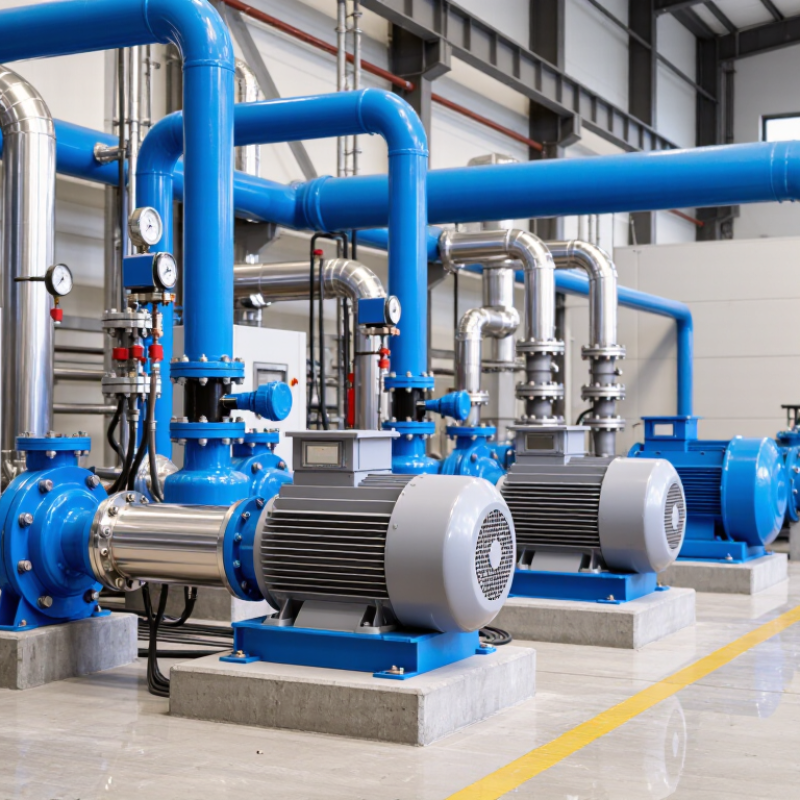
How to Choose the Right Pump Inverter?

Define Pump Duty: Match Flow, Head, and NPSH Requirements

How to Choose the Right Pump Inverter?

Define pump duty before selecting an inverter. Record the required flow, total dynamic head, fluid temperature, density, and operating hours. A pump delivering 120 m³/h at 42 m head needs a different control strategy from one delivering 80 m³/h at 60 m. The U.S. Department of Energy reports that pumping systems can consume 25–50% of industrial electricity. Small duty errors can therefore create large operating costs.

Build a duty curve, not a single-point estimate. Check minimum, normal, and maximum flow. Then compare the pump curve with the system curve. The inverter must support the motor’s rated current, overload demand, acceleration time, and control range. Variable-speed operation follows affinity laws: flow changes with speed, while power changes approximately with the cube of speed. That makes modest speed reduction valuable.

NPSH deserves equal attention. Confirm available NPSH at the lowest tank level and highest fluid temperature. Keep a practical margin above the pump’s required NPSH. Hydraulic Institute guidance, including ANSI/HI 9.6.1, emphasizes that NPSH margin depends on operating conditions and cavitation risk. Do not trust a catalogue value alone. In field reviews, suction piping often looks adequate until a hot afternoon exposes the weakness. I have also seen inverter settings optimized for energy, but not for minimum stable flow. That shortcut needs reconsideration.

Apply Pump Affinity Laws: Flow ∝ Speed and Power ∝ Speed³

How to Choose the Right Pump Inverter?

Apply Pump Affinity Laws: Flow ∝ Speed and Power ∝ Speed³

Selecting a pump inverter starts with the required flow, head, and motor rating. Pump affinity laws provide a practical starting point. When speed changes, flow changes roughly in direct proportion. At 80% speed, a pump may deliver about 80% of its original flow. However, real systems are less predictable. Pipe friction, valves, liquid viscosity, and elevation can change the result.

Power changes much faster. According to the affinity laws, power is proportional to speed cubed. At 80% speed, theoretical power demand falls to about 51%. This reduction can significantly lower energy use during partial-load operation. Head also changes with speed squared. I have seen calculations look perfect on paper, then miss the target because the system curve was ignored. Measure actual pressure, flow, and motor current before final selection.

Tips: Check the pump curve at several speeds. Confirm the inverter matches the motor voltage, current, and control method. Set minimum speed carefully to avoid poor lubrication, overheating, or unstable flow. Leave operating margin, but do not oversize the inverter without reason. A qualified technician should verify acceleration time, protection settings, and site conditions. Small assumptions matter.

How to Choose the Right Pump Inverter?

Applying Pump Affinity Laws: Flow ∝ Speed and Power ∝ Speed³

This normalized reference uses a pump operating point of 100 m³/h flow and 15 kW input power at 50 Hz. For a fixed impeller diameter, reducing inverter frequency reduces flow linearly and power approximately with the cube of speed. Select an inverter with a suitable motor voltage, current rating, overload capacity, and enough power margin for the required operating range.

Size the Inverter: Match Motor Current, Voltage, and 10% Capacity Margin

How to Choose the Right Pump Inverter?

Sizing the inverter begins with the motor nameplate. Record its rated current, voltage, phase, frequency, and power rating. The inverter’s output voltage must match the motor’s connection, not just the site supply. Check the motor’s full-load current carefully. A small reading error can create large operating problems.

Choose an inverter with continuous output current at least 10% above the motor’s rated current. For example, a motor rated at 12 A needs an inverter rated for at least 13.2 A. This margin allows limited variation during normal operation. It does not replace proper overload sizing. Pumps may draw more current during high pressure, blocked flow, or frequent starts. Check the inverter’s overload rating and starting performance.

The 10% margin is a starting point.

Ambient heat, enclosure temperature, altitude, and switching frequency can reduce capacity. Derating may require a larger inverter. Long cables can also increase voltage drop and electrical stress. A practical check is to compare the measured running current with the nameplate value after installation. If the current stays unexpectedly high, do not simply increase the inverter size. Investigate impeller condition, pipe resistance, valve position, and motor wiring. I have found that sizing by horsepower alone often misses these details. It looks simple, but pump systems rarely behave perfectly. Always verify the final selection against the inverter and motor manufacturer’s technical data.

Target Efficient Operation: Variable Speed Can Cut Pump Energy by 20–50%

How to Choose the Right Pump Inverter?

Target Efficient Operation: Variable Speed Can Cut Pump Energy by 20–50%

Choosing the right pump inverter starts with the pump’s actual duty, not its nameplate rating. Record flow, pressure, motor power, operating hours, and daily demand changes. A unit that is too large may run inefficiently at low loads. A unit that is too small may overheat or trip during peak demand. Field measurements matter.

Variable speed control can reduce pump energy by 20–50% when demand varies. The potential comes from the pump affinity laws. A small speed reduction can sharply lower power consumption. For example, reducing speed to 80% may reduce power close to half under suitable conditions. The result depends on pipe resistance, control settings, and the operating range. That estimate can be wrong.

Choose an inverter with suitable motor compatibility, overload protection, and accurate feedback control. Pressure sensors should be installed where readings represent real system demand. Check ramp-up settings, minimum speed limits, cooling requirements, and electrical harmonics before installation. A commissioning test should compare baseline energy with energy after adjustment. Measure kilowatt-hours per cubic meter, not energy alone. I have seen systems save less than expected because valves remained partly closed. That mistake is easy to miss. Regular review helps, but operators may still prioritize stable pressure over maximum savings.

How to Choose the Right Pump Inverter? - Target Efficient Operation: Variable Speed Can Cut Pump Energy by 20–50%
Application Profile Typical Operating Pattern Recommended Inverter Control Useful Speed Range Illustrative Energy Reduction Key Selection Criteria
Building water boosting Demand varies throughout the day, with frequent low-flow periods Constant-pressure control using a pressure sensor and automatic sleep mode 40–100% of rated speed 20–50% versus fixed-speed throttling Pressure setpoint, minimum flow protection, motor current rating, and compatibility with the pressure tank
Irrigation and agricultural water supply Seasonal demand with different flow requirements across irrigation zones Constant-flow or pressure-compensated control with programmable schedules 50–100% of rated speed 15–40% in variable-demand operation Wet-weather operating limits, dry-run protection, long cable distance, and enclosure rating
Cooling-water circulation Cooling load changes with outdoor temperature and process conditions Temperature-based speed control or differential-pressure control 45–100% of rated speed 20–45% when flow can track cooling load Required flow at peak load, minimum circulation flow, sensor response time, and bypass requirements
Heating-water circulation Load changes with time of day and zone demand Variable differential-pressure control with automatic pressure reset 35–100% of rated speed 20–50% in systems with frequent part-load operation System balancing, minimum pump speed, fluid temperature, and protection against excessive pressure
Process transfer Flow demand may change, but the process may require a stable minimum flow Closed-loop flow control, often combined with a manual or automatic minimum-speed limit 60–100% of rated speed 10–30% when throttling losses are significant Fluid viscosity, required torque, minimum flow, acceleration time, and process safety interlocks
Drainage and wastewater pumping Intermittent operation with changing liquid level and variable inflow Level-based control with soft start, automatic stop, and anti-cycling logic 60–100% of rated speed 10–25% where reduced-flow operation is practical Submersible motor compatibility, clogging risk, minimum run time, wet-well level range, and overload capacity
High-static-head systems Most of the required head is fixed, so speed reduction has limited benefit Pressure or flow control with a carefully defined minimum speed 75–100% of rated speed Usually below 20% unless the system also has substantial friction losses Static head, shutoff pressure, minimum operating speed, and pump curve intersection
Constant-load applications Flow and pressure remain close to the design point for most operating hours Fixed-speed operation may be more economical; use an inverter only for required control or soft starting 90–100% of rated speed Typically limited energy benefit Compare inverter losses, installation cost, maintenance, and operating-hours savings before selection
Engineering reference: For a centrifugal pump operating in a similar system, the affinity laws indicate that flow is approximately proportional to speed, head is proportional to speed squared, and pump power is approximately proportional to speed cubed. For example, reducing speed to 80% can reduce ideal pump power to about 51.2% of full-speed power, although actual savings depend on the system curve, motor efficiency, inverter losses, control settings, and operating hours.

Verify Compatibility: Check IEC 61800, IP Ratings, Harmonics, and Bypass Needs

Choosing the right pump inverter starts with compatibility, not power rating alone. Confirm that the drive follows the relevant IEC 61800 requirements for adjustable-speed power drive systems. Check voltage, current, overload capacity, switching frequency, and motor insulation together. A 15 kW motor may still need a larger inverter when starting under heavy hydraulic load.

Look closely at the IP rating. An indoor electrical room may need IP20, while a damp pump station could require IP55 or higher. Dust, condensation, and washdown water change the decision. Inspect cable glands and enclosure seals, too. A strong rating is useless if installation gaps remain. I have seen moisture damage begin around a poorly tightened gland.

Harmonics deserve practical attention. Variable-speed drives can distort the supply waveform, especially in facilities with many pumps. Ask for the expected total harmonic distortion and review the site’s electrical limits. Line reactors, passive filters, or active filters may be necessary. Do not assume the inverter’s built-in protection solves every network problem.

A bypass option can keep water moving during inverter faults or maintenance. Verify whether it is manual or automatic, and check the transfer sequence carefully. The bypass must protect the motor and prevent unsafe reconnection. It should also match the pump’s starting current and control logic. Bypass systems add cost and wiring. Sometimes they add confusion. A test under real load is more valuable than a confident datasheet review.

NEW JERSEY

Location

Union Tool & Mold is a mold making, repair and plastic injection molding company located in central New Jersey.
(973) 763-6611

220 Rutgers St, Maplewood, NJ 07040
ACCREDITED

Certified Company


SOCIAL PROFILE

Let’s Connect

We invite you to engage with us on LinkedIn, where you can stay updated on our latest news, insights, and professional opportunities.