
What Is a Hair Color Tube and How Does It Work?

A Hair Color Tube is more than a colorful package on a salon shelf. It is a carefully sealed container designed to protect a cream, gel, or paste from air, light, and contamination. Inside, pigments, alkalizing agents, conditioners, and other ingredients work together. The tube helps deliver a controlled amount to the mixing bowl or directly to the hair.

Cosmetic dermatologist Dr. Zoe Diana Draelos has stated, “Hair dyes are the second most common cause of allergic contact dermatitis.” This warning gives the Hair Color Tube a practical importance beyond convenience. Its label should show ingredients, shade information, developer guidance, and safety instructions. A professional colorist also checks the client’s hair history, porosity, and previous chemical treatments before application. Small details matter.

The working process is chemical. Permanent color usually combines the tube’s cream with a hydrogen peroxide developer. The developer helps open the hair cuticle and activate color-forming ingredients. Some molecules become larger inside the hair shaft, helping the shade remain after washing. Semi-permanent products usually behave differently. They deposit color closer to the surface and often fade gradually.

The results are not always predictable. Porous ends may absorb too much pigment. Gray hair may need a different formula. Even a familiar shade can appear warmer under bathroom lighting. That is why responsible guidance matters. A Hair Color Tube offers control, but it cannot replace testing, accurate timing, or professional judgment. Patch testing remains essential, although it does not remove every possible risk.
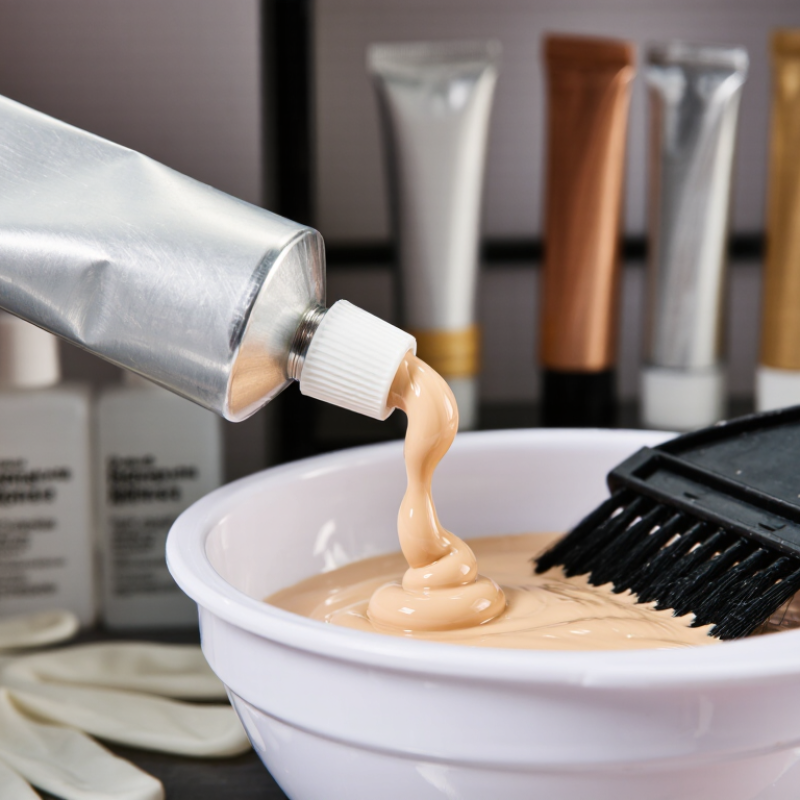
What Is a Hair Color Tube and How Does It Work?

What a Hair Color Tube Is and What It Contains

A hair color tube holds a concentrated color cream designed to change the appearance of hair. It usually contains dye intermediates, conditioning agents, stabilizers, water, and an alkaline ingredient. Some formulas also include oils, proteins, or fragrance. The exact ingredients vary by product and shade.

The tube normally works with a separate developer. The developer helps open the hair cuticle and activates the color molecules. These molecules then form larger pigments inside the hair shaft. This process explains why the cream may look different from the final shade. It also explains why timing matters. Leaving color on longer does not always create a deeper result. Hair condition, porosity, and previous treatments can change the outcome. My practical experience is that porous ends often absorb color quickly, yet they may fade sooner. Color testing remains important, even when the shade seems predictable.

Tips: Read the full directions before opening the tube. Wear suitable gloves and protect nearby surfaces. Perform the recommended allergy alert test and a small strand test. Do not mix random products or use a damaged tube. Keep the cream away from eyes and broken skin. Use fresh product within the stated period, because separated or unusual-smelling cream may no longer perform reliably. A small patch of hair can reveal more than a confident guess.

What Is a Hair Color Tube and How Does It Work?

Typical pH levels of hair-color product types

A permanent hair-color tube usually contains an alkaline cream base, dye precursors, color couplers, conditioning ingredients, stabilizers, and water. The alkaline ingredients help open the hair cuticle, while the dye precursors react with hydrogen peroxide from a developer to form larger color molecules inside the hair. The bars show the midpoint of commonly used pH ranges; exact values vary by formulation.

How Hair Color Ingredients Are Separated Inside the Tube

What Is a Hair Color Tube and How Does It Work?

A hair color tube holds a concentrated coloring cream for controlled application. Inside, dye precursors, alkalizing agents, oils, and conditioners form a carefully balanced mixture. These ingredients are not always separated individually. In many tubes, they already share one stable formula. The developer remains separate because peroxide can react with dye ingredients over time.

Some modern tubes use two internal chambers. A thin barrier divides the color cream from the activating cream. When the tube is squeezed, both formulas move through separate channels. They meet near the nozzle or inside an attached applicator. This design helps prevent premature oxidation. It also reduces measuring errors during home application. The final mixture should look smooth, not grainy or unusually watery.

I once assumed every hair color tube used this divided structure. That assumption was too simple. Semi-permanent colors may contain ready-to-use pigments, so no developer is required. Professional formulas may also use a separate bowl and measured developer. Read the instructions carefully. Check the mixing ratio, processing time, and allergy test guidance. A small color test can reveal uneven absorption, especially on porous or previously lightened hair. The tube does not control the result alone. Hair condition, temperature, application pressure, and mixing accuracy all matter. Small details matter.

How the Color Formula Works on Hair

A hair color tube holds a concentrated formula, not a complete coloring service. The formula usually contains color molecules, conditioning agents, and an alkalizing ingredient. It must be mixed with a developer when permanent color is intended. The developer releases oxygen, which helps lighten natural pigment and develop new color molecules inside the hair. The cuticle opens slightly during this process. The color then settles into the inner layers. Results depend on hair porosity, previous color, texture, and processing time. The tube is only half.

Tips: Perform a patch test and a small strand test before coloring. Wear gloves and protect the skin around your hairline. Measure the formula accurately, because extra developer can weaken coverage. Apply the mixture evenly, especially near gray roots and dry ends. Follow the stated development time. Leaving color on longer does not always create a deeper result. It may increase dryness or irritation.

From practical salon observations, porous ends often absorb color faster than healthy roots. They can look darker or less even. This is where many routines need rethinking. Hair history matters more than a color chart. Previous permanent color usually cannot be reliably lightened by applying another color tube. A professional assessment is safer for major changes, damaged hair, or overlapping chemical services. Even then, results can vary. Hair is not a blank surface.

What Is a Hair Color Tube and How Does It Work? — How the Color Formula Works on Hair

Formula Element Typical Form Main Function When It Acts Effect on Hair Important Consideration
Colorants Oxidative dye precursors and, in some formulas, direct dyes Provide the pigments that create or refresh the intended hair color During application and processing Creates a new tone inside or on the surface of the hair fiber Oxidative colorants generally need an oxidizing developer; direct dyes can deposit without the same oxidation process
Alkalizing Agents Alkaline ingredients that raise the formula's pH Helps swell the cuticle and allows the color mixture to move further into the hair fiber Early in the coloring process Improves access to the cortex, where permanent color develops Higher alkalinity can increase hair swelling and may contribute to dryness or damage if overused
Oxidizing Developer Usually a separate hydrogen-peroxide-based lotion or cream Activates dye precursors and can partially lighten the hair's natural melanin After the tube formula is mixed with developer Enables permanent or demi-permanent oxidative color to develop The developer strength and processing time should match the product instructions and coloring objective
Couplers and Precursors Small dye-forming molecules in oxidative color formulas React with one another under oxidizing conditions to form larger colored molecules While the color processes inside the hair Produces color molecules that are less able to wash out quickly than temporary pigments They do not produce the final shade until the oxidation reaction takes place
Conditioning Ingredients Oils, fatty alcohols, polymers, proteins, or other conditioning agents Improve slip, spreadability, softness, and manageability during or after coloring During application and rinsing Helps hair feel smoother and reduces friction during handling Conditioning ingredients support feel and appearance but do not eliminate the need for careful processing
Surfactants and Emulsifiers Cleansing or blending agents that help oil- and water-based ingredients mix Keep the formula uniform and help it spread evenly over the hair Throughout mixing and application Supports consistent coverage and easier distribution Uneven saturation can lead to visibly uneven color, especially on porous or previously treated hair
Thickeners Gelling or viscosity-building ingredients Give the cream or gel a controlled texture During application Helps the product stay where it is applied and reduces dripping Texture varies by formula; a thicker product is not automatically stronger or more effective
Stabilizers and Chelating Agents Ingredients that control unwanted reactions or bind metal ions Help maintain formula stability and reduce interference from minerals or impurities During storage, mixing, and processing Supports more predictable color development Water minerals, product buildup, and metal residues can affect color results on some hair
Fragrance and Preservatives Odor-masking and microbial-control ingredients Improve product acceptability and help protect the formula from contamination Throughout storage and use Primarily affects product quality, scent, and shelf stability rather than color formation People with known sensitivities should review the ingredient information and follow safety directions
Hair Cuticle Overlapping outer layer of the hair shaft Acts as the first physical barrier the formula must pass or adhere to At the beginning of application Its condition influences absorption, shine, and color uniformity Damaged or highly porous cuticles may absorb color quickly and may also lose it faster
Hair Cortex Inner structural layer containing most of the hair's natural pigment Provides the main site for oxidative color development in permanent coloring During processing after the cuticle is permeated Determines much of the final depth, tone, and coverage Existing artificial color generally cannot be reliably lightened by applying another color alone
Processing Time Specified development period stated in the product directions Allows the chemical reactions and pigment deposition to reach the intended stage After the formula has been fully applied Influences color depth, coverage, and consistency Leaving color on longer does not necessarily create a lighter or better result and may increase stress on the hair

How to Use a Hair Color Tube Step by Step

A hair color tube contains concentrated dye designed to mix with a separate developer. The developer activates the color, while the tube controls the dye amount and texture. Its creamy formula helps spread color evenly through the hair. It is not ready to use alone.

Before coloring, read the instructions and check the mixing ratio. Perform a skin sensitivity test as directed, usually 48 hours beforehand. A strand test is useful too, especially over previously colored hair. Wear gloves and protect your shoulders with an old towel.

Divide dry hair into four sections. Apply the mixture to the roots or gray areas first, using thin sections. Work carefully from scalp to ends when the instructions allow it. Do not rush this part. Set a timer, because extra processing time does not always create deeper color. It may increase dryness instead.

Keep the product away from eyes and damaged skin. If strong burning or swelling develops, rinse immediately and seek medical advice.

After the stated time, add a little lukewarm water and massage gently to loosen the color. Rinse until the water looks mostly clear, then use a suitable conditioner. Avoid very hot water for the next few washes.

I have found that uneven saturation often comes from taking sections that are too thick. Smaller sections feel slower, but they usually produce a more dependable result.

How Hair Color Tubes Are Stored and Handled Safely

A hair color tube holds a concentrated cream or gel used to change hair tone. Its container limits air, light, and contamination. Some formulas react with a separate developer, so the tube should remain closed until use. The label gives the safest mixing ratio and processing time.

Store tubes in a cool, dry cupboard away from sunlight and radiators. Avoid damp bathrooms when possible. Heat may change the product’s texture or performance. Keep each tube in its original packaging, with the cap firmly tightened. Do not transfer color into food containers or unmarked jars. Keep products away from children, pets, and open flames.

Handle the tube with clean, dry hands and wear suitable disposable gloves. Check for a broken seal, leakage, unusual swelling, or a strange odor before opening. Do not use a damaged or expired product. A patch test may be required by the instructions, even when the color seems familiar. Follow the product’s safety sheet when available, especially in professional settings. Use good ventilation, and never improvise the formula or mix products without clear guidance. Small shortcuts can create real problems. I would also recheck the instructions each time; memory is useful, but it is not perfect. Clean spills immediately, prevent contact with eyes, and dispose of leftover color according to local waste guidance.

NEW JERSEY

Location

Union Tool & Mold is a mold making, repair and plastic injection molding company located in central New Jersey.
(973) 763-6611

220 Rutgers St, Maplewood, NJ 07040
ACCREDITED

Certified Company


SOCIAL PROFILE

Let’s Connect

We invite you to engage with us on LinkedIn, where you can stay updated on our latest news, insights, and professional opportunities.