Top Strategies for Design for Manufacturing to Enhance Production Efficiency
In today's rapidly evolving manufacturing landscape, the importance of "design for manufacturing" (DFM) cannot be overstated. As companies strive to enhance production efficiency and reduce costs, integrating DFM principles into the product development process becomes crucial. This strategic approach emphasizes collaboration between design and manufacturing teams, ensuring that products are not only innovative but also feasible and cost-effective to produce. By prioritizing DFM, organizations can minimize production setbacks, optimize resource utilization, and shorten time-to-market, ultimately leading to a significant competitive advantage.
Moreover, employing effective DFM strategies allows manufacturers to identify potential issues early in the design stage, facilitating proactive solutions that enhance overall operational efficiency. As advancements in technology and materials continue to shape the manufacturing sector, understanding the critical role of DFM will empower businesses to adapt and thrive. In this article, we will explore top strategies for implementing design for manufacturing, shedding light on best practices that can transform production processes and drive sustained growth. Through practical insights and real-world examples, we aim to demonstrate how embracing DFM can pave the way for enhanced efficiency and innovation in manufacturing.

Principles of Design for Manufacturing (DFM) and Its Importance
Design for Manufacturing (DFM) is a critical approach that focuses on simplifying and optimizing product design to enhance production efficiency. By integrating DFM principles early in the design process, manufacturers can minimize production costs, reduce lead times, and improve product quality. The essence of DFM lies in building a deep understanding of manufacturing processes, materials, and technologies to create designs that not only meet functional requirements but also facilitate easier and more cost-effective manufacturing.
One of the key principles of DFM is standardization, which involves utilizing common parts and materials to streamline production. This not only reduces inventory costs but also simplifies assembly processes. Another important aspect is modular design, where products are divided into interchangeable parts. This allows manufacturers to easily upgrade or customize products without redesigning the entire system. Additionally, designers should consider manufacturability during the design phase by closely collaborating with manufacturing teams, ensuring that designs align with real-world production capabilities and constraints. By adhering to these DFM principles, companies can realize significant improvements in their production efficiency and overall operational success.
Key Considerations in Material Selection for Production Efficiency
In the realm of design for manufacturing (DFM), material selection plays a pivotal role in enhancing production efficiency. Choosing the right materials not only influences product performance but also impacts the manufacturing process and overall costs. Understanding the properties of different materials—such as strength, weight, and machinability—can help designers make informed choices that align with production goals.
Tips: Always consider the lifecycle of the material. Opt for materials that are readily available and can be sourced sustainably, which can reduce lead times and environmental impact. Furthermore, think about how the material will behave during various manufacturing processes; some materials may require special handling or additional operations that can complicate production.
Another key consideration in material selection is compatibility with manufacturing techniques. For instance, if a design involves injection molding, the chosen thermoplastic should have properties that not only match the mechanical requirements but also facilitate smooth flow during the molding process. This reduces scrap rates and overall production time.
Tips: Engage with manufacturing engineers early in the design stage. Their insights can highlight material limitations or advantages, ensuring a more seamless transition from design to production. Utilizing simulations and prototypes can also help in verifying material choices before full-scale production begins, further enhancing efficiency.
Techniques for Simplifying Product Design to Reduce Costs
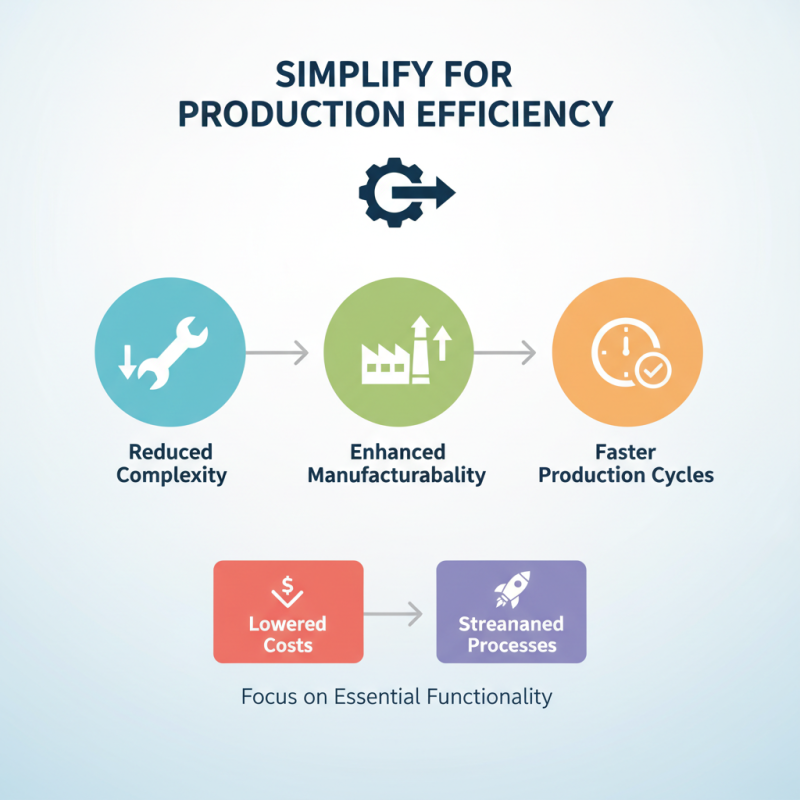
To achieve production efficiency, simplifying product design is crucial. This approach not only reduces costs but also enhances manufacturability, leading to faster production cycles. By focusing on essential functionalities and minimizing complexity, manufacturers can streamline processes and avoid unnecessary expenses.
**Tips:** One effective strategy is to use modular design principles. By breaking down a product into smaller, standardized components, manufacturers can simplify assembly and reduce lead times. Additionally, conducting thorough materials research can help in selecting cost-effective alternatives that maintain quality without sacrificing performance.
Another technique is to involve cross-functional teams early in the design process. By integrating insights from engineering, manufacturing, and supply chain professionals, companies can identify potential challenges and inefficiencies before they become costly issues. This collaborative approach not only simplifies the design process but also fosters innovation and accelerates time to market.
**Tips:** Utilizing design software that simulates manufacturing processes can also offer valuable insights, allowing teams to visualize how designs will translate into actual products. This foresight can help in making informed decisions that align with both cost reduction and production efficiency.
Incorporating Automation and Technology in Design for Manufacturing
The integration of automation and technology into design for manufacturing (DfM) is redefining production efficiency across industries. Recent trends indicate that industrial automation is experiencing significant growth, driven by the need for higher productivity and reduced downtime. A report highlighted that nearly 80% of manufacturers are leveraging automation to enhance their operational efficiency. Moreover, advancements in AI and the Industrial Internet of Things (IIoT) are enabling real-time data-driven decision-making, which further optimizes manufacturing processes.
Innovations such as collaborative robots and edge computing are set to transform manufacturing operations. For instance, studies show that implementing automation solutions can lead to a 20-30% increase in production efficiency. In the electronics sector, technologies like 3D printing and smart sensors are not just streamlining workflows but also minimizing material waste, contributing positively to both productivity and sustainability. The adoption of these technologies positions companies to meet the rising demands of modern manufacturing while addressing challenges such as labor shortages and market volatility.
Evaluating and Iterating Designs for Optimal Production Outcomes
Evaluating and iterating designs is essential in achieving optimal production outcomes within the framework of Design for Manufacturing (DFM). By closely examining each design component's manufacturability, teams can identify potential production challenges early in the process. This ongoing assessment allows designers to make informed decisions that enhance the feasibility of their creations, ultimately reducing waste and minimizing costly revisions. Techniques such as Design Failure Mode and Effects Analysis (DFMEA) can be instrumental in this phase, enabling teams to foresee and address possible defects before they impact the production line.
Iteration plays a critical role in refining designs to better align with manufacturing capabilities. Engaging in rapid prototyping and simulation enables teams to explore multiple design variations and assess their performance against production criteria. Feedback loops between design and manufacturing teams facilitate proactive problem-solving, allowing modifications and improvements to be swiftly integrated into the design process. This collaborative approach not only streamlines production workflows but also fosters innovation, leading to a final product that excels in efficiency without compromising quality.
Top Strategies for Design for Manufacturing to Enhance Production Efficiency
| Design Strategy |
Benefit to Production Efficiency |
Iterations Required |
Feedback Channels |
| Simplified Geometries |
Reduced manufacturing complexity |
2-3 iterations |
Design reviews, prototyping feedback |
| Modular Design |
Easier assembly and maintenance |
3-4 iterations |
Customer surveys, team brainstorming |
| Material Optimization |
Better resource utilization |
1-2 iterations |
Supplier discussions, material testing |
| Cross-Functional Collaboration |
Increased innovation and problem-solving |
Ongoing |
Workshops, joint meetings |
| Design for Assembly (DFA) |
Minimized assembly time and costs |
2-3 iterations |
Assembly feedback, ergonomic assessments |