
Concrete production is becoming more demanding, even on ordinary construction sites. The Global Cement and Concrete Association reports that the world uses roughly 14 billion cubic metres of concrete each year. That scale makes mixing accuracy, uptime, and material efficiency important purchasing concerns.
A Horizontal Shaft Concrete Mixer can provide strong blending through its horizontal mixing chamber, rotating paddles, and controlled discharge. However, capacity alone does not determine performance. A 1,000-litre mixer may suit one precast workshop but create unnecessary delays on a road project. Site access, aggregate size, moisture variation, batch frequency, and available power must also be examined. Small details matter. A narrow gate can reject a large machine.
ACI 304R, Guide for Measuring, Mixing, Transporting, and Placing Concrete, stresses consistent batching and uniform mixing practices. ASTM C94/C94M also highlights the importance of concrete uniformity and quality control in ready-mixed operations. These references do not select a machine for you. They establish the performance questions your supplier should answer.
In practical evaluations, inspect paddle wear, liner thickness, discharge clearance, cleaning access, and spare-parts support. Ask for verified output under comparable moisture and aggregate conditions. A catalogue figure is not field proof. It may be optimistic.
The right mixer depends on the complete production system, not one impressive specification. This guide compares mixing action, capacity, power, maintenance, automation, and lifecycle cost. It also considers a less comfortable truth: the cheapest purchase can become the most expensive equipment when cleaning, downtime, and inconsistent batches are ignored.
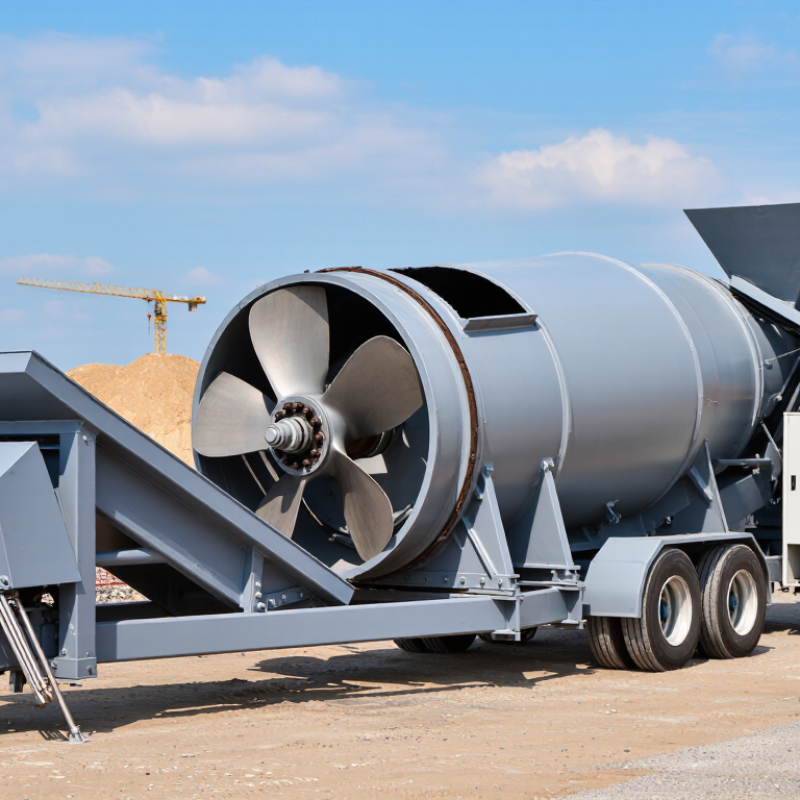
A horizontal shaft concrete mixer uses a rotating shaft to move materials through a fixed mixing chamber. Paddles or blades lift, fold, and push the concrete across the chamber. In twin-shaft models, two shafts often rotate in opposite directions, creating strong turbulence and faster material exchange. This action helps distribute cement, aggregates, water, and admixtures more evenly than simple drum rotation.
During operation, the blades should create a steady rolling movement, not a dead pile. Proper loading matters. Overfilling can reduce mixing quality and increase motor strain. Moisture also changes the result. A dry mix may need longer blending, while excess water can create sticky buildup around the paddles. Check the discharge gate, shaft seals, and wear liners regularly. Small gaps can become expensive problems.
Tips: Match the mixer size to the working batch, not the maximum chamber volume. Ask for verified mixing tests with your actual recipe. Check motor torque, blade clearance, cleaning access, and emergency stops. A useful site check is simple: inspect the discharged concrete for dry pockets and uneven color. This is not a perfect rule, but it reveals problems quickly. If residue collects near one wall, the paddle angle, fill level, or shaft alignment may need review.

Match mixer capacity and output to your project requirements, not just the advertised drum volume. A mixer rated at 1,000 liters may produce less usable concrete after allowing space for movement and safe loading. Check the working batch size, mixing time, and discharge rate together. These figures reveal whether the machine can support your placement schedule.
For a small foundation, a compact mixer may handle several batches per hour. Larger slabs need steadier output to prevent cold joints and uneven finishing. Estimate the required volume per hour, then add a practical margin of around 10 to 15 percent. Site delays happen. Aggregate delivery, moisture changes, and repositioning can reduce real production.
Horizontal shaft mixers often deliver strong blending through fixed paddles and controlled material movement. They are useful when the mix contains coarse aggregate, fibers, or a lower-slump formulation. Measure your actual materials before choosing. Wet sand can change batch weight significantly.
I have seen careful estimates fail because operators counted nominal capacity as finished output. That assumption deserves a second check.
Also consider loading space, discharge height, cleaning time, and available electrical power. A mixer that meets the volume target but blocks truck access may slow the entire operation. Run a trial batch, record the cycle time, and compare the texture from the center and discharge end.
How to Choose a Horizontal Shaft Concrete Mixer
Evaluate Mixing Performance, Materials, and Shaft Configuration
A horizontal shaft mixer should produce a consistent blend without leaving dry pockets near the walls. In practical testing, watch the discharge closely. The concrete should fall evenly, not arrive in heavy clumps. Mixing time matters, but speed alone can mislead. A faster cycle may still create uneven moisture distribution.
Match the mixer’s materials to your working conditions. Abrasive aggregate can wear ordinary liners quickly. Thick, replaceable wear plates usually offer better long-term protection. Check the shaft, paddles, seals, and bearings before purchase. A strong frame reduces vibration, especially when the drum carries a dense batch. I once underestimated cleaning access, and hardened residue later slowed every inspection. That mistake changed my evaluation process.
Tips: Test your actual aggregate and moisture range before ordering. Measure the discharge time with a stopwatch. Inspect the mixer after several cycles, not just during an empty demonstration. Compare paddle clearance with the largest stones you use. Small gaps can trap material. Also, ask how easily operators can replace worn components. The most efficient design on paper may become inconvenient in daily work. Be willing to reconsider your first choice.
| Evaluation Dimension | Single-Shaft Horizontal Mixer | Twin-Shaft Horizontal Mixer | Recommended Selection Criteria |
|---|---|---|---|
| Typical Production Capacity | Approximately 0.25–3.0 m³ per batch | Approximately 0.5–6.0 m³ per batch | Choose a rated batch volume that supports the required output without routinely exceeding 80–90% of the nominal filling capacity. |
| Mixing Uniformity | Good for conventional concrete and moderate production rates; uniformity depends strongly on blade arrangement and loading sequence. | Very good for demanding concrete applications because opposing shafts create intensive lifting, folding, and cross-mixing. | Request test results using the actual cement, aggregate gradation, admixtures, and target slump. Check consistency at multiple discharge points. |
| Typical Mixing Time | Commonly about 45–90 seconds after all materials enter the mixing chamber. | Commonly about 30–60 seconds after all materials enter the mixing chamber. | Use trial batches rather than relying only on a catalog cycle time; loading, discharge, and cleaning time must also be included in the production cycle. |
| Suitable Concrete Types | General ready-mix concrete, small precast products, masonry concrete, and standard structural mixes. | Structural concrete, precast concrete, roller-compacted concrete, fiber-reinforced mixes, and mixes with low water-to-cement ratios. | For stiff, low-slump, fiber-containing, or heavily dosed mixes, prioritize high shear action and positive material circulation. |
| Aggregate Size Capability | Often suitable for aggregate up to about 40–80 mm, depending on chamber design, clearance, and the specified mix. | Often suitable for aggregate up to about 40–80 mm, with better circulation of coarse aggregate when the blade and liner design is correctly matched. | Confirm the maximum aggregate size, shaft-to-liner clearance, inlet geometry, and manufacturer test data before selection. |
| Moisture and Slump Range | Performs well with medium-slump mixes; very dry or sticky materials may require longer mixing or optimized blade clearance. | Handles a broad range from low-slump to flowable concrete when the speed, blade angle, and discharge opening are properly configured. | Evaluate the lowest and highest expected moisture conditions, since aggregate moisture variation can significantly change workability and power demand. |
| Shaft Configuration | One horizontal shaft with paddles or helical blades; simpler material flow and fewer rotating components. | Two parallel horizontal shafts, usually rotating inward or in a synchronized counter-rotating pattern to create overlapping mixing zones. | Select a single shaft for simpler duties and lower mechanical complexity; select twin shafts when intensive mixing and high throughput are priorities. |
| Typical Shaft Speed | Often about 15–35 revolutions per minute, depending on diameter, blade profile, and material properties. | Often about 20–40 revolutions per minute, depending on mixer size and the required shear intensity. | Higher speed can improve dispersion but may increase wear, power consumption, and aggregate impact. Verify the operating range under load. |
| Installed Power Requirement | Commonly about 7.5–90 kW, depending on batch volume, material density, moisture, and duty cycle. | Commonly about 15–220 kW, with higher power generally required for larger batches and stiff or fiber-reinforced mixes. | Compare specific energy use in kWh per cubic metre, not motor power alone. Confirm starting torque and overload protection requirements. |
| Wear Protection | Replaceable wear liners and blade tips are commonly used; fewer wear parts can simplify routine servicing. | Replaceable liners, paddles, and blade tips are essential because both shafts are exposed to intensive abrasion and impact. | Look for abrasion-resistant steel, reversible or replaceable wear parts, accessible inspection doors, and documented replacement procedures. |
| Maintenance Complexity | Generally lower, with fewer bearings, seals, shafts, and drive components to inspect. | Generally higher because synchronization, two shaft assemblies, additional seals, and more wear parts require inspection. | Assess access to bearings, seals, gearboxes, lubrication points, and discharge gates. Maintenance access should not require full equipment removal. |
| Discharge Performance | Usually provides a straightforward discharge path, although sticky mixes may require additional blade assistance. | Typically provides fast and thorough discharge because the opposing shafts actively move material toward the outlet. | Check residual material after discharge, gate opening size, discharge time, and compatibility with the downstream conveyor or batching system. |
| Best-Fit Operating Profile | Small to medium plants, intermittent production, standard concrete recipes, and projects where initial cost and simplicity are important. | Medium to high production, frequent recipe changes, demanding mix designs, and applications where uniformity and short cycles are critical. | Base the decision on lifecycle cost, required output, mix difficulty, cleaning frequency, available power, and the cost of rejected batches. |
| Acceptance Test Checklist | Verify batch weight, moisture correction, discharge time, slump consistency, and uniformity between samples. | Verify all single-shaft criteria plus shaft synchronization, motor load balance, temperature rise, and wear-part accessibility. | Use the intended production recipe and document mixing time, power draw, homogeneity, discharge residue, noise, vibration, and clean-out time. |
Power selection should begin with torque, not horsepower alone. A heavily loaded mixer needs stable torque during startup and discharge. The U.S. Department of Energy reports that motor-driven systems consume about 69% of industrial electricity. Efficient motors and correctly sized drives can therefore reduce operating waste. Check the mixer’s rated batch capacity, material density, shaft speed, and overload protection. A unit that starts smoothly is usually kinder to its gearbox. This matters.
Durability depends on contact points. Inspect paddle thickness, shaft steel, liner hardness, bearing protection, and seal quality. Abrasive aggregate can quickly expose weak components. Ask for fatigue testing or service-life data, not attractive promises. No calculation is perfect. A small trial batch may reveal vibration, uneven mixing, or excessive current draw. Those observations deserve more attention than a brochure.
Maintenance should be visible and practical. Choose wide access doors, reachable grease points, replaceable liners, and simple washout routes. Trapped concrete hardens like stone around seals and bearings. Safety features need equal scrutiny. OSHA’s machine guarding requirements, including 29 CFR 1910.212, require protection from moving machine parts. Look for fixed guards, emergency stops, access interlocks, and lockout provisions. Operators should not reach across an exposed shaft, even briefly. Manuals must state cleaning, inspection, and isolation procedures clearly. A neglected maintenance detail can become the weakest design feature.
Installation needs shape the real purchase price. Measure doorway width, slab strength, discharge height, and service access before comparing drum capacity. A horizontal shaft mixer usually needs a firm, level foundation and enough clearance for shaft removal. ACI 304R stresses controlled mixing, charging, and discharge procedures for consistent concrete quality. That detail matters. A mixer that fits the production line but blocks maintenance access can become an expensive bottleneck.
Operating cost deserves closer attention than the purchase quotation. The U.S. Department of Energy’s Motor Systems Market Assessment reports that motor-driven equipment uses about 70% of industrial electricity in the United States. Compare motor efficiency, batch time, idle power, lubrication intervals, and wear-part life.
The Global Cement and Concrete Association’s 2023 roadmap links cement and concrete production with roughly 7–8% of global carbon emissions, so energy waste is not a minor issue. My cost sheet would include cleaning water, labor, downtime, and replacement paddles. Many estimates miss these items.
Supplier support should be tested before signing. Request installation drawings, commissioning procedures, spare-parts lead times, and technician response targets. Ask for service records from comparable applications, not polished promises. Support matters. A supplier should explain torque limits, overload protection, and routine inspections in clear language. I would also budget for operator training. Even a robust mixer can produce inconsistent batches when charging sequences are misunderstood. A cheaper machine may still cost more when advice arrives two weeks late.
