How to Choose the Best ADSS Clamp for Your Project in 2026
Choosing the right ADSS Clamp in 2026 starts with the cable, the route, and the actual support conditions. An aerial span crossing an open field faces different loads from one running beside buildings. The clamp must fit the cable’s diameter and design, while its materials and gripping method suit the installation environment. Small details matter. A slight mismatch can affect cable support, installation time, or long-term performance.
Span length, wind exposure, temperature changes, and pole spacing all influence selection. So do the cable manufacturer’s requirements and the hardware system already specified for the route. Check product drawings, diameter ranges, rated loads, and installation guidance rather than relying on appearance alone. A sturdy-looking clamp is not necessarily compatible. That is easy to miss.
A practical review should compare candidate clamps against documented project conditions and verified manufacturer data. Ask how the clamp is installed, what tools are required, and whether the design suits the expected cable movement. Where details are unclear, confirm them with the supplier or a qualified project engineer. Even a careful checklist can miss an awkward pole angle or a crew’s access limits; field conditions are not always tidy. This guide examines the key criteria, common trade-offs, and questions worth resolving before purchase, helping project teams make a more informed choice without treating one product as right for every route.
Define the ADSS Cable and Route Requirements
An ADSS cable is a self-supporting, all-dielectric fiber-optic cable, designed to span between structures without a metallic messenger. Before selecting a clamp, record the cable’s outside diameter, weight, rated tensile load, and approved minimum bend radius. Use the cable specification sheet, not a visual estimate. A small diameter mismatch can lead to poor grip or excessive pressure on the jacket.
Survey the route, too. Note each span length, pole material, attachment height, and changes in direction. Straight runs may call for suspension clamps, while terminal points and sharp route changes may need dead-end clamps. Wind, ice, temperature, and sag affect loading, so confirm the design conditions and clamp ratings with qualified project personnel. A route drawing helps, but it can hide uneven terrain or a pole set at an awkward angle. Field checks matter.
Tips: Measure the cable at several points, and confirm the actual diameter before ordering. Mark tangent poles, angles, and dead ends on the route plan. Check clamp compatibility with the cable manufacturer’s installation data. Don’t force a fit. If the route changes during construction, review the clamp choice again; that extra check is easy to skip, and worth doing.
Identify the Clamp Type Needed for Each Installation Point
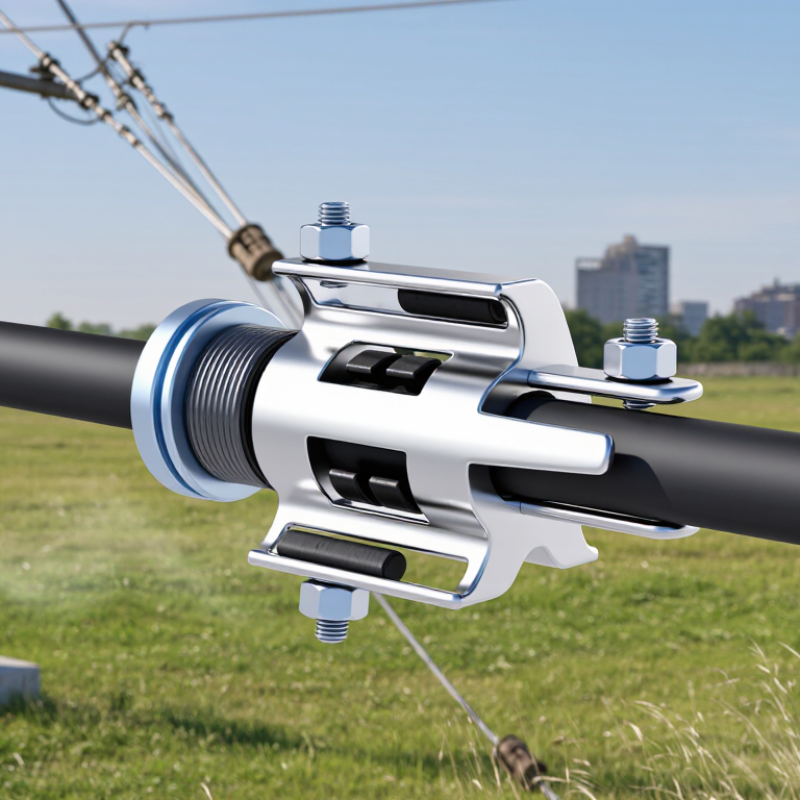
Choosing an ADSS clamp starts with the installation point, not just the cable diameter. On a straight pole-to-pole span, a suspension clamp supports the cable while allowing it to sit in a controlled position. Check the specified cable range and span conditions; a close visual fit is not proof of compatibility. Keep the cable seated without crushing its sheath.
At a terminal pole, or where the route changes direction significantly, a dead-end clamp transfers cable tension to the support structure. Match its rated holding capacity to the cable, span length, and expected loading. For a shallow route deviation, the required hardware may differ from that used at a sharp angle. Follow the cable and hardware specifications rather than guessing from appearance.
Down a pole, use a suitable cable guide or downlead clamp to keep the drop secure and orderly. It should support the cable without creating a tight bend or pinching point. Small details matter. Before installation, check the cable’s outside diameter, support spacing, and local pole arrangement. Field conditions can complicate a neat drawing; an extra inspection may reveal a mismatch before the cable is tensioned.
Match Clamp Specifications to Cable Span and Tension
Choosing an ADSS clamp starts with the cable’s actual span and working tension, not a guess based on pole spacing. A long span can increase sag and loading, especially where wind or ice is expected. I used to treat span length as the main clue; that was too simple. The route profile and support-point height matter too.
Use the project’s sag-tension data to identify the expected load at each attachment point. Then compare that load with the clamp’s rated capacity and intended use. A dead-end clamp and a suspension clamp serve different roles. Check the cable’s outside diameter against the clamp’s stated range, and confirm compatibility with its jacket. Close fit matters. A clamp that is too loose may slip; one that is too tight can damage the sheath. That detail is easy to overlook.
Field checks help catch mismatches before installation. Verify the support angle, cable condition, and specified hardware, then follow the clamp maker’s installation instructions, including any torque limits. Do not select a clamp from span length alone. If the calculated tension or cable data is uncertain, ask the project engineer to confirm the selection. I have seen small measurement errors complicate an otherwise sound installation. Recheck the numbers.
Compare Materials, Weather Resistance, and Compatibility
Choosing an ADSS clamp starts with the cable, not the catalog photo. Match the clamp’s diameter range to the cable’s measured outer diameter, including any sheath variation. Then check the required holding load and whether the location needs a suspension or dead-end fitting. A snug fit matters. Too much pressure can damage the jacket; too little can let the cable creep.
Material choice depends on the route. Aluminum alloy bodies are common where low weight and corrosion resistance matter. Stainless-steel hardware can suit exposed fittings, but mixed metals need careful design in wet or salty conditions. Look for compatible materials and protective inserts, rather than assuming any coated clamp will last. Small details matter.
Weather resistance is more than a temperature rating. Consider ultraviolet exposure, driving rain, coastal salt, wind, and ice on the actual span. Ask for test data or installation limits that match those conditions. Compatibility also includes strand construction, cable weight, span length, and line angle. Compare these with the cable supplier’s limits and the clamp maker’s stated range. Field checks can reveal an imperfect assumption: the listed diameter may not reflect the jacket at a real installation point. Recheck measurements before ordering, and confirm the specified installation method with the project engineer.
Verify the Selection Against Site Conditions and Safety Standards
Choosing an ADSS clamp in 2026 means checking the actual cable and route, not just matching a catalog diameter. Measure the cable, confirm its construction, and compare the clamp’s approved range with the cable supplier’s data. Then verify span length, expected tension, wind exposure, ice loading, and pole geometry. IEEE Std 1222-2019 covers ADSS cable requirements; it does not certify every clamp or installation. NOAA reported 28 U.S. billion-dollar weather and climate disasters in 2023, with estimated losses of $92.9 billion. That figure is not a local loading value, but it underlines why site-specific weather checks matter.
Tips: Record cable diameter, span, and mounting height in the field. Check clearances and electrical exposure against the utility’s requirements. Inspect the clamp’s rated load and installation instructions. Small mismatch, big trouble.
Before installation, confirm the assembly suits the cable’s specified tension and the support structure. Use documented test information, such as relevant optical-cable procedures in IEC 60794-1-2, as supporting evidence—not as proof that a clamp meets every site need. Check for sharp edges, correct seating, and specified tightening practice. Recheck after installation; a rushed visual inspection can miss a poorly seated cable. I would also question any selection based only on “standard span” assumptions. Local conditions are rarely that tidy.
How to Choose the Best ADSS Clamp for Your Project in 2026
Verify each item against field measurements, the cable and clamp manufacturers’ specifications, and applicable safety standards. The chart is a verification checklist, not a performance rating.
Confirm cable outside diameter, span and tension, line angle, wind and ice loading, support hardware compatibility, and required electrical clearances before finalizing clamp selection. Do not use a clamp beyond its specified cable range or rated loads.