How to Choose POY Spinning and Winding Equipment

Choosing POY Spinning And Winding equipment is a process decision, not a race for the highest advertised speed. A line may look impressive on paper, yet unstable temperature control or uneven quenching can show up later as inconsistent filament and more frequent package defects. Small details matter. Check the polymer throughput range, spinneret layout, cooling airflow, godet configuration, winding tension, and package-change system. Ask suppliers for operating data at conditions close to your own, not only ideal demonstration settings.

A note on attribution: no verifiable expert quotation was provided for this introduction, so the following is an original editorial line from a fictional composite specialist, not a real person’s quotation. Textile process engineer Mira Chen puts the selection principle this way: “Choose the line that holds stable yarn quality through a full shift, not just during a short trial.” Use that as a question, not a promise. Can the proposed system maintain denier consistency while operators change packages? Is the control interface clear when a sensor alarm appears? What happens when feedstock or ambient conditions vary? These questions deserve practical answers. A polished brochure cannot provide them. Nor can a single successful trial. Compare energy use, maintenance access, spare-part availability, operator training, and winding performance together. The best choice depends on your product range and plant conditions; even a sound comparison may leave trade-offs worth revisiting.
How to Choose POY Spinning and Winding Equipment

POY Product Specifications and Production Requirements

Before comparing POY spinning and winding equipment, translate the product brief into measurable yarn specifications. Record polymer type, nominal linear density in denier or dtex, filament count, cross-section, and acceptable variation. A 150-denier, 48-filament polyester POY, for example, needs different spinneret and take-up settings than a finer, higher-filament product. Small differences matter.

Define package requirements too. Set tube dimensions, target package mass, winding pattern, and maximum diameter to suit downstream draw-texturing creels. Specify the finish type and pickup range, interlace level if needed, and yarn tension limits. Include end-break rate and package hardness in the acceptance criteria. On the production floor, inspect packages from several positions; edge build and loose tails can reveal unstable traverse or tension. Small clues count.

Production needs shape the equipment choice. State planned output per position, operating hours, changeover frequency, and the range of yarn counts the line must handle. Confirm that the spinneret, quench system, godets, and winder can maintain even cooling and stable take-up at the intended speed. Request test data across the actual product range, not only at maximum speed. A trial can expose issues. It may also show that the brief is too ambitious; revise it using measured results rather than assumptions.
How to Choose POY Spinning and Winding Equipment

Compare nominal linear density across three common polyester POY product examples. Use the intended denier range and filament count when checking spinneret, throughput, and winding-position requirements.

Reading the chart: Denier indicates yarn mass in grams per 9,000 meters; the filament count is shown in each product label. These are representative product configurations, not universal production specifications. Confirm the required yarn properties and operating limits with your process and equipment supplier before selecting a line.

Main Components of a POY Spinning and Winding Line

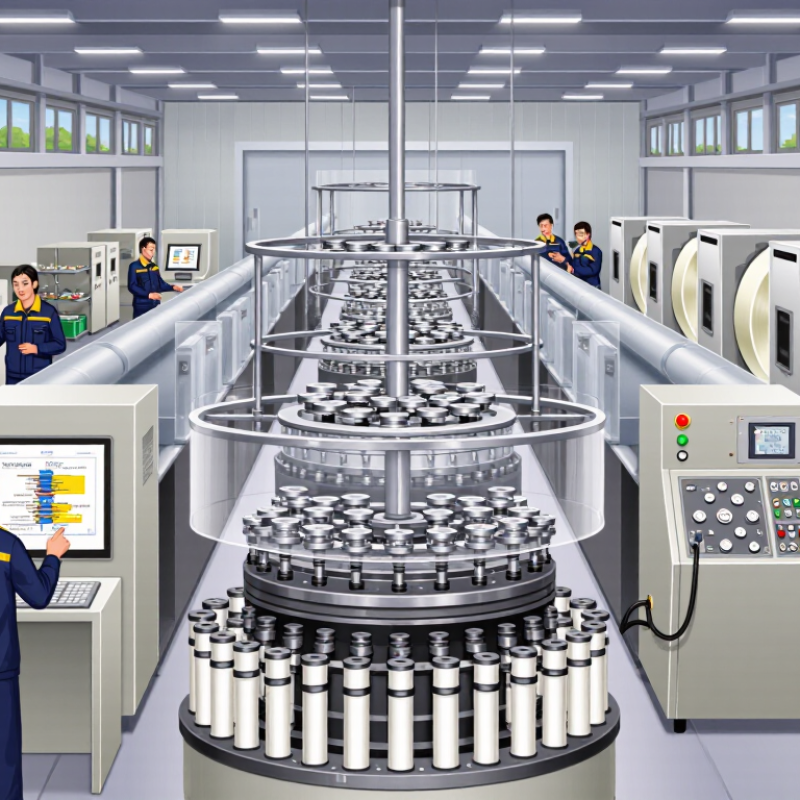
A POY spinning and winding line begins with melt delivery, metering pumps, and a heated spinning beam. The pumps regulate polymer flow to each spinneret, where fine filaments emerge through small, precise holes. Stable temperature and pressure help keep filament size consistent. A slight fluctuation can show up later as uneven yarn.

Quench-air cabinets cool the filaments after extrusion. Their airflow should be even across the threadline, not strong in one spot and weak in another. A finish applicator then lays a thin coating on the yarn to reduce friction. Small details matter. Godets guide and control yarn speed before it reaches the winding position. Their surface condition and alignment deserve regular checks.

The winding head builds the yarn package, while its traverse mechanism distributes yarn across the package width. Tension controls and sensors help detect breaks or unstable winding. Check the yarn path. When evaluating equipment, consider how these components work together, along with access for cleaning and maintenance. A compact layout may save floor space but make threading less convenient. That trade-off is easy to underestimate. Operators’ feedback from routine changes can reveal issues that a specification sheet misses.

How to Choose POY Spinning and Winding Equipment - Main Components of a POY Spinning and Winding Line

Equipment Component Main Function Typical Selection Data Key Checks When Choosing Effect on POY Quality
Polymer chip drying and conveying system Reduces moisture in PET chips and delivers them consistently to the extruder. PET drying commonly uses dry air with a dew point around −40°C or lower. Drying temperature and residence time depend on the resin supplier’s recommendations and system design. Check dryer capacity, airflow distribution, dew-point monitoring, conveying cleanliness, and protection against moisture re-absorption. Proper drying helps limit hydrolysis during melting, supporting stable melt viscosity and fewer filament breaks.
Extruder and melt delivery system Melts and homogenizes polymer, then supplies it at a controlled rate to the spinning positions. PET spinning melt temperatures are often in the approximate range of 280–295°C. Extruder output must match the number of spinning positions and the planned throughput. Evaluate output stability, screw and barrel design, temperature-zone control, melt-pump compatibility, insulation, and ease of maintenance. Consistent melt temperature and flow help maintain uniform filament denier and reduce spinning instability.
Melt filtration and spin pack Removes contaminants and distributes filtered melt evenly to the spinneret. Filter media and pack configuration are selected for polymer cleanliness, throughput, and the required filtration level. Operating pressure limits are equipment-specific. Review filter area, changeover method, pressure monitoring, seal design, pack life, and availability of replacement filter elements. Effective filtration reduces spinneret blockage and helps maintain consistent filament formation.
Spinneret assembly Forms continuous filaments by extruding melt through precision capillaries. Hole count is matched to the desired filament count; common commercial filament counts include 24, 36, 48, 72, and 96. Hole geometry and capillary dimensions depend on the product. Confirm hole-count options, capillary tolerances, material compatibility, cleaning method, and availability of product-specific spinnerets. Capillary condition and hole-to-hole uniformity affect filament evenness, cross-section, and break frequency.
Quench-air system Cools and solidifies freshly extruded filaments in a controlled manner. Many PET POY lines use cross-flow quenching. Air temperature is commonly controlled near 18–22°C, while airflow and humidity targets depend on the line design and product. Check air filtration, temperature and humidity control, flow uniformity across the filament bundle, and access for cleaning. Uniform quenching supports consistent filament structure and reduces variation in yarn properties.
Finish-oil application system Applies a controlled finish to the yarn to improve friction behavior and downstream processability. Application method may be a metered finish applicator or a finish roller. The finish type and application rate are selected for the yarn specification and downstream use. Check metering accuracy, finish circulation and filtration, applicator alignment, cleaning access, and compatibility with the specified finish. Consistent finish application helps control yarn friction, static, and performance during winding and texturing.
Take-up godets and yarn guides Control yarn speed and path between the spinning cabinet and winder. POY winding speeds are commonly in the approximate range of 2,500–3,500 m/min; some line designs operate outside this range. Roll diameter, surface condition, and drive control must match the target speed. Assess drive synchronization, speed accuracy, surface wear, yarn-path accessibility, guarding, and suitability for the intended filament and denier range. Stable yarn handling helps maintain consistent tension and reduces fuzz, breaks, and package defects.
Automatic POY winder Builds the yarn package with controlled winding tension, traverse, and package formation. Choose the number of winding positions, compatible package dimensions, target winding speed, and doffing method for the planned production rate. Review package build control, traverse pattern, tension control, automatic doffing, end transfer, safety systems, and operating data monitoring. Good winding control produces stable packages that unwind reliably in downstream texturing or processing.
Drive, controls, and line monitoring Coordinates component speeds and temperatures and records operating conditions. Control functions typically include temperature regulation, drive-speed control, alarms, and production data for each spinning or winding position. Check sensor accuracy, alarm coverage, recipe management, data export, spare-parts support, and compatibility with plant electrical standards. Reliable monitoring helps identify process drift early and supports repeatable product quality.
Utilities and safety systems Provide power, cooling, compressed air, exhaust, and operator protection for the line. Utility demand depends on line capacity and configuration. Obtain equipment-specific electrical loads, cooling requirements, compressed-air demand, and exhaust specifications before installation. Verify utility capacity, emergency stops, guarding, hot-surface protection, access routes, ventilation, and maintenance clearances. Stable utilities support continuous operation, while suitable safety systems protect personnel and equipment.

Note: Figures shown are representative guidance, not universal specifications. Confirm operating ranges, throughput, package dimensions, and utility requirements with the resin supplier and equipment designer for the intended yarn product and plant conditions.

Matching Spinning Equipment to Polymer and Filament Needs

Start with the polymer, not the winder. PET, nylon, and polypropylene differ in melt behavior, moisture sensitivity, and thermal response. These differences affect extrusion stability and filament formation. For moisture-sensitive polymers, drying control and clear dew-point monitoring are essential. A small change in melt viscosity can alter pressure at the spinneret. Small details matter.

Match the spinning line to the intended filament count and denier. Fine filaments need consistent polymer flow through each spinneret hole, while higher filament counts require careful quenching to limit uneven cooling. Check the quench airflow across the full filament curtain, not only at its center. For POY, godet configuration and take-up speed should suit the polymer’s draw behavior and the target yarn properties. Avoid selecting speed from a catalogue figure alone; confirm it with process trials.

The winder must handle the planned package size and yarn tension without causing loose edges or hard spots. Review traverse settings, contact pressure, and tension readings during a sustained run. Record breaks, package shape, and yarn uniformity, then adjust one variable at a time. A clean specification sheet can still miss a real production issue. Trial data is not perfect, either, especially when ambient conditions shift. Keep those limits visible when comparing equipment.

Evaluating Winder Performance and Package Quality

When choosing POY spinning and winding equipment, compare performance under the same yarn, speed, and operating conditions. A high rated speed means little if tension fluctuates during a long run. Watch the yarn path and record tension changes, breaks, and package build at several machine positions. Small differences between positions can become visible defects later.

Package quality needs close inspection. Check the edges for ridges, the surface for loose wraps, and the shape for uneven shoulders. Weigh packages and compare their dimensions; consistent density supports stable downstream unwinding. If possible, unwind sample packages at the intended process speed. Listen for snags and note tension variation. A neat-looking package is not always a stable one. I have seen visual checks miss problems, so measurements matter.

Tips: Keep a simple log of speed, tension, package weight, and defects. Test more than one position and repeat the trial. Don’t trust one good package. A rushed evaluation can hide variation.

Comparing Automation, Maintenance, and Operating Costs

Choosing POY spinning and winding equipment is a lifecycle-cost decision, not a contest for the highest rated speed. Automated doffing, tension control, and package monitoring can reduce manual handling and help maintain consistent winding. Still, automation adds sensors, drives, and software that require skilled support. A line can be highly automated and still lose production when one poorly maintained component stops several positions.

Operating costs deserve close attention. The U.S. Department of Energy’s 2014 motor systems sourcebook estimates that motor-driven systems use about 54% of electricity in U.S. manufacturing. This is a broad manufacturing benchmark, not a POY-specific figure, but it highlights the cost of godet drives, quench fans, and compressed-air systems. Compare equipment using measured energy per kilogram, not motor nameplate ratings alone. Small differences add up over long shifts.

Maintenance access matters. Check whether technicians can reach filters, godets, and winding assemblies without lengthy shutdowns. Deloitte and MAPI’s 2019 Smart Factory report found reported improvements of 10–20% in production output among surveyed smart-factory adopters; that is a cross-industry benchmark, not a guaranteed POY result. Predictive alarms may help, but they can also create noise if sensors are poorly calibrated. A spare-part list and realistic service intervals are less glamorous. They are useful. Some cost estimates will remain imperfect until the line runs with your polymer, denier, and shift pattern.

NEW JERSEY

Location

Union Tool & Mold is a mold making, repair and plastic injection molding company located in central New Jersey.
(973) 763-6611

220 Rutgers St, Maplewood, NJ 07040
ACCREDITED

Certified Company


SOCIAL PROFILE

Let’s Connect

We invite you to engage with us on LinkedIn, where you can stay updated on our latest news, insights, and professional opportunities.