Choosing the right plastic injection molding supplier is crucial for your manufacturing success. A reliable partner ensures high-quality production and efficient service. However, with so many options available, it can be challenging to determine which supplier aligns with your specific needs.
To begin this process, consider their experience in the industry. Suppliers with a strong track record have likely encountered diverse challenges and solutions. Their expertise can significantly impact your project’s outcome. Additionally, assess their technical capabilities. Do they utilize advanced technology? Are they able to offer customized solutions? These factors can drive your project’s efficiency and effectiveness.
Developing a shortlist is an essential step. Reach out to potential suppliers and ask detailed questions. Understand their production processes and quality control measures. Gathering feedback from other clients can also provide insights into their reliability. Remember, the right supplier can make a difference in your plastic injection projects, but it’s essential to invest time in researching and evaluating your options.

Plastic injection molding is a manufacturing process that shapes plastic materials into desired forms. Understanding the basics of this process is crucial for businesses aiming to produce high-quality products. According to a 2023 report by MarketsandMarkets, the global plastic injection molding market is expected to reach $424 billion by 2027, showing a compound annual growth rate of 5.5%. This reflects the growing demand for efficient production processes across various industries, including automotive, consumer goods, and electronics.
The process begins with melting plastic pellets, which are then injected into metal molds. These molds are designed to create specific shapes. Proper mold design is vital; poorly designed molds can lead to defects, affecting product performance. A 2022 study from the Society of Plastics Engineers emphasized that up to 30% of production defects arise from inadequate mold design. This highlights the importance of working with skilled suppliers who understand the intricacies of mold engineering.
Choosing the right supplier involves assessing their expertise in the injection molding process. A reliable supplier should have a proven track record and adherence to industry standards. Reports indicate that suppliers with ISO certification often show better quality control practices. However, not all suppliers meet these standards. Businesses must be vigilant when evaluating options, ensuring that they prioritize experience and technical capability in their selection process.
Choosing the right plastic injection molding supplier can significantly impact your production quality. That's why understanding key qualities in reliable suppliers is essential. A strong track record in the industry shows experience and expertise. Look for suppliers who can demonstrate successful projects and satisfied clients.
Next, consider communication and responsiveness. Good suppliers are attentive to your needs and provide updates regularly. They should be open to questions and adaptable to changes. Quick responses reflect their commitment to service.
Tips: When evaluating suppliers, request references. Speaking directly with previous clients can provide insight into the supplier's reliability. Additionally, ask about their quality control processes. A robust system indicates that the supplier prioritizes product consistency.
Finally, assess their technological capabilities. Advanced machinery and innovative techniques lead to better efficiency and precision. Don’t overlook the importance of their team. Skilled professionals enhance production capabilities.
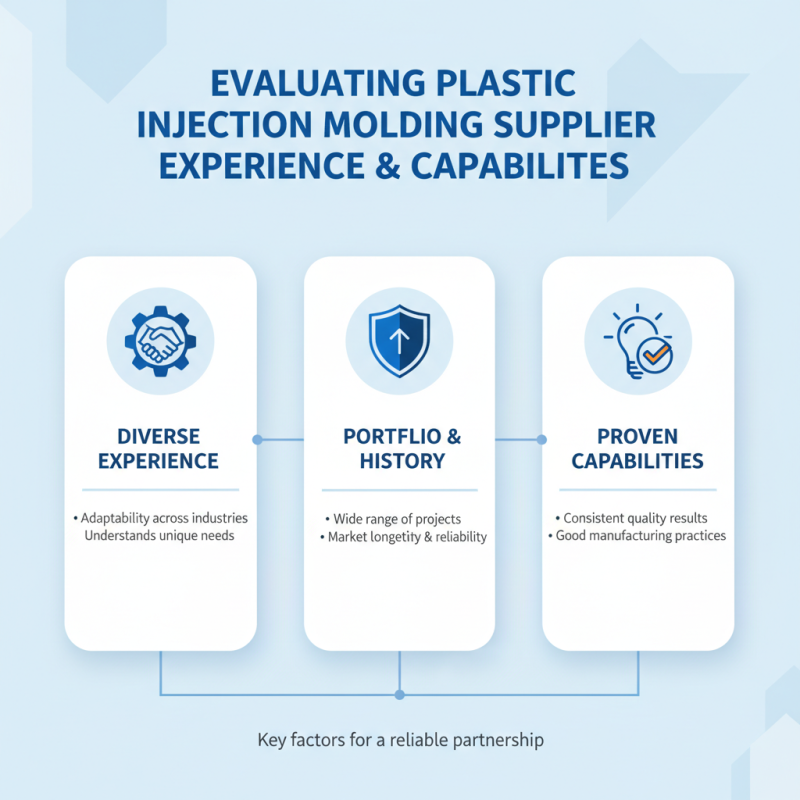
When evaluating plastic injection molding suppliers, their experience is crucial. A supplier with a diverse portfolio shows adaptability. Look for those who have worked across various industries. This demonstrates their capability to understand unique requirements. A supplier’s history in the market can signal reliability. Longevity often suggests good practices and proven results.
Additionally, assess their manufacturing capabilities. Check if they use advanced technologies and techniques. State-of-the-art machinery can lead to better quality products. Consider their quality control processes, as they affect the final output. Suppliers should have clear procedures to ensure consistency.
Don’t overlook recent client testimonials. They can provide insights into a supplier’s performance. However, be cautious. Not every review may give an accurate picture. Request case studies to understand how challenges were met. This reveals their problem-solving skills. Reflecting on these elements will aid in making an informed decision.
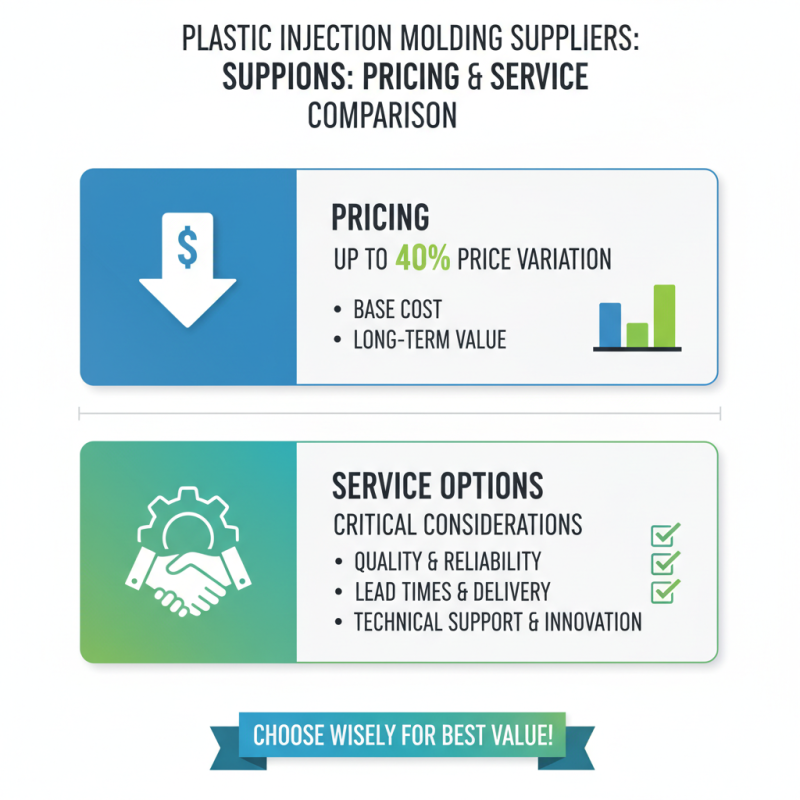
Choosing the best plastic injection molding suppliers involves careful consideration of pricing and service options. A recent industry report indicates that pricing can vary significantly, with differences of up to 40% among suppliers for similar services. It is critical to analyze not just the base cost, but also the long-term value offered.
Many suppliers boast rapid turnaround times. However, it’s essential to verify these claims. One study notes that 30% of suppliers fail to meet their delivery promises consistently. Evaluating customer feedback can unveil these discrepancies. Look for reviews that mention responsiveness and flexibility, as these are crucial for any project's success.
Additionally, service options can make or break your partnership. Suppliers with a range of services, such as design support or material selection, can provide valuable assistance. However, relying solely on a supplier's claims can be risky. Conducting thorough research and asking for references can help identify reliable partners. Balancing cost with service quality is often more challenging than anticipated, warranting deeper scrutiny into supplier offerings.
Choosing the right plastic injection molding supplier involves careful consideration of their customer support and communication responsiveness. You want a partner who is available and responsive to your needs. Delays in communication can lead to misunderstandings, impacting your production timelines and costs.
Effective communication should reflect professionalism and understanding. Evaluate potential suppliers by their response time. How quickly do they answer your inquiries? Are their explanations clear? A supplier who engages in meaningful dialogue demonstrates commitment to your project. Try asking specific questions to gauge their depth of knowledge.
Tips: Look for suppliers who offer dedicated account managers. This can ensure more tailored support. Regular updates about project status are also key. A supplier that provides progress reports shows transparency and reliability. You should feel comfortable asking for clarifications or adjustments at any stage of the process.
Remember, customer support is not just about being available. It's about being proactive. A supplier that anticipates your needs can enhance your experience. Reflect on past interactions with suppliers. Were they responsive? Did they understand your requirements? These factors are crucial in establishing a successful partnership.