What Is the Best Rolled Metal from China?
Choosing the best Rolled Metal from China requires more than comparing prices or surface brightness. Product performance depends on grade, thickness tolerance, coating, forming behavior, and traceability. A clean, reflective coil may still fail during stamping if its chemistry or yield strength is unsuitable.
The World Steel Association reported that China produced approximately 1,005 million tonnes of crude steel in 2024. That represented more than half of global output. However, crude steel data does not equal finished rolled-metal quality. The OECD’s steel market analysis also highlights continuing concerns about global overcapacity and uneven demand. Buyers should therefore examine mill certificates, inspection records, tensile results, and coating measurements. Small details matter. A 0.03-millimeter thickness variation can affect panel alignment, machining waste, and final assembly.
Edwin Basson, Director General of the World Steel Association, has stated, “Steel is fundamental to modern life.” His point is simple, but sourcing remains complicated. The best Rolled Metal is not automatically the cheapest material from the largest producer. It is the material that matches the application and performs consistently. That means checking standards such as ASTM, EN, or JIS, while confirming the supplier’s actual production capability. Some evaluations rely too heavily on certificates. That is a weakness. Independent inspection, sample testing, and a clear warranty can reveal problems before shipment. This guide compares Chinese rolled-metal options through measurable quality, practical application, and supplier reliability.
Defining “Best” Rolled Metal by Grade, Strength, Thickness, and End Use
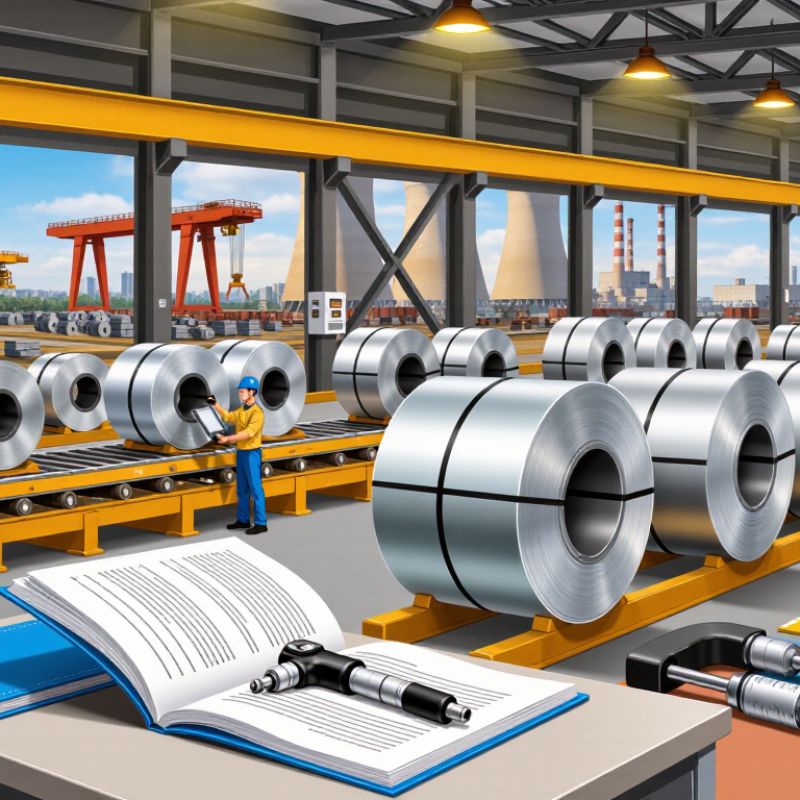
The best rolled metal from China is not defined by origin alone. Grade, strength, thickness, and end use decide the right choice. The World Steel Association’s World Steel in Figures 2024 reports China produced about 1.019 billion tonnes of crude steel in 2023, roughly 54% of global output. That scale supports broad capacity, but it does not guarantee consistent performance.
For structural frames, buyers often compare yield strength, tensile strength, elongation, and weldability. Common carbon-steel grades may suit beams, brackets, and general fabrication. Higher-strength grades can reduce weight, yet they may require tighter forming controls.
A practical specification should also state thickness tolerance, flatness, surface condition, and coil or sheet dimensions. Small deviations matter. A thin sheet can distort during laser cutting or bending.
End use changes the definition of “best.” Automotive panels need formability and surface quality. Pressure-related equipment needs documented chemistry, testing, and traceability.
Construction plate may prioritize strength, impact performance, and weld reliability. The OECD Steel Market Developments report has repeatedly identified overcapacity as a structural industry concern, so low price alone deserves caution.
Ask for mill test certificates, independent inspection, and production samples. ASTM and ISO test methods improve comparability, but paperwork is not performance. I would not treat any grade table as perfect; actual processing conditions can expose weaknesses that laboratory numbers miss.
Comparing China’s Steel, Aluminum, Copper, and Stainless Rolled Products
What Is the Best Rolled Metal from China?
Comparing China’s Steel, Aluminum, Copper, and Stainless Rolled Products
The best rolled metal from China depends on the application, not the country of origin. Steel usually offers the strongest value for beams, machinery panels, and general fabrication. Hot-rolled steel handles heavy forming, while cold-rolled steel provides cleaner surfaces and tighter dimensions. Galvanized steel adds useful protection in humid environments.
Aluminum is lighter and resists corrosion without heavy coatings. It suits transport parts, roofing, enclosures, and heat-sensitive structures. Copper carries electrical current and heat exceptionally well. Rolled copper sheet works in busbars, connectors, heat exchangers, and decorative details. Its higher cost needs careful justification. Stainless steel offers strong corrosion resistance and a clean appearance, especially in food equipment, chemical areas, and outdoor assemblies. However, its price and forming behavior can change sharply by grade.
I once judged materials mainly by price per ton. That was too simple. Slitting loss, surface defects, freight, and machining can change the real cost. Buyers should verify chemical analysis, mechanical test results, thickness tolerance, surface finish, and coil weight. Mill certificates matter. Independent inspection can reveal edge cracks, waviness, or inconsistent coating thickness before shipment. Ask for samples when surface quality is critical. A bright stainless sheet may look perfect under warehouse lights, yet minor scratches can appear after bending. Copper can also discolor during storage. Packaging and moisture control deserve attention. The “best” choice is often the one that performs consistently after processing, not the cheapest coil on paper.
Evaluating GB, ASTM, EN Standards and Thickness Tolerances
Choosing the best rolled metal from China depends less on origin and more on measurable compliance. GB, ASTM, and EN standards define different grades, chemical limits, mechanical properties, and test methods. They are not interchangeable by default. A specification that seems similar may still produce different yield strength or elongation results. Check the exact grade, delivery condition, surface requirement, and inspection method before ordering.
Thickness tolerance deserves equal attention. Standard tables may allow different deviations for the same nominal thickness. For example, a 6 mm plate may not measure exactly 6 mm at every location. Measurements can vary near edges, corners, or after leveling. Ask for the permitted tolerance, measurement points, and whether the value applies to nominal or minimum thickness. A certificate can look complete and still omit this detail. That is a practical weakness worth questioning.
Tips: Compare the purchase specification with the inspection certificate line by line. Request independent testing for critical applications. Keep records of measured thickness, hardness, and surface defects from several sheets. Do not rely on one sample. Sampling can miss variation. Clear documentation is useful, but physical inspection remains essential. The “best” rolled metal is the material that consistently matches the required standard and tolerance, not simply the lowest quotation.
Ranking Key Metrics: Yield Strength, Corrosion Resistance, and Surface Finish
What Is the Best Rolled Metal from China?
The best rolled metal depends on the job, not its country of origin. For structural parts, yield strength is a practical starting point. It shows how much stress the metal can take before permanent deformation. Ask for heat numbers, mill certificates, and independent test reports. Do not rely on a sales table alone.
Corrosion resistance needs a harsher test than a quick visual check. Consider humidity, salt exposure, temperature changes, and contact with other metals. Stainless grades often perform well, but alloy selection and surface condition still matter. A scratched sheet can corrode faster at its damaged edges. Coating thickness, adhesion, and cut-edge protection deserve inspection.
Surface finish affects appearance, forming, cleaning, and later coating. Under factory lighting, a sheet may look excellent. Check it under angled light too. Look for pits, roll marks, stains, and uneven gloss. I prefer sample panels before approving a large shipment. Small differences become obvious after bending or polishing. That lesson is easy to miss.
There is no universal winner. High yield strength may reduce formability. A bright finish may reveal handling marks. Better corrosion resistance can increase cost. Compare test results with the actual service environment. Verify several coils, because one good sample cannot represent every batch. Even careful specifications can leave gaps. That is where experienced inspection earns its value.
What Is the Best Rolled Metal from China? - Ranking Key Metrics: Yield Strength, Corrosion Resistance, and Surface Finish
| Overall Rank | Rolled Metal Grade | Common Product Form | Typical Yield Strength
(MPa) | Corrosion Resistance
(Relative Score) | Typical Surface Finish | Finish Roughness
(Typical Ra, μm) | Best-Fit Applications |
| 1 | 316L Austenitic Stainless Steel | Cold-rolled sheet and coil | 170–310 | 5 / 5 — Excellent | 2B, BA, No. 4, No. 8 | 0.05–0.80 | Marine equipment, chemical processing, food-processing equipment |
| 2 | 304 Austenitic Stainless Steel | Cold-rolled sheet and coil | 170–310 | 4 / 5 — Very good | 2B, BA, No. 4, No. 8 | 0.05–0.80 | Kitchen equipment, architectural panels, general fabrication |
| 3 | 5052-H32 Aluminum Alloy | Cold-rolled sheet and coil | 160–195 | 4 / 5 — Very good | Mill finish, brushed, anodized | 0.20–1.60 | Marine panels, vehicle components, enclosures and brackets |
| 4 | 6061-T6 Aluminum Alloy | Rolled plate and sheet | 240–276 | 4 / 5 — Very good | Mill finish, brushed, anodized | 0.20–1.60 | Structural panels, transport equipment, machined components |
| 5 | 430 Ferritic Stainless Steel | Cold-rolled sheet and coil | 205–310 | 3 / 5 — Good | 2B, BA, No. 4 | 0.05–0.80 | Appliance panels, interior trim, decorative applications |
| 6 | Hot-Dip Galvanized Low-Carbon Steel | Galvanized sheet and coil | 180–350 | 3 / 5 — Good | Regular spangle, minimized spangle, skin-passed | 0.80–3.20 | Roofing, ductwork, automotive panels, outdoor enclosures |
| 7 | Cold-Rolled Low-Carbon Steel | Cold-rolled sheet and coil | 140–280 | 1 / 5 — Limited without coating | Bright cold-rolled, oiled, painted | 0.20–1.60 | Indoor fabrication, stamped parts, painted structural components |
| Data notes: Yield-strength values are typical ranges for commonly supplied sheet, strip, or plate conditions and vary with thickness, temper, and applicable product standard. Corrosion-resistance scores are comparative engineering ratings, not laboratory corrosion rates; actual performance depends on chloride exposure, humidity, temperature, surface condition, and maintenance. Surface roughness values are indicative ranges and should be confirmed against the purchase specification. Relevant standards commonly used for these materials include ASTM A240, ASTM A653, ASTM B209, EN 10088, and EN 10346. |