What Are the Best Plastic Manufacturing Companies in China?
China’s plastic manufacturing sector is vast, but scale alone does not identify the right supplier. PlasticsEurope’s Plastics—the Fast Facts 2024 report estimates global plastics production reached 413.8 million tonnes in 2023, with China accounting for about 32 percent. That concentration creates choice. It also makes careful comparison essential.
The OECD’s Global Plastics Outlook reports that global plastic waste reached 353 million tonnes in 2019. These figures make production quality, material traceability, and waste management relevant screening factors—not optional details. Covestro CEO Markus Steilemann has publicly advocated moving “from a linear to a circular economy,” a useful lens for assessing manufacturers’ material choices and recycling plans. This is a direction, not proof that any one factory has achieved it.
The companies in this guide should therefore be judged on verifiable capabilities: product range, certifications, process controls, export experience, and documented customer references. Ask for recent test reports. Inspect sample parts for uneven edges, sink marks, or inconsistent color. A polished catalog can still hide gaps. This comparison is a starting point, not a factory audit, and rankings may change as capabilities and evidence change.
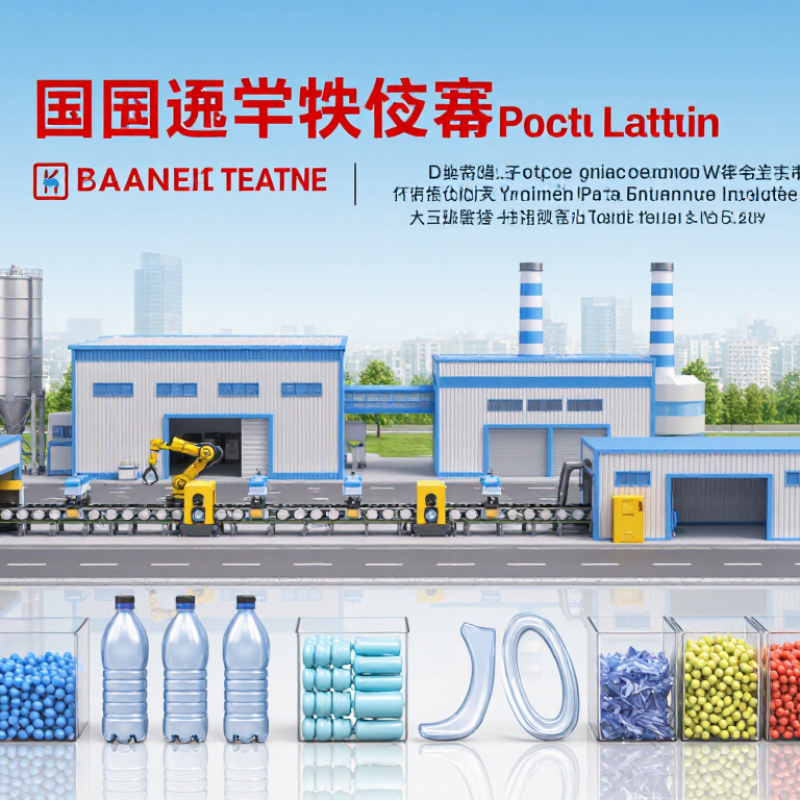
China’s Plastics Industry: NBS Reports 74.89 Million Tonnes in 2023
China’s plastics industry produced 74.89 million tonnes in 2023, according to the National Bureau of Statistics (NBS). The figure was 3.9% lower than in 2022. It measures reported plastic-products output, not factory capacity or product quality. A large number, but not a quality score.
For manufacturers, the scale signals a mature production base and intense competition. Yet output figures cannot show whether a supplier controls material consistency or dimensional accuracy. The OECD’s Global Plastics Outlook (2022) estimated that global plastic waste reached 353 million tonnes in 2019. Only 9% was recycled. That comparison is useful, but imperfect: global waste data do not reveal how much material any Chinese factory uses.
Buyers assessing suppliers can look beyond headline capacity. Ask for resin-lot traceability, inspection records, and measured tolerances for the parts being ordered. A sample should be checked for fit, surface finish, and wall thickness under real operating conditions. Scrap rates and delivery records also offer practical evidence. One limitation remains: public national statistics rarely provide factory-level detail. I would not treat the 74.89-million-tonne figure as proof that every producer is efficient or dependable.
What Are the Best Plastic Manufacturing Companies in China? - China’s Plastics Industry: NBS Reports 74.89 Million Tonnes in 2023
| Indicator |
2023 Figure |
Unit |
What It Measures |
| Plastic products output |
74.89 million |
tonnes |
National output of plastic products reported by China’s National Bureau of Statistics (NBS). |
| Year-on-year change in plastic products output |
-0.3% |
change |
Change compared with 2022, as reported in NBS annual industrial output data. |
| Manufacturing value added |
+5.0% |
year-on-year |
National manufacturing-sector context; this is not a plastics-only growth rate. |
| China’s GDP growth |
+5.2% |
year-on-year |
Overall economic context for interpreting industry-wide production figures. |
Source: China National Bureau of Statistics (NBS), 2023 annual statistical releases. National industry figures describe sector-wide output and do not rank or evaluate individual manufacturers.
Global Context: PlasticsEurope Records 400.3 Million Tonnes in 2022
PlasticsEurope’s Plastics – the Fast Facts 2023 report records global plastics production at 400.3 million tonnes in 2022. China accounted for about 32% of that output, making it a major part of the manufacturing landscape. The figure gives buyers useful context when assessing Chinese suppliers, but production volume alone says little about consistency, material traceability, or delivery performance. A large market is not automatically a reliable one.
The number also needs careful reading. PlasticsEurope’s estimate and other datasets may use different definitions and coverage. The OECD’s Global Plastics Outlook, for example, estimates that 353 million tonnes of plastic waste were generated worldwide in 2019. That is a different measure and year, not a direct comparison with production. Still, it highlights the material’s growing end-of-life burden. The data is useful, but imperfect.
For procurement teams, the practical questions are more specific: Can a factory provide stable resin specifications? Are batch records clear? Does it measure scrap and recycled content consistently? Ask for recent test reports and sample the parts you actually plan to buy. A polished factory tour is not enough. Check the figures behind the claims, too. A small gap between a supplier’s stated capacity and verified output can matter more than a headline global statistic.
Key Manufacturing Types: Injection Molding, Extrusion, and Packaging
What Are the Best Plastic Manufacturing Companies in China?
The best choice depends on the product, material, and production volume, not just a low quoted price. Injection molding suits detailed parts such as clips, housings, and containers. Ask how a supplier controls mold temperature, material drying, and cycle time. These details affect dimensions and surface finish. Request samples from a normal production run, not only a polished prototype. A neat sample can still hide inconsistent output.
Extrusion works well for continuous shapes, including tubing, profiles, and sheet. Check wall thickness along the length and ask how scrap is measured. Packaging manufacturers may offer film, rigid containers, or protective inserts. Confirm seal strength, fit, and performance during handling. Specifications should identify resin type, dimensions, tolerances, and inspection methods. In practice, a clear drawing helps, but it cannot replace checking real samples. Some requirements may need adjustment after testing.
Tips: Send the same brief to each supplier. Compare tooling costs, lead times, quality checks, and communication—not unit price alone. Keep a record of sample changes. No checklist catches everything. Look closely at the details.
China’s Plastic Products Output in 2023
National output provides context for manufacturers across injection molding, extrusion, and plastic packaging.
China’s National Bureau of Statistics reported 74.885 million tonnes of plastic products output in 2023. This total covers plastic products overall; it is not broken down by manufacturing process.
How to Evaluate Suppliers: Capacity, Quality Systems, and Compliance
Choosing among China’s plastic manufacturers starts with evidence, not brochure capacity. Ask for monthly output by resin and process, current line utilization, mold ownership, and peak-season lead times. A high press count means little if dryers, operators, or maintenance are bottlenecks. Request a recent production plan and compare it with shipment records. Small mismatch? Probe it.
Quality evidence should connect resin lots to finished-part records. Review calibration logs, first-article approvals, defect trends, and corrective-action closure—not just an ISO certificate. ISO’s 2022 Survey of Management System Standard Certifications recorded more than one million valid ISO 9001 certificates worldwide. Certification is common; scope and daily practice still need checking. A tidy file can hide weak shop-floor habits. That is easy to miss.
For compliance, confirm that test reports match the exact resin, color, and part being quoted. Check document dates, traceability, and whether the supplier understands requirements in your destination market. The World Bank’s 2023 Logistics Performance Index gave China an overall score of 3.7 out of 5; this country-level result cannot verify one factory’s delivery performance. Ask for recent on-time shipment data and investigate exceptions. I would not treat a single audit as proof. Recheck after changes to tooling, materials, or production sites.
Leading Chinese Manufacturers: Products, Export Reach, and Technical Strength
Chinese plastic manufacturers serve markets ranging from household goods to automotive interiors and electrical enclosures. Their capabilities vary: some specialize in injection molding, while others handle extrusion, blow molding, or custom tooling. Strong suppliers can explain resin choices, mold design, production tolerances, and inspection methods in plain terms. Ask for sample parts and measured results. A smooth surface is useful, but consistent dimensions matter more. Export experience also means clear packing plans, responsive communication, and reliable shipping records. A polished catalog can still hide gaps; treat it as a starting point, not proof.
Technical strength shows in practical details. Ask how a factory controls temperature, checks mold wear, and handles defects between production runs. For a plastic housing, for example, request details on wall thickness, fit, and impact testing. Export reach should be judged by demonstrated experience with your destination, product type, and order size—not broad claims. Some suppliers may be excellent at large batches but less flexible with prototypes. That difference matters.
Tips: Compare two or three sample parts under the same conditions. Request a written specification, material data, and inspection records before placing a large order. Check who owns the tooling and how changes are approved. Small details count.