
What Is the Best Type of Furniture Grade Plywood in 2026?

Choosing the best Furniture Grade Plywood in 2026 requires more than comparing wood species or price tags. Cabinet doors, bookshelves, and kitchen carcasses demand different performance. A beautiful birch panel may remain stable in a dry bedroom, yet fail to suit a humid laundry room. The right choice depends on strength, surface quality, core construction, moisture exposure, and finishing plans.

This guide examines hardwood plywood, veneer-core panels, MDF-core sheets, and specialized options such as Baltic birch. It considers warping resistance, screw-holding power, edge appearance, sanding behavior, and formaldehyde emissions. Look for clear grading information, consistent thickness, strong inner plies, and compliance documentation from reputable manufacturers. Certification matters, but paperwork should support physical inspection, not replace it.

Experienced cabinetmakers often tap panel edges, inspect veneer repairs, and check sheets on a flat surface before cutting. Small voids can become serious problems near hinges or exposed edges. A smooth face can also hide a weak core. That detail is easy to miss. The most expensive panel is not automatically the best panel. In some projects, it may be unnecessary. In others, saving money creates visible seams, loose screws, or costly replacement work. This 2026 comparison offers practical guidance, while acknowledging one uncomfortable truth: plywood quality can vary between suppliers, batches, and regions. Always request samples, verify technical data, and test the material against your actual furniture design before ordering a full pallet.
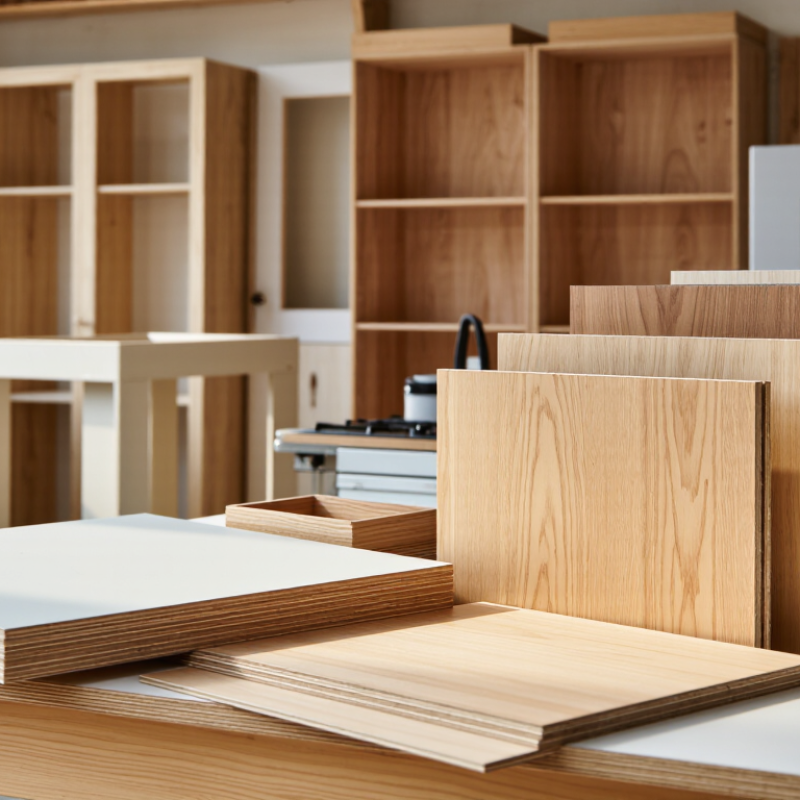
What Is the Best Type of Furniture Grade Plywood in 2026?

Furniture-Grade Plywood Defined: Veneer Core, MDF Core, and Particleboard Core

The best furniture-grade plywood in 2026 depends on the cabinet’s job, not its label alone. “Furniture-grade” usually describes appearance, machining quality, and panel construction. It is not always a universal technical standard. Check the face veneer, core gaps, thickness accuracy, and moisture rating before buying.

Veneer core plywood uses stacked wood layers with alternating grain directions. It feels relatively light and holds screws well, making it practical for shelves, doors, and cabinet boxes. Its edges can reveal attractive layers after sanding. However, some panels have small voids or uneven inner plies. Inspect a cut edge carefully. A smooth face cannot hide a weak core.

MDF core plywood offers a dense, exceptionally flat center beneath a wood veneer. It machines cleanly and suits painted doors, panels, and precise routed details. The tradeoff is weight, and exposed MDF edges need careful sealing.

Particleboard core plywood is usually economical and very flat. It works well for stable interior panels and laminate surfaces. Yet screws may loosen after repeated removal, especially near edges. Moisture is another weakness. I would not use it beside an unprotected sink.

My own selection would change after handling the panel, because printed specifications cannot show every soft spot, chipped edge, or hidden gap.

Birch, Maple, and Baltic Birch: Comparing Strength, Stability, and Appearance

What Is the Best Type of Furniture Grade Plywood in 2026?

Birch, maple, and Baltic birch each solve different furniture problems. Birch plywood offers balanced strength, clean edges, and predictable machining. Maple plywood usually provides a brighter face and refined grain. Its appearance suits visible cabinet panels and modern furniture.

The USDA Wood Handbook lists hard maple and yellow birch among dense hardwoods, with oven-dry specific gravity near 0.63 and 0.62. Their bending performance is broadly comparable. Baltic birch uses multiple birch plies, often with fewer internal voids. That structure improves screw holding and edge finishing. However, Baltic birch faces can look less decorative than maple. It is strong, but not automatically the prettiest choice.

APA’s Engineered Wood Construction Guide emphasizes panel grade, veneer quality, thickness, and bond performance. “Furniture grade” is not one universal technical grade. Inspect the core, not only the showroom face. A beautiful panel can still warp.

Tips: Choose Baltic birch for drawer boxes, jigs, and exposed edges. Choose maple for premium visible surfaces. Choose standard birch when cost and reliable machining matter. Check moisture content before assembly. The Forest Products Laboratory notes that wood movement follows changing humidity, even after finishing. That detail is easy to underestimate. In practice, a perfectly flat sheet may still demand careful storage and balanced finishing.

What Is the Best Type of Furniture Grade Plywood in 2026? - Birch, Maple, and Baltic Birch: Comparing Strength, Stability, and Appearance
Comparison Dimension Birch Plywood Maple Plywood Baltic Birch Plywood
Typical Construction Often a decorative birch face veneer over a multi-ply or veneer-core panel. The core composition varies by grade and manufacturer. Usually a maple face veneer over a hardwood, veneer, or mixed-core panel. Face appearance and core quality can differ substantially between panels. Generally constructed from multiple thin birch plies with birch layers running through the panel. The core is commonly more uniform than standard veneer-core plywood.
Strength for Cabinet and Furniture Parts ★★★★☆
Good overall strength when the panel has a sound core and adequate thickness.
★★★★☆
Comparable to good birch-faced plywood when the core construction and thickness are similar.
★★★★★
High strength-to-thickness performance because of its dense, consistent multi-ply core.
Resistance to Deflection Good for shelves and casework when properly supported. Long, heavily loaded shelves may require a thicker panel or front edging. Good for typical furniture applications. Performance depends more on core construction, thickness, and span than on the face species alone. Very good for its thickness. The many thin plies provide consistent support, although long spans still need proper design.
Dimensional Stability ★★★★☆
More stable than solid wood because of cross-laminated layers. Quality depends on balanced construction and moisture control.
★★★★☆
Stable when manufactured with a balanced core and kept in a controlled interior environment.
★★★★★
Typically very uniform and resistant to warping when acclimated and finished correctly on all sides.
Edge Appearance May show alternating plies, veneer-core gaps, or a less uniform edge. Edge banding is commonly used for finished furniture. Usually selected for its face veneer; exposed edges often benefit from solid-wood edging, veneer tape, or paint-grade treatment. Clean, attractive layered edge with few visible voids. Often suitable for exposed modern edges after sanding and finishing.
Face Appearance Light-colored surface with a fine, relatively even grain. It accepts clear finishes, stains, and paint with suitable preparation. Light cream to pale golden surface with a subtle, refined grain. It is commonly chosen when a clean, premium light-wood appearance is desired. Light birch appearance with a consistent, understated grain. The visible multi-ply edge is often part of its modern aesthetic.
Screw-Holding Performance Good in a solid, void-free core; pilot holes help reduce splitting near edges. Good when fasteners are placed in sound material. Edge holding varies with the core type. Very good for repeated assembly because the dense, layered core provides consistent material for screws and threaded inserts.
Machining and Routing Machines well, but veneer-core voids can occasionally affect cut edges or routed profiles. Machines well and produces a refined face, though sharp tools are recommended to reduce veneer chipping. Machines cleanly and predictably. The dense plies can be slightly harder on cutting edges than softer-core panels.
Moisture and Humidity Behavior Suitable for interior furniture when sealed and protected from prolonged moisture. It is not automatically exterior-grade. Suitable for dry interior environments. Unsealed edges and faces can absorb moisture and expand. Stable in normal interior conditions, but standard Baltic birch is not inherently waterproof. Use an appropriate adhesive and finish for humid areas.
Typical Thickness Options Commonly available in furniture thicknesses such as approximately 12, 15, 18, and 19 mm, depending on the market. Commonly available in approximately 12, 15, 18, and 19 mm furniture-panel thicknesses, with actual dimensions varying by supplier. Frequently sold in nominal thicknesses from approximately 6 to 24 mm, with many thin plies and relatively consistent actual thickness.
Best Furniture Uses Cabinet boxes, drawer parts, shelving, desks, wardrobes, and painted or clear-finished casework. Visible cabinet panels, furniture fronts, built-ins, desks, shelving, and projects requiring a light, refined wood appearance. Drawer boxes, shop furniture, shelving, CNC-cut parts, workbenches, modern tables, and projects with exposed layered edges.
Main Advantages Balanced combination of appearance, strength, availability, and finishing flexibility. Excellent decorative appearance and a clean, contemporary look for visible furniture surfaces. Highly consistent core, strong edges, good screw holding, low void content, and predictable machining.
Main Limitations Core quality can vary, and some panels have voids or less attractive edges that require banding. Often costs more for the decorative face, while the maple surface itself does not guarantee a superior core. Usually costs more than standard interior plywood and may be less readily available in large decorative face selections.
Best Choice When... You want a versatile, attractive panel for general interior furniture and can select a reliable core grade. The visible surface and light-colored hardwood appearance are the highest priorities. You prioritize core consistency, exposed edges, machining accuracy, and high performance in demanding furniture parts.
Overall Furniture Rating ★★★★☆
Best all-purpose option when panel construction is verified.
★★★★☆
Best appearance-focused option for visible surfaces.
★★★★★
Best performance-focused option for demanding joinery and exposed edges.
Selection note: “Furniture grade” is not a single universal engineering standard. Before purchasing, check the panel’s actual core construction, thickness, face grade, formaldehyde-emission classification, adhesive type, moisture rating, and whether the panel is flat and properly acclimated. Strength and stability also depend on thickness, support spacing, grain direction, fasteners, and indoor humidity.

Structural Benchmarks: APA Rated Sheathing, EN 636, and Panel Thickness Data

Choosing furniture-grade plywood in 2026 requires more than inspecting a smooth surface. Structural markings reveal how a panel should perform under load, moisture, and repeated use.

APA-rated sheathing indicates structural performance, not premium face quality. It may work well for cabinet carcasses, platforms, or hidden frames, but visible furniture needs better sanding and fewer core voids. Check the stamp, veneer condition, and intended span together. A clean face can still hide weak internal layers.

EN 636 classifications help clarify moisture exposure. EN 636-1 suits dry interior conditions, while EN 636-2 addresses humid environments. EN 636-3 is intended for exterior exposure, although edge sealing remains essential. That distinction matters. A kitchen cabinet beside a sink should not be judged like a bedroom shelf.

Panel thickness changes stiffness dramatically. A 12 mm sheet may suit a short shelf with close supports. A 18 mm panel usually reduces visible deflection, especially across wider openings. A 24 mm panel adds strength, but also weight and edge-treatment demands. Measure twice. A thickness table can mislead when supports, grain direction, and fastener spacing differ. In practical checks, place the panel on its actual supports and apply a controlled load. Watch the center, edges, and screw movement. I would also inspect several sheets from one batch; plywood quality can vary more than expected. That limitation deserves attention before specifying a large project.

Indoor-Air Standards: TSCA Title VI, CARB Phase 2, and E1 Emission Limits

What Is the Best Type of Furniture Grade Plywood in 2026?

Indoor-air quality should guide plywood selection, not appearance alone. Furniture-grade plywood can look flawless while releasing unwanted formaldehyde indoors. TSCA Title VI and CARB Phase 2 set strict emission limits for composite wood panels sold in the United States. Limits vary by panel type, including hardwood plywood, particleboard, and medium-density fiberboard. For example, hardwood plywood has a lower limit than some MDF products.

E1 is another useful reference, but it is not automatically identical to TSCA Title VI or CARB Phase 2. E1 commonly allows formaldehyde emissions up to 0.1 ppm under its specified chamber test. Test methods matter. A supplier should provide current certification, panel thickness, core details, and laboratory results. Check the production date, too. Old paperwork can create false confidence. I once focused mainly on veneer quality. That was too simple. Adhesives and edge treatments can affect indoor emissions significantly.

Tips:

  • Ask for documentation before cutting the sheets.
  • Choose low-emission plywood for bedrooms, nurseries, and enclosed cabinets.
  • Store panels in a dry, ventilated area.
  • Seal exposed edges carefully, but do not treat sealing as a substitute for certified materials.
  • If a document only says “eco-friendly,” request the actual emission standard and test result.
  • Fresh plywood can have a noticeable odor. Ventilate the workshop and finished room before regular use.

Best 2026 Choice by Use: Durability, Certification, Cost, and Machining Needs

What Is the Best Type of Furniture Grade Plywood in 2026?

For most furniture, balanced hardwood plywood is the strongest all-round choice. It uses several cross-laminated veneers, reducing warping beside a sunny window. The USDA Forest Products Laboratory reports that veneer species, thickness, and layup strongly affect plywood strength and stability. Choose a panel with a smooth A face and consistent inner plies. Fewer voids matter when routing exposed edges. A thicker panel also improves screw holding, but it increases weight and cost. My earlier assumption that every attractive face veneer performs equally was too simple.

Certification becomes critical for bedrooms, nurseries, and enclosed cabinets. EPA TSCA Title VI limits formaldehyde emissions from hardwood plywood to 0.05 ppm. Ask for test documentation, not only a printed claim. FSC chain-of-custody certification can support responsible fiber sourcing, although it does not guarantee perfect machining or durability. For painted parts, MDF-core plywood may provide flatter faces and cleaner finishing. It is heavy, however, and its edges need careful sealing. For chairs, drawers, and routed components, void-free multi-ply panels usually machine more predictably. APA technical guidance also emphasizes panel grade, exposure rating, and intended use rather than appearance alone. Cost remains practical: premium panels often save labor, yet a budget sheet can be sensible for hidden carcass parts. No panel wins every category.

What Is the Best Type of Furniture-Grade Plywood in 2026?

Scores are comparative, typical-use ratings on a 0–100 scale. Durability reflects resistance to wear, moisture, and structural stress; certification reflects the availability of FSC or formaldehyde-emission-compliant products; machining measures cutting, routing, drilling, and edge-finishing performance. Cost is shown as a relative index, where a higher value indicates a higher typical material cost.

Hardwood veneer-core plywood is a balanced choice for general furniture. Baltic birch is typically preferred for precision machining and exposed edges, marine plywood for moisture-prone applications, and MDF-core plywood for smooth painted panels. Certification and performance depend on the specific product and supplier.

NEW JERSEY

Location

Union Tool & Mold is a mold making, repair and plastic injection molding company located in central New Jersey.
(973) 763-6611

220 Rutgers St, Maplewood, NJ 07040
ACCREDITED

Certified Company


SOCIAL PROFILE

Let’s Connect

We invite you to engage with us on LinkedIn, where you can stay updated on our latest news, insights, and professional opportunities.