Global buyers are reassessing valve performance as water infrastructure, power generation, and process industries expand across demanding markets. Industry reports from Grand View Research and MarketsandMarkets identify industrial valves as a steadily growing global sector, supported by urbanization, energy investment, and stricter flow-control requirements. Their findings also show that lifecycle cost increasingly matters more than purchase price.
This trend places double-eccentric butterfly valves under closer technical review. The term “Double Eccentic” often appears in online searches, although “double-eccentric” is the correct engineering expression. This design reduces disc-to-seat contact during opening, which can lower operating torque and limit seat wear. In a large water pipeline, that difference may affect actuator sizing, shutdown reliability, and maintenance intervals.
Specification details remain decisive. Experienced engineers compare pressure class, body material, shaft design, seat construction, coating quality, and temperature limits. They also review compliance with standards such as API 609, EN 593, ISO 5752, and AWWA C504, where applicable. Certification should be verified through traceable documents, not attractive catalog language.
No shortlist is flawless. Site conditions vary.
A reliable global purchase therefore requires more than a polished datasheet. Buyers should examine factory testing, hydrostatic results, torque curves, inspection records, spare-parts support, and after-sales response. Suppliers with documented projects in municipal water, cooling systems, or industrial pipelines usually provide stronger practical evidence. Still, past performance cannot replace application-specific engineering. This guide evaluates leading 2026 options through measurable performance, standards alignment, supplier credibility, and total ownership considerations.
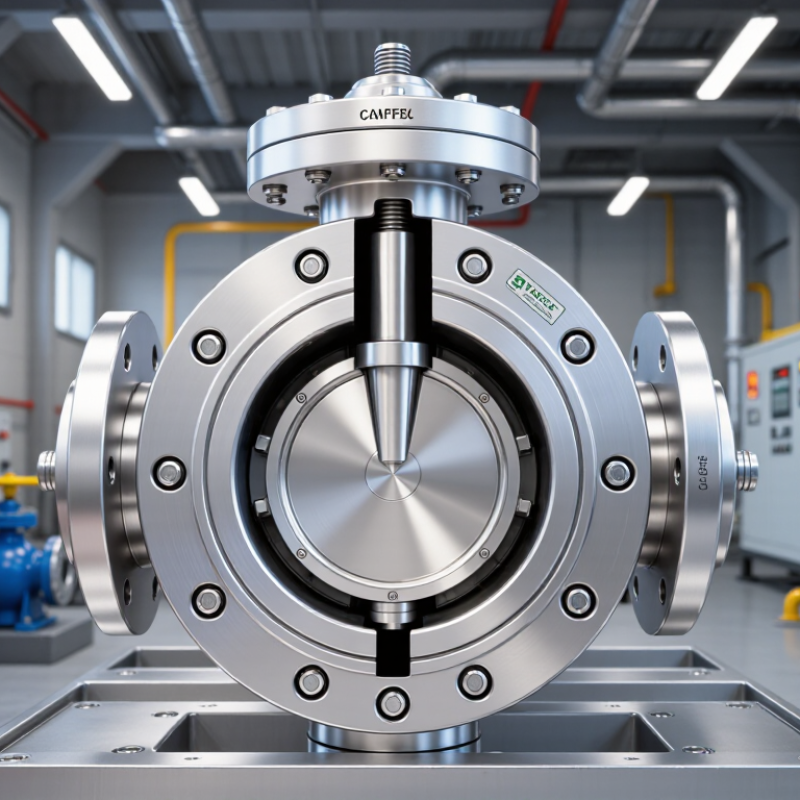
A double eccentric valve, often called a double offset butterfly valve, uses a disc shaft positioned away from the pipe centerline and sealing plane. This geometry reduces contact between the disc and seat during most of the rotation. Friction decreases. Operating torque usually falls as well.
When the valve closes, the disc approaches the seat with limited rubbing. Near the final closing angle, it presses into the resilient or metal seat and creates shutoff. During opening, the disc quickly moves away from the sealing surface, reducing wear and particle buildup. This action supports frequent cycling in water, cooling, process, and general industrial systems.
The body, disc, shaft, seat, and actuator must work as one system. Engineers should check pressure class, temperature range, fluid compatibility, flow direction, and available installation space. A properly sized actuator prevents incomplete closure and unnecessary mechanical stress. Field technicians should also verify flange alignment before tightening bolts. Small alignment errors can damage the seat.
The theory is clean. Field conditions are not. Corrosion, suspended solids, and poor commissioning can shorten service life. I have found that published torque data needs practical review, especially when deposits or temperature changes affect operation. Buyers should request pressure testing records, material certificates, and clear maintenance instructions. Local standards still matter. Always confirm the final design with a qualified valve engineer.
For global industrial applications, selection begins with the medium, not the catalogue photo. A double eccentric valve for clean water may fail early in abrasive slurry. Check fluid temperature, pressure, solids content, flow velocity, and corrosion risk. Small details matter. A sharp-edged particle can damage an unsuitable seat within months.
Material compatibility deserves careful review. Ductile iron, carbon steel, stainless steel, and special alloys serve different environments. Confirm pressure-temperature ratings at the actual operating range. Review flange dimensions, face-to-face length, and regional piping standards before ordering. An apparently suitable valve may create expensive installation changes. That mistake remains common.
Reliable suppliers should provide inspection records, material certificates, leakage test results, and clear traceability. Ask whether testing follows recognized procedures, such as ISO 5208, where applicable. Actuator sizing must include breakaway torque, differential pressure, and emergency operating conditions. Manual operation may look simple. It is not always simple under high loads.
Global buyers should also examine coating quality, storage protection, spare parts, and technical support near the installation site. Salt air, freezing winters, and dusty warehouses can affect performance before commissioning. I would not select only by purchase price. Yet service life estimates are often uncertain, especially with changing media conditions. Require realistic assumptions, maintenance intervals, and documented limits. A valve is a system component, not an isolated purchase.
The 2026 industrial valve market is becoming more specification-driven. Grand View Research estimated the global industrial valves market at about USD 78 billion in 2023, with steady growth through 2030. MarketsandMarkets also forecasts continued demand from water treatment, energy, and process industries. These figures do not select a valve for you. They show why comparison matters.
Double eccentric designs reduce disc-to-seat contact during opening. This can lower operating torque and slow seat wear. Wafer versions usually save installation space and weight. Lugged versions offer easier removal and more flexible pipeline maintenance. Flanged designs provide stronger alignment for larger, higher-pressure systems. API 609 and EN 593 remain important references for butterfly valve design, testing, and performance. ISO 5752 helps buyers verify face-to-face dimensions before replacing existing equipment.
Field reality differs. I have seen torque calculations look correct, yet actuators struggle after pipe misalignment. That gap matters. Buyers should compare shutoff class, pressure rating, shaft support, coating thickness, and cycle-life evidence. Stainless or nickel-based trim may improve corrosion resistance, but fluid chemistry decides whether the upgrade pays back. Larger discs can also increase dynamic loads during rapid closure. This detail is often missed.
The best design is not always the most expensive. It is the one matching pressure, temperature, media, installation space, and maintenance access. Published reports provide useful market direction, but certified test records provide stronger purchasing evidence. Some catalog claims still need independent verification.
Comparison of common double eccentric valve configurations using representative industrial pressure ratings. Actual limits depend on body material, seat design, temperature, and applicable standards such as EN 593, API 609, and EN 12266.
Key insight: Resilient-seated designs are commonly selected for general water and utility services, while polymer-seated and metal-seated configurations are used when higher pressure, temperature, or service durability is required. Shell test pressure is shown at approximately 1.5 times the nominal working pressure, a commonly used test relationship.
2026 Best Double Eccentric Valves for Global Buyers
Materials, Standards, and Certification Requirements Worldwide
Double eccentric valves serve water, wastewater, power, and process pipelines. Material selection should follow fluid chemistry, pressure, temperature, and installation conditions. Ductile iron bodies offer practical strength for municipal water systems. Stainless steel suits corrosive service. Duplex alloys can improve resistance in chloride-rich environments, though costs rise sharply.
The WHO/UNICEF Joint Monitoring Programme reported in 2023 that 2.2 billion people lacked safely managed drinking water. This infrastructure gap increases demand for dependable isolation equipment. Buyers should request pressure-test records under ISO 5208 and dimensional compliance under ISO 5752. API 609 and EN 593 may apply, depending on the project specification and market. Check the exact edition.
Sealing materials also require careful review. EPDM commonly supports potable-water service, while NBR performs better with certain oils. PTFE handles broader chemical exposure but may need tighter installation control. For drinking-water projects, NSF/ANSI/CAN 61, WRAS, ACS, or equivalent approvals may be required. Export documents should include an EN 10204 type 3.1 material certificate, coating data, and traceable serial records.
A certificate is not enough.
I have seen specifications copied between regions without checking local acceptance rules. That approach creates delays. Buyers should verify conformity assessment, pressure class, flange drilling, and actuator compatibility before ordering. The World Bank’s 2024 water-sector reporting also emphasizes resilient infrastructure and lifecycle efficiency, not purchase price alone. Still, every project differs, and no universal material schedule is perfectly reliable.
| Selection Category | Typical Service | Recommended Body Material | Disc and Shaft Materials | Seat and Seal Options | Common Pressure Range | Typical Temperature Range | Primary Design and Testing Standards | Regional Certification and Documentation | Key Buyer Verification Points |
|---|---|---|---|---|---|---|---|---|---|
| Potable Water and Municipal Networks | Drinking-water transmission, distribution pipelines, pumping stations, and water-treatment plants. | Ductile iron EN-GJS-400-15 or ASTM A536; carbon-steel bodies may be selected for higher pressure or larger sizes. | Stainless steel 1.4021, 1.4057, or AISI 316/316L; epoxy-coated ductile iron discs may be used for suitable water service. | EPDM is commonly selected for potable water; NBR is generally used only where oil resistance is required. | PN10, PN16, or PN25; ASME Class 150 designs are also common in North American projects. | Approximately 0 °C to 80 °C for standard EPDM water service, subject to the manufacturer’s pressure-temperature rating. | EN 593ISO 10631EN 1074-1/-2ISO 5208 | EU drinking-water contact requirements where applicable; national approvals such as WRAS, ACS, or equivalent may be requested. NSF/ANSI/CAN 61 is commonly requested in North America. | Confirm lining and elastomer approval, extraction or leach testing, coating system, end dimensions, bidirectional shutoff, and clean-water pressure test records. |
| Seawater and Desalination | Seawater intake, reverse-osmosis pretreatment, cooling-water systems, and desalination plants. | Duplex stainless steel, super duplex stainless steel, or suitably lined carbon steel depending on chloride concentration and velocity. | Duplex or super duplex stainless steel; titanium may be specified for particularly aggressive chloride service. | EPDM, PTFE, or other chemically compatible seats; selection must consider chlorine, temperature, and pressure cycling. | Typically PN10 to PN25 or ASME Class 150; higher ratings require project-specific design review. | Approximately 0 °C to 80 °C for many water services, but actual limits depend on material, lining, and elastomer selection. | EN 593ISO 10631ISO 5208ASTM G48 | Material certificates to EN 10204 3.1 are commonly required. Chloride-service corrosion testing, coating reports, and project-specific seawater qualification may be required. | Verify pitting-resistance requirements, weld-repair controls, galvanic compatibility, coating holiday testing, and resistance to disinfectants or oxidizing chemicals. |
| General Industrial Water and HVAC | Cooling-water circuits, chilled-water systems, condenser lines, fire-water utilities, and industrial process water. | Ductile iron for moderate service; carbon steel or stainless steel for higher mechanical or corrosion demands. | Stainless steel shaft; ductile iron, carbon-steel, or stainless-steel disc according to fluid chemistry. | EPDM for water and glycol mixtures; NBR for selected hydrocarbon-contaminated utility services. | PN10, PN16, PN25, or ASME Class 150. | Approximately -10 °C to 120 °C, depending on seat compound, fluid composition, and pressure rating. | EN 593ISO 10631MSS SP-67ISO 5208 | Pressure equipment conformity may apply in the EU when the valve falls within the scope of the Pressure Equipment Directive. Fire-water projects may require additional local approvals. | Check glycol concentration, minimum operating temperature, actuator torque margin, flange drilling, face-to-face dimensions, and pressure-test classification. |
| Oil, Fuel, and Refined Hydrocarbon Service | Fuel terminals, tank farms, pipeline stations, refinery utility systems, and non-sour hydrocarbon lines. | Carbon steel ASTM A216 WCB or equivalent; stainless steel may be selected for corrosive products. | Stainless steel or alloy steel shaft; stainless steel disc is preferred for corrosive or clean-fuel service. | PTFE, reinforced PTFE, graphite, or hydrocarbon-compatible elastomers, selected according to temperature and fluid composition. | ASME Class 150, 300, or equivalent PN ratings; pressure class must match the piping system. | Approximately -29 °C to 180 °C for common configurations; higher temperatures require engineered materials and seals. | API 609ISO 10631API 598ISO 5208 | API 607 or ISO 10497 may be specified for fire-tested valves. ATEX requirements may apply when the valve assembly is installed in a potentially explosive atmosphere. | Confirm fire-safe construction, antistatic continuity, fugitive-emission class, hydrostatic and seat-test pressure, material traceability, and actuator suitability. |
| Natural Gas and Process Gas | Gas transmission and distribution, compressor stations, gas-treatment facilities, and industrial gas headers. | Carbon steel or low-temperature carbon steel selected for design temperature and impact requirements. | Stainless steel or alloy steel shaft; disc material is selected for gas composition, erosion risk, and pressure class. | PTFE, reinforced PTFE, graphite, or approved elastomers; low-emission packing may be required. | ASME Class 150 to Class 600 or equivalent design ratings, subject to pipeline and project specifications. | Approximately -46 °C to 180 °C for common engineered configurations. | API 609ISO 10631API 598ISO 15848-1 | Fire-safe certification may be required under API 607 or ISO 10497. ATEX, UKCA, or other hazardous-area requirements apply to the complete actuated assembly where relevant. | Review low-temperature impact tests, fugitive-emission testing, pipeline pressure class, antistatic design, shutoff direction, and gas decompression requirements. |
| Chemical and Corrosive Process Service | Acids, alkalis, brines, chemical transfer, wastewater chemicals, and process-media isolation. | Stainless steel 316/316L, duplex stainless steel, alloy steel, or lined carbon steel based on chemical compatibility. | 316/316L, duplex, super duplex, or nickel alloy; material selection depends on concentration, temperature, and contamination limits. | PTFE, modified PTFE, FKM, EPDM, or other chemically compatible compounds. | PN10 to PN40 or ASME Class 150 to Class 300, depending on design and temperature derating. | Approximately -20 °C to 200 °C for engineered configurations; chemical compatibility must be confirmed at actual conditions. | EN 593ISO 10631ISO 5208ISO 15848-1 | CE/PED conformity may apply in the EU. Material certificates, elastomer compatibility statements, coating records, and chemical-resistance documentation are commonly required. | Specify concentration, impurities, flow velocity, crystallization risk, permeation limits, corrosion allowance, and cleaning or sterilization requirements. |
| Sour Gas and Oilfield Service | Hydrogen-sulfide-containing production, gathering, gas processing, and upstream oil and gas systems. | Low-alloy carbon steel or corrosion-resistant alloy selected for the specified sour-service environment. | Materials must be compatible with hydrogen sulfide exposure, hardness limits, and project sour-service requirements. | PTFE, graphite, or qualified elastomers selected for sour gas, pressure, temperature, and decompression conditions. | ASME Class 150 to Class 600 or project-specific pipeline ratings. | Commonly approximately -29 °C to 180 °C, subject to materials, pressure, and sour-service limitations. | API 609ISO 10631NACE MR0175/ISO 15156API 598 | NACE/ISO 15156 compliance documentation is commonly required. NACE TM0177 or other specified qualification tests may be required by the project. | Verify material hardness, heat treatment, NACE compliance, positive material identification, weld procedures, trim compatibility, and pressure-cycle performance. |
| High-Temperature Steam and Thermal Utilities | Boiler auxiliaries, hot-water systems, thermal-oil utilities, and selected steam isolation duties. | Carbon steel, alloy steel, or stainless steel selected for temperature, pressure, and oxidation resistance. | Heat-resistant stainless steel or alloy steel; disc and shaft design must address thermal expansion and galling. | Graphite or metal-seated arrangements are generally considered for elevated temperatures; standard elastomers may be unsuitable. | ASME Class 150 to Class 600 or equivalent EN pressure classes with temperature derating. | Approximately 150 °C to 400 °C for specially engineered designs; exact limits depend on seat and packing construction. | API 609EN 593ISO 5208API 607 | EU PED conformity may apply. Fire-safe testing, pressure-temperature charts, material traceability, and high-temperature seat-test data may be requested. | Confirm thermal-cycle testing, seat leakage class, actuator sizing at maximum differential pressure, insulation clearance, packing arrangement, and thermal expansion limits. |
| Fire-Protection Water Systems | Fire pumps, hydrant networks, sprinkler risers, deluge systems, and water-based fire suppression installations. | Ductile iron or carbon steel with a qualified protective coating suitable for fire-protection service. | Stainless steel shaft or corrosion-resistant coated components; disc design must support reliable emergency operation. | EPDM or other listed fire-service elastomers, where accepted by the applicable approval body. | Typically PN10, PN16, or ASME Class 150, subject to the fire-system design standard. | Usually approximately 0 °C to 80 °C for standard water-based systems; freezing protection may be required. | EN 593ISO 5208NFPA 20NFPA 24 | Project approval may require listing or certification from an authority recognized in the target market. Supervisory switches, position indication, and installation requirements may be mandatory. | Confirm approved configuration, visible position indication, supervisory monitoring, corrosion protection, installation orientation, and fire-system acceptance testing. |
| Export Projects Requiring Global Documentation | Multiregional EPC projects where valves may be installed in Europe, the United Kingdom, North America, the Middle East, or Asia-Pacific. | Material selected from the project specification, commonly ductile iron, carbon steel, stainless steel, duplex, or lined construction. | Specified by fluid, pressure class, corrosion risk, temperature, and regional material requirements. | EPDM, NBR, FKM, PTFE, graphite, or metal seat according to media and operating envelope. | PN10 to PN40 and ASME Class 150 to Class 600 are common; flange drilling and face-to-face dimensions must be confirmed. | Project-specific; the pressure-temperature curve must accompany the technical submittal. | API 609EN 593ISO 10631ISO 5208API 598 | Possible requirements include CE/PED, UKCA, EAC, ATEX, NSF/ANSI/CAN 61, WRAS, ACS, fire-safe testing, fugitive-emission testing, and EN 10204 3.1 material certificates. | Request a country-specific compliance matrix, declaration of conformity where applicable, dimensional drawings, test procedures, inspection plan, coating records, and complete traceability documents. |
Installation determines much of a double eccentric valve’s later cost. Confirm the pipe centerline, flange rating, and disc clearance before lifting the valve. A small offset can create uneven seat loading and early leakage. Fit matters more. Actuator sizing should include shutoff pressure, friction, and emergency operating requirements, not only nominal torque. Experienced installers also protect the shaft and seat from welding debris, grit, and temporary pipe strain.
Maintenance should combine operating records with physical inspection. Check unusual torque, partial-stroke response, flange seepage, and actuator position feedback. Quarterly checks suit many water applications, but corrosive fluids may require shorter intervals. ISO 5208 provides standardized leakage testing, while AWWA C517 addresses resilient-seated butterfly valve performance. These standards improve purchasing discipline, though field conditions remain messier than test benches.
Lifecycle cost needs more than purchase price. The World Bank’s 2006 report, Non-Revenue Water, estimated global water losses at 32 billion cubic meters annually, with substantial recovery potential. Poor isolation valves can enlarge that waste during repairs and pressure events. A useful model includes installation labor, inspection hours, replacement seals, downtime, energy demand, and disposal. A double eccentric design may reduce seat wear because the disc disengages earlier during opening. Yet this benefit depends on correct alignment and cycling frequency. The estimate is imperfect. Local labor rates and water quality can change the ranking. Buyers should request test certificates, torque curves, spare-part availability, and documented service intervals before comparing bids.