2026 Top Plumber Tools for Global Buyers
For global buyers, choosing the right Plumber Tools in 2026 means more than comparing prices. It requires practical judgment, verified performance, and awareness of different jobsite conditions. A compact pipe cutter may excel in a European apartment renovation, while a heavy-duty press tool may better suit commercial projects in North America or the Middle East.
Richard Trethewey, a respected plumbing and heating expert, has often emphasized a simple principle: “The right tool makes the work easier, safer, and more reliable.” That idea remains important today. Professional buyers should examine jaw strength, grip comfort, corrosion resistance, battery life, replacement parts, and service support. A wrench that feels solid in a showroom may become tiring after eight hours of overhead work. Small details matter.
This guide reviews leading Plumber Tools for contractors, distributors, and serious maintenance teams. It considers real working conditions, not just attractive product images. Tools must handle copper, PVC, stainless steel, and difficult access points without creating unnecessary damage. Certification and local compliance also deserve attention, especially for buyers serving multiple markets.
No buying guide is perfect. Some tool choices depend on personal technique, budget, and regional supply chains. Even experienced plumbers can overlook long-term repair costs. That is why this overview combines professional experience, technical specifications, and practical purchasing concerns. The goal is not to promote the most expensive equipment. It is to identify dependable tools that earn their place in a working toolbox.
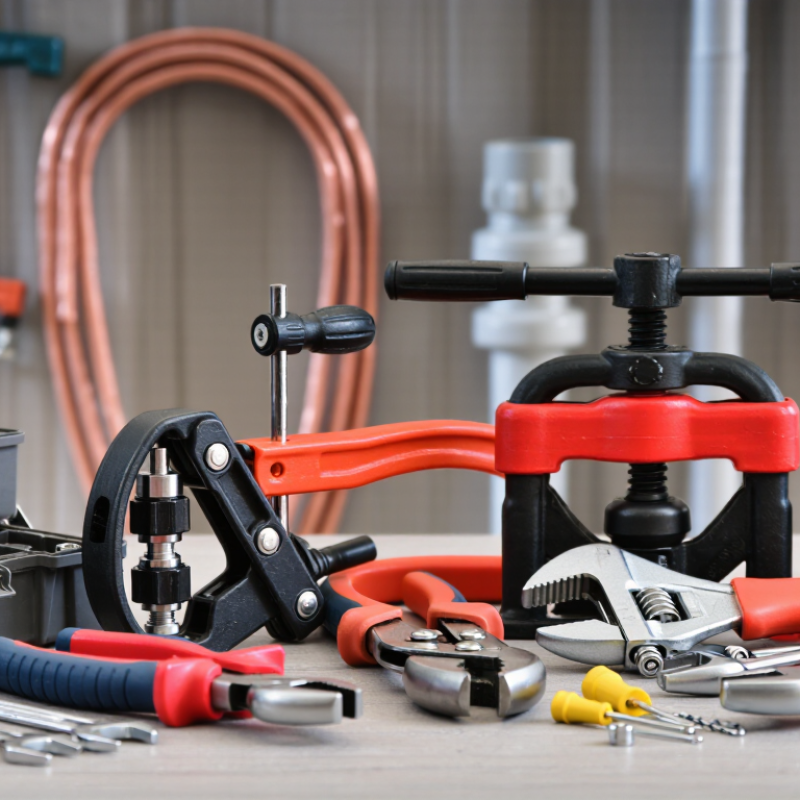
Plumber Tool Categories and Their Core Functions
Professional plumbing work depends on choosing tools by function, not appearance. Adjustable wrenches handle compression fittings, supply valves, and hexagonal nuts. Pipe wrenches provide stronger gripping power on threaded metal pipes. They can mark polished surfaces, so a protective cloth helps. Pliers support smaller tasks, such as holding fittings or removing worn washers.
Drain tools address blockages through different methods. A plunger creates pressure for nearby clogs in sinks, tubs, and toilets. A hand auger reaches deeper through curved drain lines. Longer drain machines work farther into pipes, but they require controlled feeding and careful cleaning. Pipe cutters make straight cuts on copper, plastic, or multilayer pipe. Reamers remove sharp inner edges before connection. Threading tools create external threads on suitable metal pipes. Leaks often begin with poor preparation.
Inspection and measurement tools improve accuracy. A tape measure checks pipe runs, while a level confirms proper drainage angles. A pressure gauge can reveal unstable water pressure. Inspection cameras show hidden buildup, damaged joints, or unexpected bends. Personal protective equipment also matters. Gloves, eye protection, and non-slip footwear reduce common job-site risks.
In field work, tool categories can overlap. A basin wrench may solve a tight fixture problem better than a large wrench. I have found that carrying too many tools slows decisions. Carrying too few creates delays. Tool quality matters, but maintenance matters more. Clean jaws, sharp cutters, and dry storage improve reliability. My own selection process still needs revision after unusual pipe layouts and cramped working spaces.
How to Choose Plumber Tools for Different Plumbing Tasks
2026 Top Plumber Tools for Global Buyers
How to Choose Plumber Tools for Different Plumbing Tasks
Tool selection should begin with the pipe, not the toolbox. For copper or multilayer pipe, choose a clean tube cutter, deburring tool, and calibrated press or crimp equipment. For threaded steel, use a strong pipe wrench, threading die, and cutting oil suitable for the material. Drain work needs a hand auger for short blockages and a controlled electric machine for deeper lines. I have seen oversized tools damage fittings, especially in older buildings.
Leak detection requires different thinking. A moisture meter helps locate hidden dampness, while an acoustic detector can identify pressurized leaks behind walls. Use inspection cameras before opening floors whenever possible. The U.S. Environmental Protection Agency reports that household leaks can waste nearly 1 trillion gallons of water yearly in the United States. Small accuracy gains matter. Very much.
Global buyers should also check measurement systems, voltage, pipe standards, spare parts, and operator training. The WHO/UNICEF Joint Monitoring Programme reported that 2.2 billion people lacked safely managed drinking water in 2022, increasing demand for reliable maintenance tools. The U.S. Bureau of Labor Statistics projects about 44,000 annual openings for plumbers, pipefitters, and steamfitters during 2023–2033. That workforce needs durable tools, but durability alone is not enough. I still prefer lighter equipment for repeated overhead work, although my first choice is not always the most productive one. Test grip, balance, service access, and safety controls before purchasing large quantities.
2026 Top Plumber Tools for Global Buyers
How to Choose Plumber Tools for Different Plumbing Tasks
The chart compares the typical number of core tool types needed for common plumbing tasks. Buyers should match tool selection to the job: hand tools are essential for fixture work, cutting and joining tools support pipe installation, and drain or pressure-testing tools are required for maintenance and diagnosis.
Global Buying Standards, Safety, Quality, and Supplier Evaluation
Global buyers should judge plumber tools by safety, measurable quality, and supplier evidence, not appearance alone. A reliable tool should show stable dimensions, clean jaws, controlled torque, and corrosion-resistant surfaces. For insulated tools, request test records against applicable electrical safety standards, such as IEC 60900. Even basic wrenches need clear material specifications and batch traceability.
Safety deserves serious attention. The International Labour Organization reported about 2.93 million work-related deaths and 395 million non-fatal injuries annually in its latest global estimates. Tools cannot prevent every accident, but poor grips, cracked handles, and inaccurate torque increase exposure. Check edge finishing, grip pressure, insulation condition, and packaging protection. Ask for inspection photos from actual production batches. A catalogue image proves little.
Supplier evaluation should combine documents with physical testing. ISO’s 2023 survey recorded more than 1.2 million ISO 9001 certificates worldwide, yet certification alone cannot confirm tool performance. Request calibration records, material certificates, inspection plans, and independent test reports. Compare samples from different batches. A perfect checklist does not exist. Buyers can still miss hidden weaknesses, especially after transport or repeated use. That uncertainty deserves a small trial order, not blind confidence.