2026 Best Flexible Shaft Brush Cutter Buying Guide
Choosing the 2026 best Flexible Shaft Brush Cutter requires more than comparing engine size and price. A Flexible Shaft Brush Cutter must match your terrain, cutting frequency, and physical comfort. In real garden and property maintenance work, small differences become noticeable quickly. Harness balance affects your shoulders. Shaft flexibility affects control around fences, trees, and uneven ground. Vibration can also change the quality of a full afternoon’s work.
This guide examines practical details that product listings often overlook. We consider engine response, shaft construction, cutting-head compatibility, handle design, fuel efficiency, and maintenance access. We also review manufacturer specifications and user feedback, rather than trusting promotional claims alone. A reliable model should start predictably, cut dense grass without constant stalling, and allow routine cleaning near the air filter and gearbox. It should feel steady, not merely powerful.
There is no perfect machine.
Some buyers may prefer a lighter unit, even with less cutting strength. Others may need a stronger engine for reeds, weeds, or rough field edges. Our recommendations acknowledge these compromises and the limits of available testing. Personal technique matters, too. A poorly adjusted harness can make a capable cutter feel uncomfortable. Before purchasing, check local safety requirements, service support, replacement-part availability, and the manufacturer’s operating instructions. The cheapest option may cost more after repeated repairs. This guide aims to support a careful, informed decision, not force one universal answer.
Define Flexible-Shaft Brush Cutters and Their 2026 Professional Applications
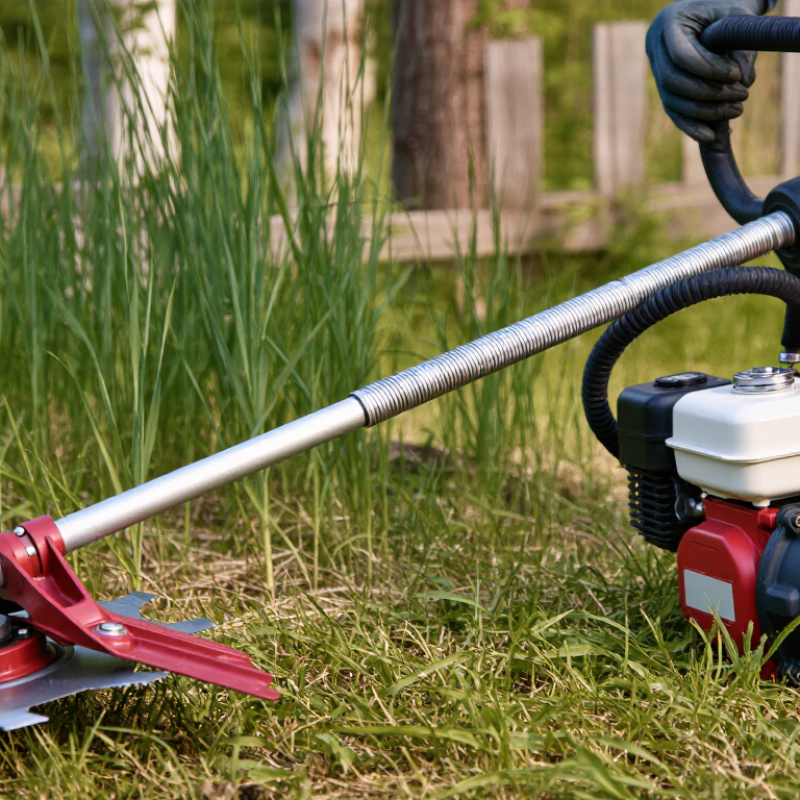
A flexible-shaft brush cutter transfers power through a rotating cable inside a protected sheath. The engine or motor stays near the operator’s body. Only the cutting head moves at the end of the shaft. This design can reduce hand fatigue and improve control around trunks, fences, and uneven ground. It is not a magic solution. Cable routing, lubrication, and bend limits affect service life.
In 2026, professionals use these cutters for orchard floors, roadside vegetation, utility corridors, park edges, and light forestry clearing. They are especially useful on slopes, where a compact head can follow the terrain naturally. Operators should match the blade or line to the vegetation. Thick woody stems need a rated metal blade. Fine grass usually needs cutting line. Guards, harness fit, hearing protection, eye protection, and regular inspections remain essential.
When buying, check torque delivery, shaft length, clutch response, vibration control, spare-part access, and maintenance requirements. Battery systems may reduce local exhaust and simplify starting. Fuel systems may support longer remote shifts. Runtime claims need field verification. Mud changes everything. I would test the cutter with gloves and the intended harness before approving a fleet purchase. A machine that feels balanced for ten minutes may become tiring after four hours. That detail is easy to miss.
2026 Best Flexible Shaft Brush Cutter Buying Guide - Define Flexible-Shaft Brush Cutters and Their 2026 Professional Applications
| Evaluation Dimension | Typical Professional Specification or Range | What It Means | Best-Fit 2026 Application |
|---|---|---|---|
| Definition | A brush cutter that transfers engine or motor torque through a flexible rotating shaft inside a protective housing. | The flexible drive allows the cutting head to be positioned remotely from the power unit, improving maneuverability in confined or irregular areas. | Landscape maintenance, roadside work, drainage channels, orchards, and vegetation management around obstacles. |
| Power Source | Battery-electric, corded electric, or petrol engine; professional portable models commonly use approximately 0.8–2.0 kW of rated output. | Higher output supports denser grass and tougher weeds, while electric systems generally reduce local exhaust emissions and operating noise. | Battery systems for noise-sensitive areas; petrol systems for long-duration work away from charging infrastructure. |
| Cutting Width | Approximately 25–45 cm, depending on the cutting head, blade, and available power. | A wider path increases productivity in open areas but can reduce control in narrow spaces and increase power demand. | 25–35 cm for obstacles and tight access; 35–45 cm for open grass, field margins, and large properties. |
| Cutting Attachments | Nylon line head for grass; multi-tooth metal blade for brambles, reeds, and woody weeds; specialized blades only when approved by the manufacturer. | The attachment must match the vegetation type, shaft speed, guard design, and power rating. | Routine turf edging, dense weeds, invasive vegetation, light scrub, and seasonal field clearing. |
| Flexible Shaft Construction | Multi-layer steel cable or spring-style drive shaft enclosed in a lubricated, abrasion-resistant outer housing. | A properly supported and lubricated shaft reduces heat, vibration, wear, and the risk of premature cable failure. | Frequent professional use where repeated bending and movement around trees, posts, walls, and slopes are expected. |
| Shaft Length and Reach | Common working shaft lengths are approximately 1.2–2.0 m, with adjustable handles or harness systems on many professional models. | Reach should allow a balanced cutting posture without forcing the operator to overextend or twist. | Longer reach for banks and drainage edges; shorter or adjustable configurations for dense landscaping and precise trimming. |
| Weight and Balance | Professional handheld systems commonly weigh about 5–10 kg before fuel or removable battery packs, depending on configuration. | Total carried weight and the location of the power unit affect fatigue, control, and safe work duration. | Low-weight battery units for routine trimming; harness-supported systems for extended vegetation clearance. |
| Vibration Control | Anti-vibration mounts, padded handles, balanced cutting heads, and a correctly tensioned flexible shaft. | Lower transmitted vibration improves comfort and supports compliance with workplace exposure-control procedures. | Municipal, grounds-care, and contractor work involving repeated daily operation. |
| Noise and Emissions | Battery-electric models produce no direct exhaust emissions during use and are generally quieter than petrol models; actual sound levels vary by design. | Noise, local air-quality rules, and working-hour restrictions can determine the most suitable power source. | Hospitals, schools, residential communities, parks, and other noise-sensitive locations. |
| Fuel or Battery Runtime | Runtime depends on load, cutting attachment, vegetation density, battery capacity, fuel-tank size, and operating technique. | Use manufacturer-rated runtime as a comparison point, but plan for shorter periods in heavy growth or continuous cutting. | Multiple batteries or spare fuel for full-shift work; rapid charging and battery rotation for fleet operations. |
| Safety Equipment | Approved guard, eye and face protection, hearing protection where required, gloves, safety footwear, long trousers, and a suitable harness. | The guard and personal protective equipment help control risks from thrown objects, rotating parts, noise, and vegetation contact. | All professional applications, especially work near roads, buildings, pedestrians, glass, and vehicles. |
| Maintenance Requirements | Inspect the guard, head, blade, fasteners, cables, and housing before use; clean air filters and lubricate the flexible shaft according to the service schedule. | Routine inspection helps identify damaged parts, overheating, excessive play, and unsafe attachment conditions before operation. | Daily contractor use, facility maintenance fleets, roadside crews, and seasonal land-management programs. |
| Terrain Capability | Suitable for level ground, slopes, embankments, uneven margins, and areas containing fixed obstacles when operated with stable footing. | Flexible shaft systems improve access, but they do not eliminate the need for terrain assessment and controlled positioning. | Sloped parks, canal banks, orchard rows, fence lines, and rough grassland. |
| Selection Priority for 2026 | Match power, shaft durability, cutting width, runtime, ergonomics, service access, and local noise or emissions requirements. | The best professional brush cutter is determined by the complete operating system rather than maximum engine or motor output alone. | Fleet standardization, lower operating fatigue, predictable maintenance, and efficient vegetation control. |
Note: Specifications are typical professional-use ranges and should be verified against the current operating manual, local regulations, approved attachments, and site-specific safety requirements before purchase or operation.